An unprecedented power struggle reshapes the Sahel
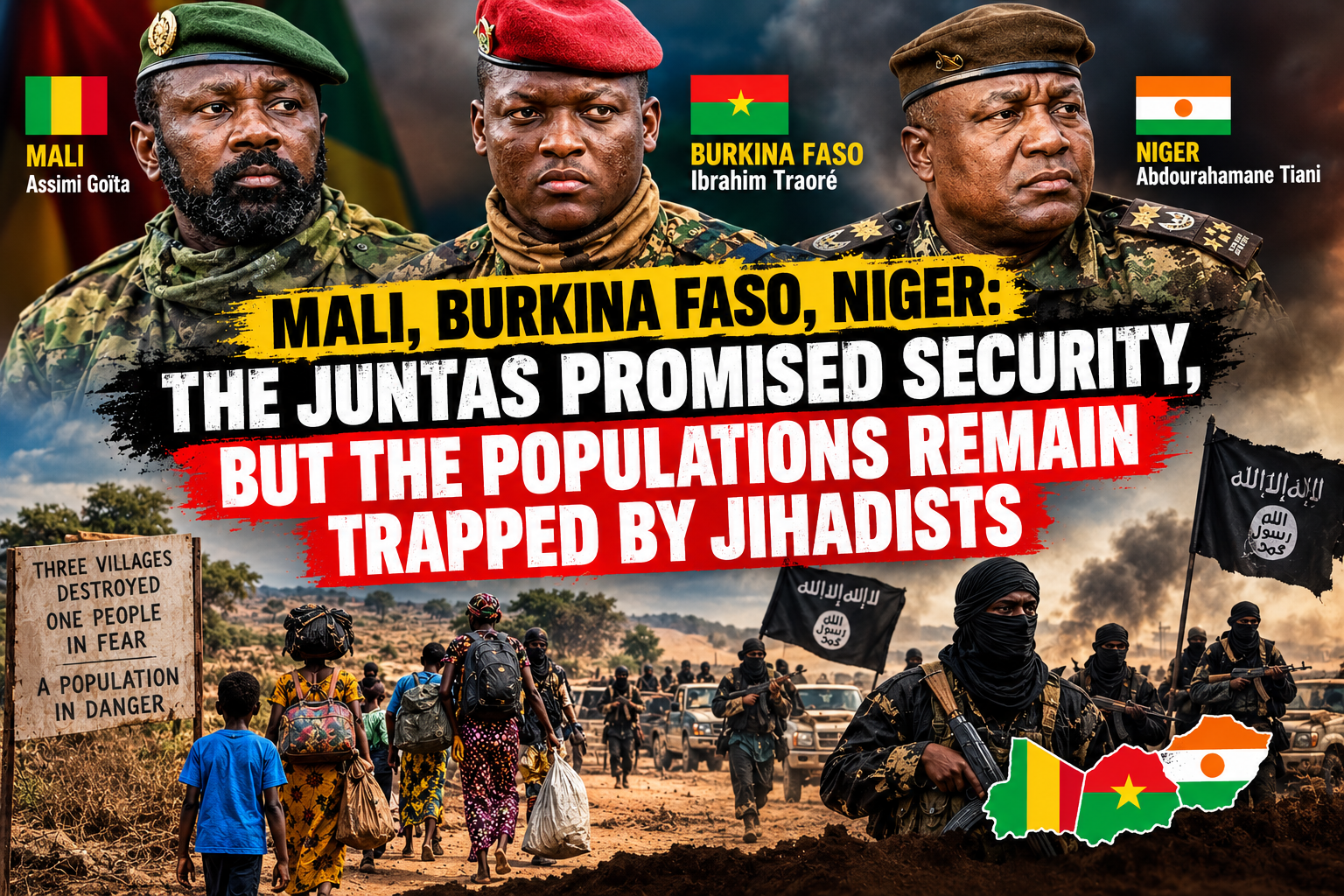
The tri-border region of Mali, Burkina Faso, and Niger has become the epicenter of a brutal jihadist turf war. The Islamic State in the Greater Sahara and the Group for the Support of Islam and Muslims (JNIM), Al-Qaeda’s regional affiliate, have intensified clashes in a strategic zone they both seek to dominate. With hundreds of casualties claimed by both sides in recent weeks, the escalation exposes a harsh reality for the military regimes now in power: after vowing to restore security, what remains of their promises to the most vulnerable populations?
The conflict between these two armed groups is not merely a contest for military supremacy. It is a battle for territorial control, movement corridors, local resources, and the submission of communities caught in the crossfire. For isolated villagers, survival itself is now secondary only to the constant threat of violence.
From promises to peril: juntas at a crossroads over security
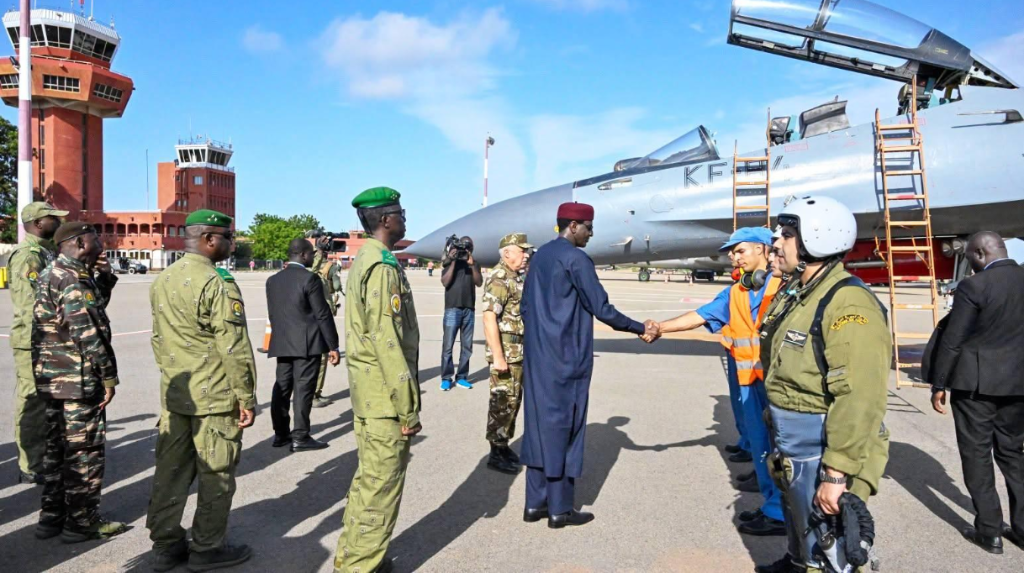
The military juntas of Mali, Burkina Faso, and Niger rose to power promising nothing short of national renewal reclaiming territory, breaking foreign military ties, and asserting sovereignty. Yet in the heart of the tri-border area, their failure to deliver on security is becoming impossible to ignore.
Sovereignty, after all, is not measured in international declarations or strategic alliances alone. It is measured in the ability of a state to protect its people, maintain a presence in distant regions, and ensure that citizens can move, farm, and live without fear.
For many in rural communities, daily life under jihadist dominance includes roadblocks, economic paralysis, and forced displacement. The juntas’ repeated assertions of independence and self-determination ring hollow when villages remain under the control or under the threat of armed factions with no allegiance to the state.
Who safeguards the villages when the guns come closer?
As the fighting between ISIS-GS and JNIM intensifies, the civilian toll rises not only from direct clashes, but from retaliatory attacks and the collapse of essential services. Casualty figures released by either side must be scrutinized carefully; propaganda often inflates victories and downplays losses, making independent verification essential.
But beyond the military narratives, one question looms large: when combat reaches the outskirts of a village, who steps in to protect the homes, the schools, the clinics, and the markets? Who guarantees that children can attend class, farmers can till their fields, and traders can transport goods without fear?
This is where the true measure of public action lies not in speeches, not in military parades, but in the tangible security of ordinary citizens.
Economic and administrative cracks in the state’s foundation
In the most exposed rural areas, insecurity is not just about violent attacks. It is about the slow erosion of state authority: the closure of schools and health centers, the inability of security forces to maintain a permanent presence, and the growing influence of armed groups over local populations.
The consequences are dire. Markets shrink. Trade routes are abandoned. Farmlands fall fallow. Families are forced to flee or live under duress, choosing between risking their lives or losing their livelihoods. While no regime willingly abandons its people, the persistence of such conditions demands accountability. Authorities must explain what has been achieved and what has not.
The fallacy of sovereignty without security
The Sahel’s military leaders have placed their cooperation within the Alliance of Sahel States at the core of their political and military strategy. They frame it as a break from past dependencies and a bold assertion of independence. But this narrative stands on shaky ground if villages remain unprotected and civilians remain at risk.
Real sovereignty demands results: fewer attacks, safe return for displaced persons, functioning public services, secure roads, and the restoration of trust between people and state.
If jihadist factions continue to contest control over territory while communities remain vulnerable, governments cannot hide behind historical grievances or foreign entanglements. They must answer for their actions or lack thereof and propose concrete solutions for the zones most in danger.
The real test of power: protecting the civilian population
The Sahel crisis will not be resolved by slogans or international realignments alone. It demands a response that is both military and civic: robust intelligence, cross-border cooperation, justice initiatives, and the restoration of essential services.
For the juntas in Bamako, Ouagadougou, and Niamey, the moment of reckoning has arrived. Can sovereignty truly mean anything if, in large parts of the tri-border region, people still live in fear of armed checkpoints, night raids, and sudden violence?
The answer will not come from declarations or alliances. It will come from the streets, the fields, and the schools of the Sahel where the absence of security has already transformed promises into peril.
By Thérèse Nguimfack — Journalist