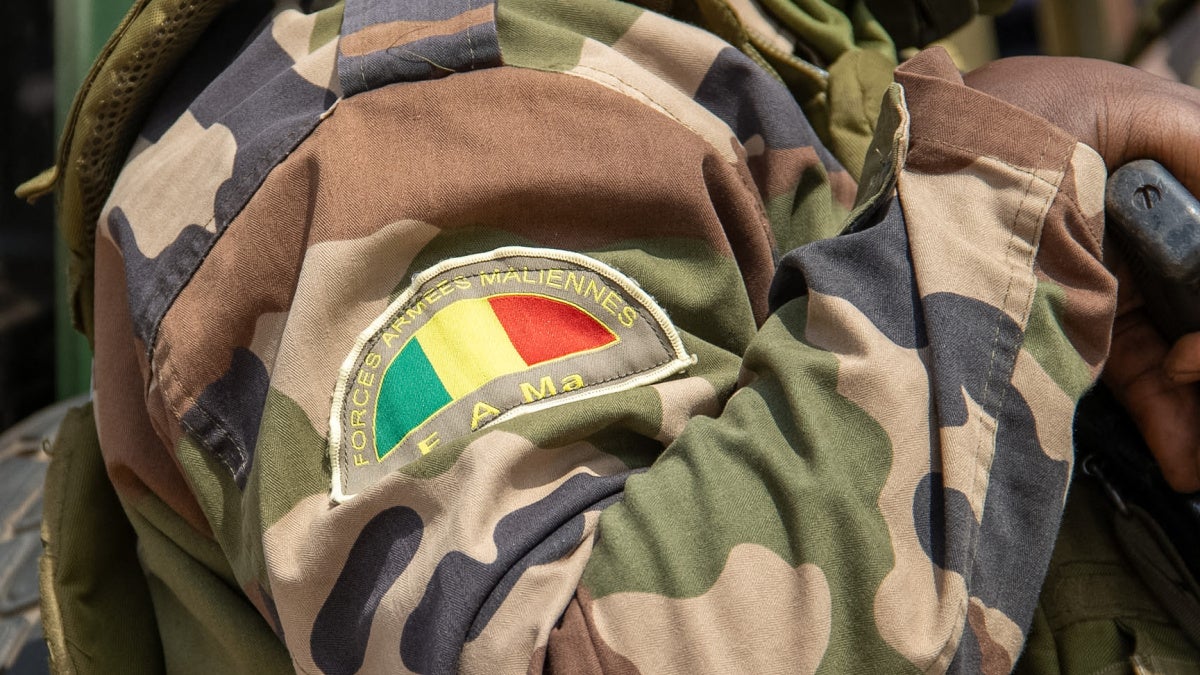
Bamako – In a region already scarred by years of conflict, a fresh wave of violence has left deep wounds in central Mali. According to local testimonies, soldiers from the Malian Armed Forces (FAMA) and allied dozos militiamen carried out deliberate killings and destruction in two villages during early October, resulting in at least 31 civilian deaths.
Village of Kamona: Executions and Arson
On October 2, military personnel and dozos entered Kamona in the Ségou region, targeting men they accused of collaborating with the Group for the Support of Islam and Muslims (GSIM, affiliated with Al-Qaeda). Survivors reported that soldiers, accompanied by dozos on motorcycles, forcibly gathered villagers before executing at least 21 men and setting fire to 10 homes. The attackers, identifiable by their camouflage uniforms and traditional amulets, arrived in seven pickup trucks and three armored vehicles, prompting many to flee before the assault. Those who remained were met with gunfire.
« Those who couldn’t escape were rounded up and shot, » a survivor recounted. Witnesses noted that GSIM fighters had already evacuated the village before the military arrived, confirming no direct clashes occurred between the two forces. Among the victims were 17 men found dead under a tree, their bodies riddled with bullets, alongside four others discovered north of the village. The burnt homes belonged to Fulani ethnic households.
A 40-year-old herder, hiding with his nine-year-old daughter, described the aftermath: « The bodies were strewn about, some with shattered skulls. Spent bullet casings littered the ground. » Locals compiled a list of 21 male victims aged 20 to 65, though they suspect additional deaths in surrounding areas. « We heard at least 15 more men were killed in the bush, but we feared returning to confirm, » a villager shared.
Balle Massacre: Brutality and Looting
A second incident unfolded in Balle on October 13, when military forces and dozos stormed the village. Soldiers in five pickup trucks and militiamen on 30 motorcycles forced some residents to flee while others were subjected to violent searches. « I initially stayed, but when I saw soldiers kicking and slapping men during house-to-house raids, I hid, » a 24-year-old man recalled. « Gunshots echoed from my hiding place. »
The attackers killed 10 civilians, including a 55-year-old woman, and stole over 100 cattle. A 33-year-old witness found the bodies of nine men and the woman in the village center. « Their limbs were broken, and they were shot at close range, » he said. The victim’s 21-year-old daughter described her mother’s final moments: « She confronted the soldiers, accusing them of abuse. They took her to where the men were held and executed her. »
Military officials later claimed the operation in Balle was an « offensive reconnaissance » that « neutralized around 20 terrorists » and seized weapons. However, residents disputed this, stating the village had been under GSIM control for years, paying religious taxes and relying on the group for dispute resolution. « The army doesn’t distinguish between us and them, » a local explained. « They assume everyone is a GSIM fighter. »
Accountability and International Law
Since 2012, Mali’s ongoing conflict has displaced over 400,000 people and claimed thousands of civilian lives. Both state forces and armed groups, including GSIM, have been implicated in grave abuses. International humanitarian law prohibits attacks on civilians, executions, and torture, with potential war crime charges for those responsible under command.
Despite Mali’s withdrawal from the International Criminal Court (ICC) in September, the country remains bound by the Rome Statute until 2026. The ICC has investigated alleged war crimes in Mali since 2012. Meanwhile, the African Union’s (AU) Peace and Security Council has faced criticism for its limited response to the crisis, issuing only statements of concern despite its mandate to uphold regional security.
« The AU must prioritize Mali’s conflict, » urged a regional analyst. « It should convene regular briefings, strengthen diplomatic efforts, and coordinate accountability measures for abuses by all parties. »