How regional security dynamics in the Gulf of Guinea are transforming Togo into a geopolitical battleground
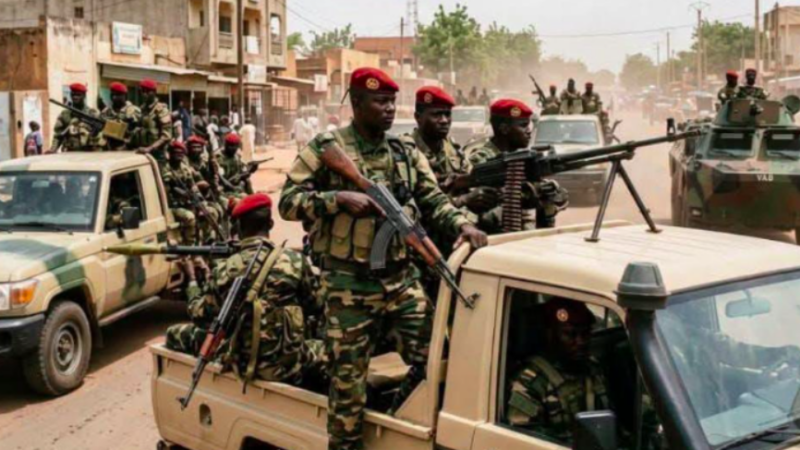
In the northern reaches of Togo, a quiet yet intense geopolitical rivalry is unfolding. Over 300 operatives from the Russian African Corps the successor structure to the Wagner Group are now active within the country. Concurrently, Turkey is expanding its own defense footprint through entities associated with the private military company SADAT.
This dual presence marks a profound pivot in the defense strategy of Togo, transforming the nation from a seeker of temporary security assistance into a theater of competition for global powers.
While Moscow and Ankara frame their involvement as support for counter-terrorism efforts, the underlying objective remains influence. Access to state leaders, defense contracts, intelligence sharing, and tactical training are highly prized assets in a region where foreign nations are scrambling to anchor their geopolitical presence. This raises a fundamental question: who benefits most from this arrangement, and what does it mean for the sovereignty of Togolese citizens?
A national army overshadowed by external actors
This influx of foreign operatives raises serious concerns about the role of the Forces armées togolaises. Togo possesses a well-structured national army with capable officers trained in prestigious international academies. Consequently, the increasing reliance on external security forces cannot be attributed to a lack of local capacity.
Instead, it reflects a deliberate political trajectory. Entrusting national security to foreign entities breeds a multi-dimensional dependency. Weapon suppliers become indispensable, foreign intelligence agencies gain direct access to state decision-making bodies, and external instructors reshape domestic defense doctrines. True independence is not just about troop numbers, but about the autonomous capacity to direct national defense policies.
This situation demands transparency. A sovereign nation has every right to diversify its partnerships, but such choices must undergo democratic scrutiny. The public remains in the dark regarding the specifics of these bilateral agreements, their duration, their financial cost, and the legal jurisdiction governing foreign personnel operating on Togolese soil.
The financial opacity of externalised defense
Relying on foreign military entities risks eroding the very institutions they are meant to support. While external actors can swiftly deploy personnel and logistics, they cannot construct a sustainable national defense framework. Without sustained domestic investment in military academies, border surveillance, and local intelligence, dependency becomes structural.
Furthermore, the financial burden of these arrangements is immense. The cost of maintaining private military forces, modern hardware, and foreign advisers represents a massive drain on public coffers. Because these transactions are shielded by national security classifications, they completely bypass parliamentary and civic oversight, leaving citizens unaware of how their tax revenues are allocated.
Counter-terrorism as a political shield
The security threat in northern Togo is undeniable, particularly with armed groups operating across the Sahelian borders. However, combatting insurgencies should not serve as an administrative blank check to justify opaque defense strategies.
The activity of the Groupe de soutien à l’islam et aux musulmans (JNIM) requires a measured, multidimensional response rather than a permanent foreign military footprint. Real security cannot be achieved solely through weapons; it requires border control, regional intelligence coordination, and, crucially, socio-economic development in marginalized border regions where poverty and unemployment make local populations vulnerable to extremist recruitment.
Social neglect amidst geopolitical maneuvering
While state authorities focus on complex geopolitical negotiations, the daily struggles of ordinary citizens remain unaddressed. Issues such as inflation, unemployment, inadequate healthcare, substandard education, and lack of clean water dominate the lives of most Togolese.
Neglecting the social fabric to prioritize military spending is a dangerous calculation. History shows that territorial marginalization and the absence of basic state services create the very instability that security policies aim to prevent. Investing in public infrastructure in vulnerable regions is not just social welfare; it is a core component of national defense.
Protecting the state or securing the regime
This militarization occurs alongside a tightening of the domestic political landscape. Restrictions on public assembly, institutional reforms, and a controversial constitutional overhaul have fueled concerns about an increasingly centralized power structure.
In this environment, a heavily militarized state apparatus risks turning inward. When political dissent is systematically treated as a threat to national stability, the distinction between opposing a regime and endangering the state begins to blur.
The primary duty of a national army is to defend the territory and its citizens, not to preserve a ruling system. If foreign security actors are integrated primarily to protect the political status quo, the building of a resilient, democratically accountable national defense system is severely compromised. Ultimately, national sovereignty is validated not by the number of foreign flags flying in the country, but by the capacity of state institutions to serve and protect their own people.