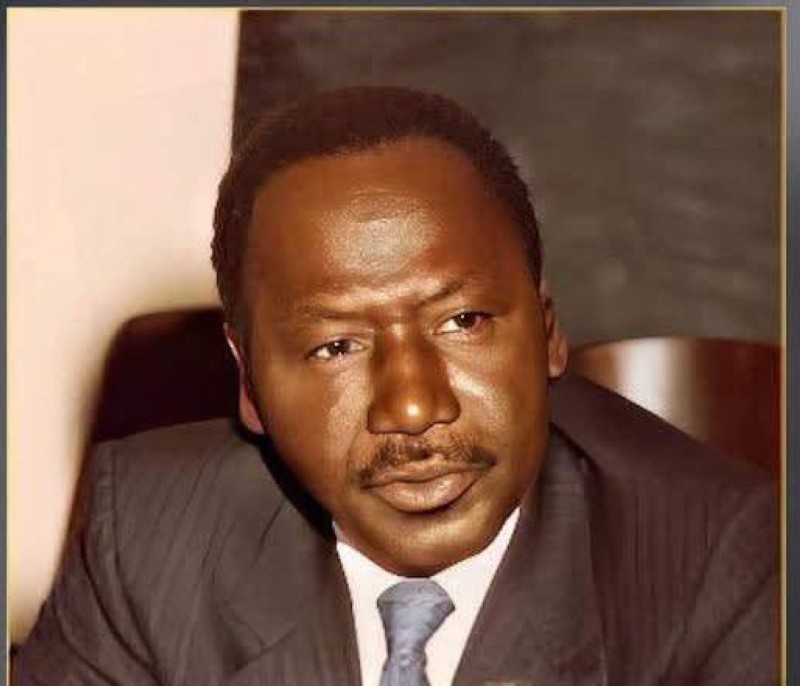
The passing of Abdoulaye Koné, former Minister of Economy and Finance, at 91 on Saturday, September 19, 2026, offers a rare window into the behind-the-scenes forces that built Côte d’Ivoire’s financial architecture and the West African economic union.
There are deaths that merely close a chapter. Abdoulaye Koné’s opens a much longer reckoning with memory itself. He belonged to that small, largely unseen cohort of senior officials who steered the first decades of independent Côte d’Ivoire from within the quiet machinery of administration and at the heart of major economic decisions.
From budget technician to guardian of national balances
Born in Tingréla, in northern Côte d’Ivoire, Koné devoted the better part of his life to public service. His path took him through several senior administrative roles before he entered government under President Félix Houphouët-Boigny.
Long before holding the Economy and Finance portfolio, he served as Director of the Budget and later as Secretary of State for the Budget. These were positions at the very core of the state’s financial machinery, where budget balances and the broad direction of public spending are decided.
His time in government placed him at a moment when Côte d’Ivoire was working to consolidate the foundations of its economic development and deepen its integration into regional dynamics.
Ouattara’s tribute: experience, conviction and regional vision
In his homage to the deceased, President Alassane Ouattara emphasized precisely this dimension, describing him as a “great servant of the state” and a man of “experience and conviction” whose commitment contributed to the country’s economic and social development.
But the head of state also highlighted another facet of Koné’s career: his involvement in building the West African economic space. Under Houphouët-Boigny’s guidance, Koné worked to consolidate the West African Economic and Monetary Union (UEMOA), according to the presidential tribute.
This regional dimension gives his trajectory particular weight, recalling the role played by certain Ivorian senior officials in establishing and strengthening frameworks for economic and monetary cooperation among West African states.
A mentor’s imprint on a future president
His experience was not limited to governmental responsibilities. It also intersected with the professional path of Alassane Ouattara, then serving at the Central Bank of West African States (BCEAO).
The president testified to the special place his elder occupied in his own journey. Koné, he wrote, was for him “a true source of inspiration and unwavering support.”
Beyond the official phrasing, this evokes the portrait of a man whose experience mattered to several generations of economic and administrative leaders.
A legacy now entrusted to posterity
With his passing, part of Côte d’Ivoire’s administrative and economic memory drifts further away. For decades, Koné witnessed the transformations of the Ivorian state, its periods of economic consolidation and the shifts in its regional environment.
From the Budget Directorate to government, then to responsibilities linked to regional economic cooperation, his career mirrors a portion of the history of the country’s financial and economic institutions.
Upon news of his death, President Ouattara extended condolences to his wife, children, family and all his loved ones.
Time will come to assess this long career in full. For now, what remains is the memory of an economist, a senior civil servant and a minister who devoted several decades to the state.
At 91, Abdoulaye Koné has departed. He leaves behind an administrative legacy, experience accumulated across responsibilities, and a memory that Côte d’Ivoire must now pass on to generations who never knew this man of the shadows, long present in the machinery of the Republic.