Educational crisis in Togo: the contrast between symbolic pan-Africanism and decaying schools
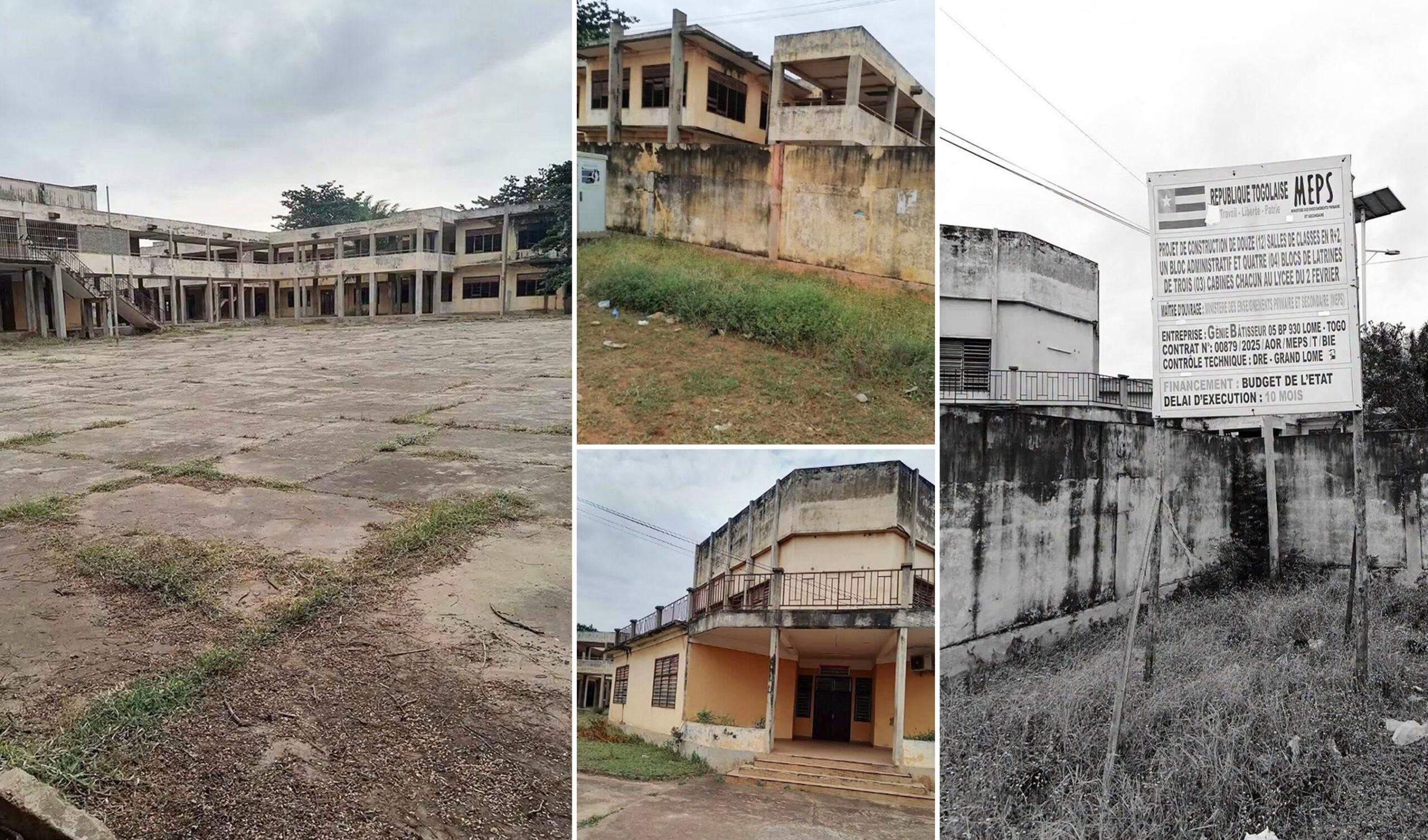
An exquisite adjustment to a geographical map cannot substitute for stable, physical infrastructure. By highlighting the adoption of a cartographical projection that accurately represents the true scale of the African continent, the Togolese authorities have executed a highly successful public relations campaign. While this symbol carries significant weight and the pan-African rhetoric remains appealing, the underlying reality presents a stark contrast: the largest public high school in Togo is currently deteriorating amidst widespread indifference.
The contrast between symbolic diplomacy and educational decay
A nation’s progress is not merely defined by its representation on a map. Rather, it is reflected in the state of its academic institutions, the quality of its classrooms, the safety of its students, and the working conditions of its teaching staff. This dichotomy exposes a significant challenge for the administration: while adjusting continental proportions on a world map can be achieved rapidly, restoring educational infrastructure demands concrete decisions, financial allocation, and genuine political determination.
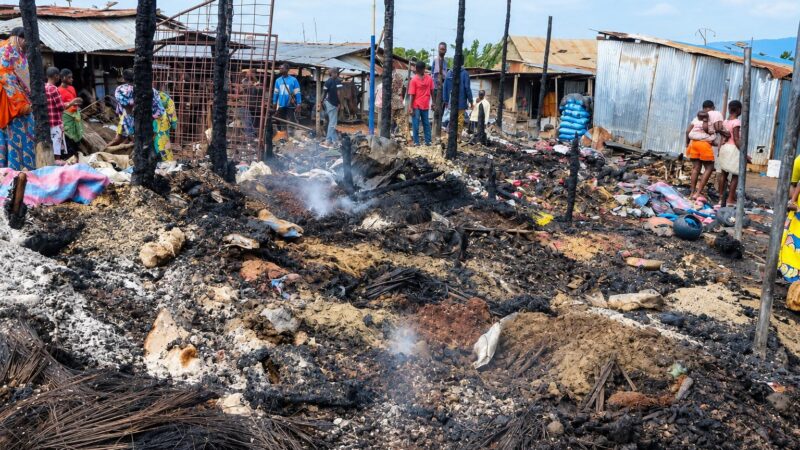
On the ground, official pan-African discourse clashes with the daily experiences of a neglected youth. Every morning, thousands of students crowd into dilapidated classrooms lacking basic learning materials, sheltered by roofs that threaten to collapse during heavy rains. In these institutions, the crisis is far from theoretical; it directly compromises the physical safety of children, the quality of their instruction, and their long-term prospects.
The true foundation of pan-African progress
Genuine pan-Africanism must begin within the classroom. The youth of the continent will not regain their dignity simply because Africa appears larger on a map. True empowerment occurs when children have access to secure learning environments, textbooks, laboratories, libraries, modern digital equipment, and properly supported educators.
This divergence raises fundamental questions regarding state priorities. It is difficult to justify claims of restoring national pride on the international stage when local children are deprived of basic learning conditions. An ambitious diplomatic narrative loses its substance when the very institutions tasked with preparing future generations to lead are left to crumble.
A question of national priorities and budget allocation
There is a political reality that symbolic cartography cannot obscure. A decaying school is not merely a neglected structure; it represents a series of budgetary trade-offs, administrative choices, and public policy decisions. When a major facility hosting thousands of learners deteriorates to a hazardous degree, the core issue is not simply identifying who should fund the repairs, but understanding why maintenance and renovation were not planned in advance.
Education must be treated as a primary investment for any state aiming to secure its future. Allowing children to study in inadequate facilities leads to lost learning hours, diminished academic motivation, and widening social disparities. Students from economically disadvantaged backgrounds suffer the most, as they lack alternative options when public services fail.
Beyond symbols: the need for concrete public policy
This crisis extends beyond cracked walls, aging roofs, and poorly equipped classrooms; it affects the social contract between the state and its youth. A government cannot credibly urge its young citizens to believe in the future while forcing them to study in conditions that belong to the past.
Effective public policy must be evaluated by its tangible impact on daily life. Ceremonies, maps, speeches, and grand declarations may enrich the political narrative, but parents, voters, and students ultimately judge progress by what is directly in front of them: functional classrooms, solid roofs, blackboards, chairs, textbooks, and secure environments.
This is not an argument against recognizing Africa’s geographical scale, but a reminder that symbols should never replace substantive public action. A sovereign state can simultaneously champion a bold pan-African vision and invest heavily in its educational system. One must not be used to mask the deficiencies of the other.
Correcting a map requires only a stroke of a pen. In contrast, providing thousands of children with decent schools demands substantial funding, rigorous planning, oversight, and sustained political will. This distinction highlights the true gravity of the situation in Togo.
Ultimately, national greatness is not measured by cartography, but by the schools constructed, the safety guaranteed to children, and the resources provided to help the younger generation succeed. By prioritizing symbolic gestures over educational infrastructure, the administration risks compromising the future of the nation. A map can alter perceptions, but it cannot build a classroom or secure a roof.