Dioura : how the JNIM’s counter-narrative exposes the fault lines in Mali’s military communication
When Mali’s Chief of Defence Staff tried to play down the situation with a terse claim that “there is nothing happening in Dioura”, the Group for the Support of Islam and Muslims (JNIM) responded with a statement whose toll was devastating. By claiming the attack with exhaustive detail and visual evidence, the jihadist organisation laid bare the communication strategy of the military government in Bamako. Between the scale of human losses and the material haemorrhage suffered by the army, the official narrative is tottering in the face of a ground reality that is increasingly slipping out of control.
A blunt rebuttal to official rhetoric
The Malian junta’s strategy of minimisation has just hit a steel wall. By publicly declaring that no major event had occurred in Dioura, the military command presumably hoped to smother the impact of a fresh strategic setback. That was without reckoning with the media reflexes of JNIM, Al-Qaeda’s Sahel branch, which rushed to publish a rebuttal as firm as it was detailed.
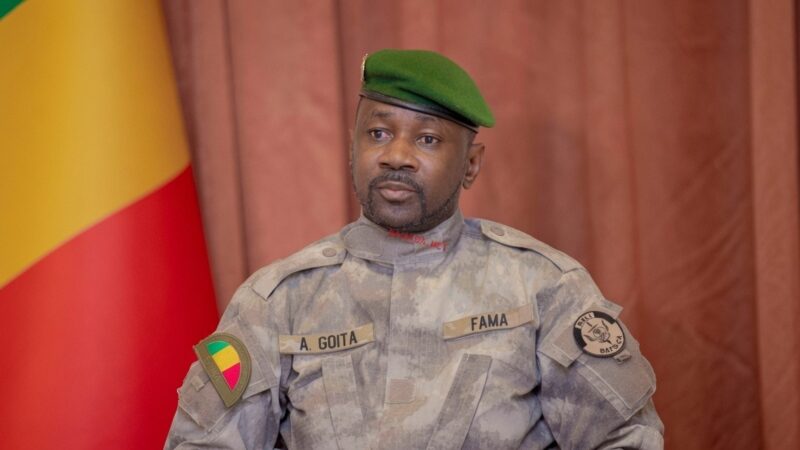
For Assimi Goïta’s government, built on a rhetoric of sovereign reconquest and a build-up of the armed forces, the contrast is striking. In denying the obvious before it surfaced on social media, Bamako exposes itself to a destructive loss of credibility — not only among international observers but, above all, among a Malian population increasingly unsure about the country’s real security situation.
Behind the announcement: a systemic communication failure
Dioura lays bare a structural flaw in the junta’s crisis management. By choosing denial or radio silence in the face of tactical reverses, the military command leaves the field open to enemy propaganda. When jihadist militias release verifiable images of seized equipment and captured soldiers, official communication collapses, reinforcing the isolation felt by troops deployed at the front.
This battle over the narrative matters all the more because JNIM has shown its ability to conduct complex operations, combining a massive assault with the systematic recovery of heavy weaponry. Every defeat that the authorities fail to acknowledge erodes confidence within army ranks and weakens national cohesion.
An unprecedented human and material toll
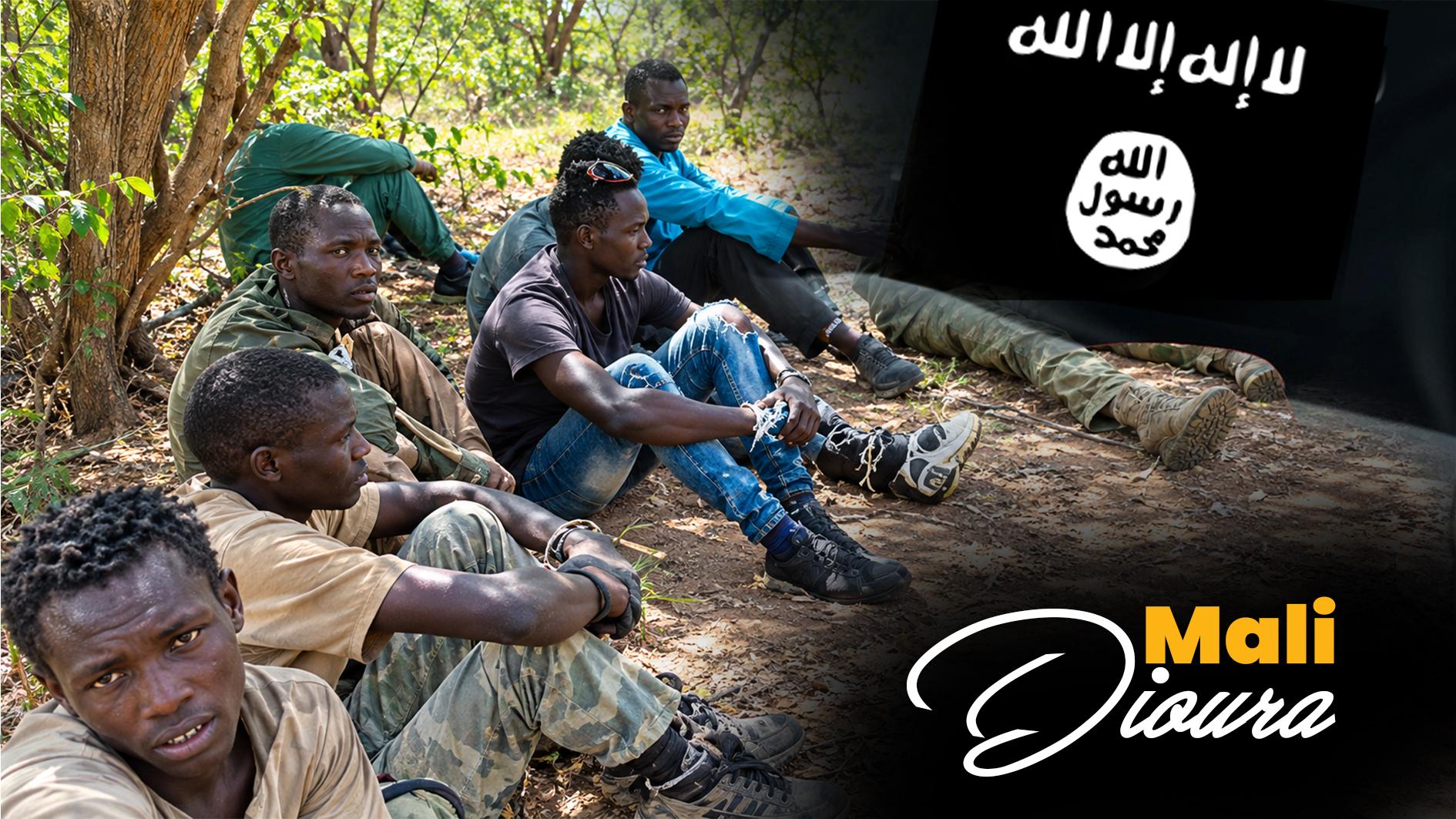
The figures put forward by JNIM point to a veritable military carnage. The group claims to have killed 150 Malian soldiers in the clashes, among them senior officers, including a colonel and a captain. Added to this already heavy human toll are 93 soldiers taken prisoner — a considerable political and strategic lever for the armed organisation.
On the logistical front, the rout described by the terrorist group is equally spectacular:
- Army material losses: confirmed destruction of 15 military vehicles and more than 100 motorbikes used by patrols.
- Captured vehicles: seizure of 6 tactical vehicles and 10 motorbikes in working order.
- Heavy arsenal recovered: 6 14.5 mm-calibre weapons, 17 DShK-type heavy machine guns, 32 PK machine guns, 10 RPG rocket launchers, 3 mortars and one SPG recoilless cannon.
- Small arms and ammunition: 233 Kalashnikov assault rifles and a massive stock of ammunition of various calibres.
To back up these claims and head off any attempt at contestation, JNIM accompanied its statement with photographic and video evidence detailing the loot and the captives.
The information war: Bamako’s strategic weak point
Analysing the Dioura episode reveals a deeper pattern: the junta’s instinct to deny or stay silent only amplifies the adversary’s voice. Each unacknowledged setback becomes a propaganda victory for JNIM, which can present itself as transparent while the authorities appear evasive. The result is a widening gap between the official line and the lived experience of soldiers and civilians alike.
What makes this dynamic particularly corrosive is that it compounds over time. A single denial might seem manageable, but repeated over months, it corrodes the credibility of the entire security apparatus. For a regime that stakes its legitimacy on restoring order, that erosion is a strategic liability.
What the numbers reveal about JNIM’s operational reach
The scale of the haul described by JNIM — dozens of heavy weapons, hundreds of assault rifles, prisoners and vehicles — is not merely a scoreboard of loss. It is evidence of an adversary capable of planning, executing and documenting a complex operation. The seizure of such quantities of equipment also implies a logistical pipeline that can absorb and redeploy captured materiel, extending the impact of a single battle well beyond the day of the assault.
For Bamako, the implication is uncomfortable: the enemy is not only present, it is organised, mobile and able to turn each engagement into a narrative asset.
The test on the ground versus the sovereignty discourse
The reality on the ground reaffirms the complexity of the security crisis in central and northern Mali. Despite the display of a strategic break and the use of new partners, the disruptive capacity of armed groups remains intact. The Dioura attack proves that JNIM retains tactical mobility and striking power capable of disorganising fortified army positions.
Faced with the precision of the elements provided by the attackers, silence or minimisation on the part of the authorities cannot serve as a military strategy. For the Malian junta, the challenge is no longer only recapturing territory, but confronting the facts in order to readjust a security response that is now being severely tested.