Deadly Mali air strikes by Russia-controlled africa corps claim civilian lives in Mopti region
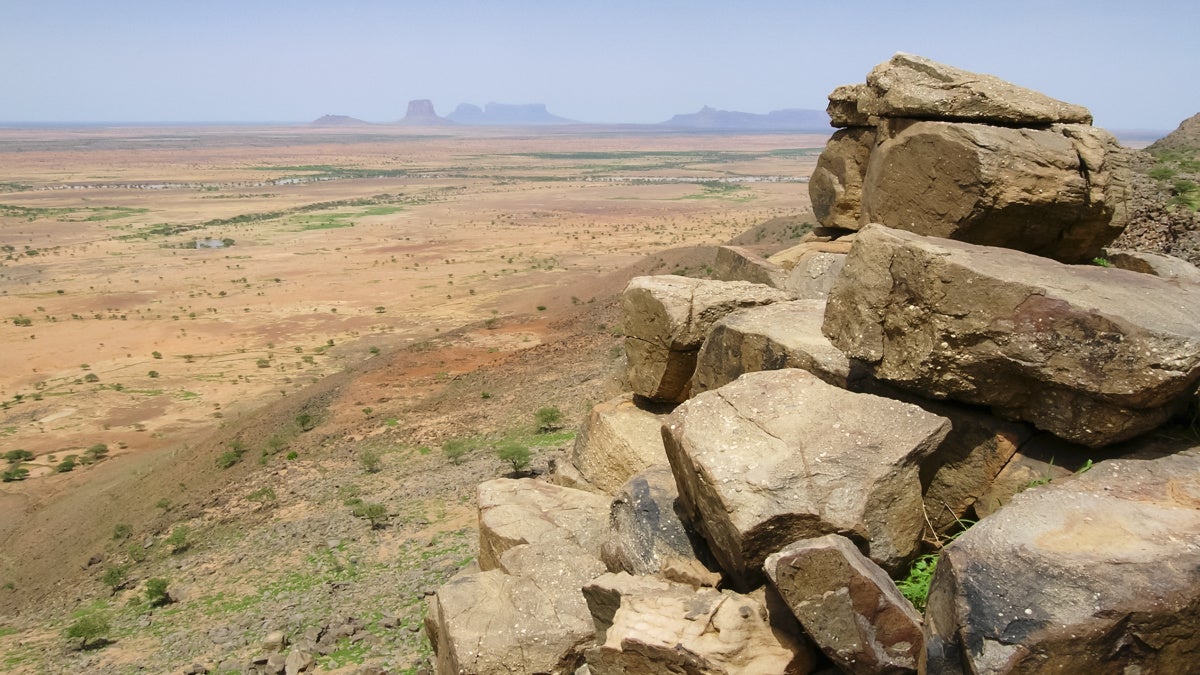
On June 15, 2026, air strikes conducted by the Russia-controlled Africa Corps in central Mali resulted in the deaths of eight civilians, including three children. These attacks, which occurred in the Mopti region, appear to be a clear violation of international humanitarian law.
That morning, a Sukhoi Su-24 aircraft, identified by two Malian military sources, launched at least two munitions on the village of Kyrnia. The initial strike landed near the village chief’s home, tragically killing two of his children, his wife, and another child, while injuring one woman. The second munition detonated approximately twenty meters away, at a small cattle market, claiming the lives of four men and wounding two others. Notably, none of the casualties were identified as combatants from Islamist armed groups.
“The actions of the Russia-controlled Africa Corps, causing civilian fatalities in a Malian village, demonstrate a blatant disregard for the laws of war,” stated Ilaria Allegrozzi, a senior Sahel researcher. “By granting unchecked authority to Russian forces, the Malian government must acknowledge its own complicity in the atrocities perpetrated by its allied forces.”
Our investigation involved extensive telephone interviews conducted between June 24 and July 14, gathering insights from 19 individuals. This included six direct witnesses, civil society representatives, community leaders, Malian military sources, and local journalists. We also meticulously analyzed satellite imagery of the strike locations, reviewed a video of the strikes released by Africa Corps, and examined photographs shared on social media by an Islamist armed group. A letter detailing our findings and questions was sent to the Russian Minister of Defense on July 23, but no response has been received.
On June 23, Africa Corps publicly announced on its Facebook and X accounts that it had successfully carried out an air strike on June 15 against a “terrorist gathering point” in the Mopti region, claiming to have eliminated several field commanders. They subsequently published a video of the strikes and their aftermath. Our analysis successfully geolocated the two strikes visible in the video to Kyrnia.
Kyrnia has been under the control of the Al-Qaeda-linked Group for the Support of Islam and Muslims (GSIM or Jama’at Nusrat al-Islam wal-Muslimin, JNIM) for the past six years. Witnesses confirmed that at least 100 GSIM fighters, including a high-ranking commander, were present in the village during the strikes. However, these fighters were primarily gathered near the village mosque and outside a shop adjacent to a small cattle market. While neither the mosque nor the shop was directly hit, one munition struck the nearby cattle market. The village chief, a wealthy merchant, owned the shop, which GSIM sometimes used to store weapons, ammunition, fuel, and other supplies. A pick-up truck, similar to those typically used by GSIM, was parked in front of the chief’s house.
Since 2012, successive Malian governments have been engaged in conflict with Islamist armed groups. Following military coups in 2020 and 2021, junta leader General Assimi Goïta expelled French and UN forces, strengthening ties with Russia. Since 2021, the junta has relied on the Russia-linked Wagner group for security assistance. This mercenary group was rebranded as Africa Corps after the death of Wagner founder Evgueni Prigozhin in 2023, subsequently falling under direct control from Moscow, impacting the political Sahel landscape.
In June, the Russian Ministry of Foreign Affairs acknowledged that Russian military personnel were collaborating with Malian armed forces to secure full control of Malian territory, especially after GSIM attacks across the country on April 25. The Russian Ministry of Defense also confirmed that its forces were utilizing Su-24 aircraft to target GSIM combatants, a critical aspect of security Sahel operations.
Media reports and satellite imagery indicate that Africa Corps has deployed Su-24 aircraft in Mali since at least April 2025 to support the Malian army. There are no public records documenting the transfer of Su-24s to Malian authorities. These aircraft are capable of carrying a wide range of aerial munitions, including guided weapons, which align with the type of damage observed in Kyrnia.
Witnesses recounted seeing a fighter jet flying low over Kyrnia, emitting a deafening roar. “It was a fighter jet, incredibly fast… flying low… from west to east,” described a 35-year-old merchant. “I saw it drop a bomb… like a fireball… and I ran to take cover under a tree.”
A 37-year-old cattle herder recalled being at the cattle market when he heard a loud rumble, followed by an explosion. He then saw thick black smoke rising from homes near the chief’s house before a second explosion occurred. “The market was in disarray,” he explained, “stalls flung several meters away, cattle and sheep torn apart.” He assisted other residents in clearing debris from the collapsed chief’s house, while GSIM fighters coordinated rescue efforts. “The chief’s second wife was dead, and she had lost… her arms,” he recounted. “Then [we found] the [bodies of the] two children… and another boy who had been thrown onto the roof by the blast.”
Our analysis of the Africa Corps video and satellite imagery from June 25 reveals two craters in the southern part of Kyrnia, each approximately 12 meters wide, indicating the deployment of two large aerial munitions. Around nine market stalls, visible in satellite images from February 7, appear to have been destroyed by the second strike. The strike near the chief’s residence landed between structures, causing at least one building to collapse.
A 48-year-old camel herder recounted being “thrown [to the ground] by the blast of the first explosion” before realizing he was “covered in sand and debris.… [P]eople in front of me were injured, some had broken arms.”
A 40-year-old man identified “the bodies of three merchants,” who were hit “while they were traveling on a tricycle loaded with bags of dates” through the cattle market.
The second strike injured three men, one of whom succumbed to his injuries the following day. A witness explained that the man had been hit by bomb fragments and that “[h]is arms had been shredded.”
We examined a list containing the names of the eight victims, which included three children aged 1 to 10, a 24-year-old woman, and four men aged 30 to 40.
Witnesses reported seeing a drone, likely operated by Malian armed forces or Africa Corps, flying over Kyrnia on June 14, suggesting the village was under surveillance. “I saw a drone in the sky the day before, between 4 and 5 p.m.,” described the camel herder. “It circled the village several times before leaving.”
Witnesses stated that approximately one hundred GSIM fighters were in the village during the strikes, mostly gathered at the mosque, about 150 meters from the impact sites. A 40-year-old man noted that some GSIM fighters at the mosque were on motorcycles. “They had automatic weapons and wore military uniforms or boubous, with their faces covered by turbans,” he explained. The merchant also stated that numerous GSIM fighters, including a senior commander, were inside or outside the village chief’s shop, located next to the cattle market struck by the second munition.
The strikes occurred on a market day, when Kyrnia was bustling with merchants, buyers, and villagers. Residents indicated that since GSIM took control of the area, Kyrnia has become a significant commercial hub with a thriving cattle market.
Locals asserted that GSIM purchased supplies, including fuel and food, at Kyrnia’s market. They speculated that the air strikes might have targeted the village chief’s residence because his pick-up truck, similar to those used by GSIM, was parked outside. They also explained that three of the chief’s sons were GSIM fighters, though they were not in Kyrnia at the time of the attack. However, engaging in commerce with an armed group does not render a civilian a legitimate target under the laws of war.
The laws of war, which govern the armed conflict in Mali, prohibit attacks targeting civilians and civilian objects, attacks that fail to distinguish between civilians and combatants, or attacks expected to cause disproportionate harm to civilians or civilian objects compared to any anticipated military advantage. Parties to a conflict are obligated to take all feasible precautions to minimize civilian casualties. They should avoid deploying forces in densely populated areas. The strikes in Kyrnia did not appear to target specific military objectives and thus constitute unlawful indiscriminate attacks. We found no information indicating that the chief’s house was used to store weapons or ammunition.
The Malian government bears the responsibility to investigate this incident thoroughly and hold those accountable for violations of the laws of war, including members of Africa Corps. This is crucial for humanitarian Sahel efforts and upholding justice in West Africa.
“The Malian government cannot evade responsibility for the laws of war violations committed by its Russian allies,” concluded Ilaria Allegrozzi. “The junta must impartially investigate all potential war crimes perpetrated on its territory, including the Kyrnia air strikes, or risk being considered complicit in these abuses.”