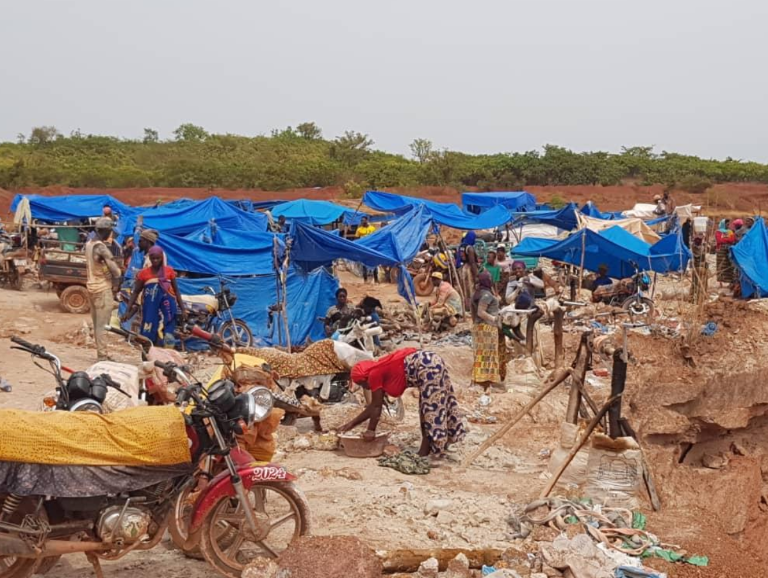
Burkina Faso stands at a critical moment as its government confronts the urgent challenge of reintegrating hundreds of Burkinabè gold miners expelled from Guinea. With no structured economic recovery plan in sight, the displaced workforce many of whom had built their livelihoods on artisanal mining now faces an existential dilemma: how to reclaim financial stability in a country struggling to translate resource control into tangible prosperity for its people.
The gap between political rhetoric and economic reality
The return of these miners is more than a humanitarian issue it is a litmus test for Burkina Faso’s commitment to economic sovereignty. While authorities championed the recovery of national mining resources, the sudden expulsion of an estimated 5,000 Burkinabè miners from Guinea has exposed a stark contradiction: the state’s inability to provide viable alternatives for those who once powered the informal gold economy.
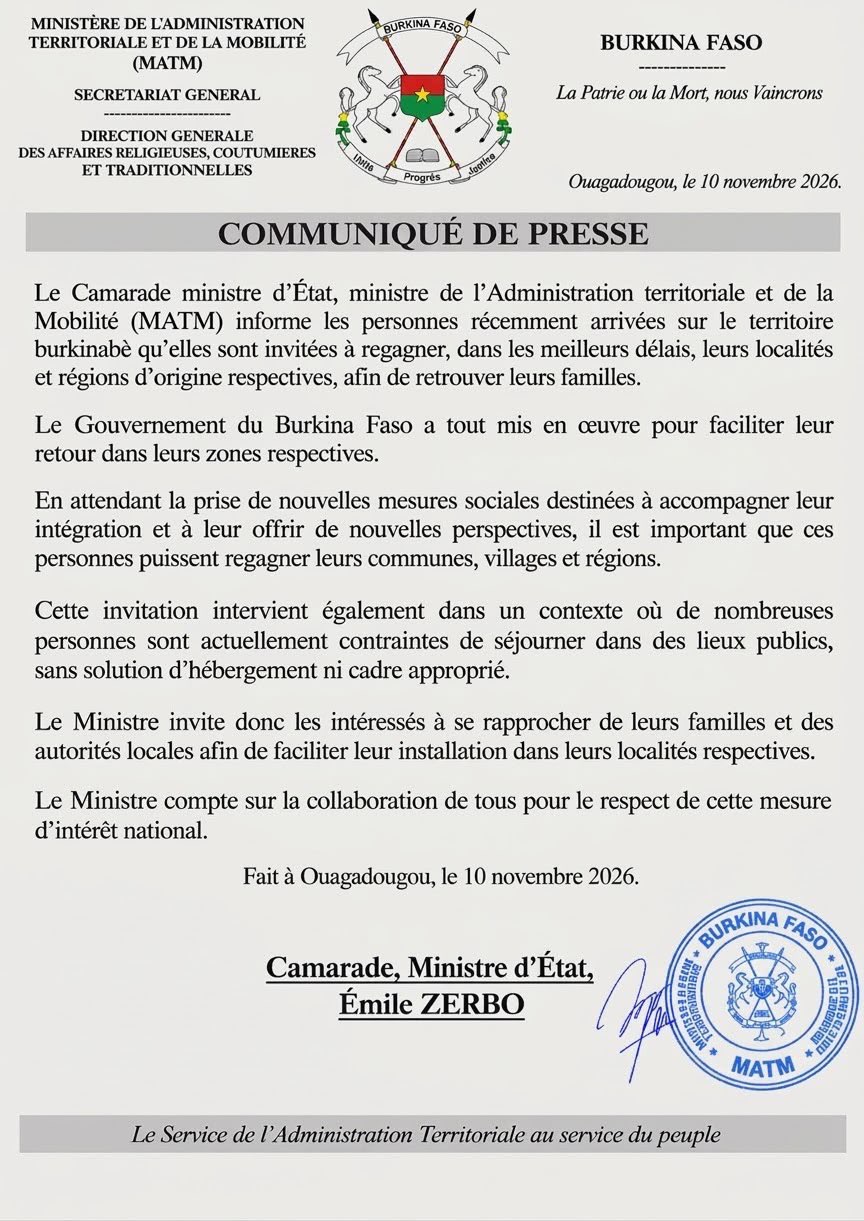
Official statements urging displaced miners to “return to their villages” suggest administrative expediency rather than a sustainable reintegration strategy. Yet for many, this directive rings hollow. These are not idle returnees; they are workers who left Burkina Faso in search of survival, only to be uprooted again without recourse. The void left by their expulsion demands more than empty promises it requires concrete mechanisms for job creation, capital access, and long-term stability.
From gold fields to agricultural fields: the flawed blueprint for survival
Government proposals to redirect miners toward agriculture, livestock, or vocational training are well-intentioned but fundamentally inadequate. Transitioning from artisanal gold mining to farming, for instance, assumes access to arable land, seeds, tools, and market connections resources many displaced miners lack. Similarly, microcredit schemes touted as solutions often arrive without sufficient collateral, leaving borrowers trapped in cycles of debt rather than economic revival.
Key questions remain unanswered: How many returnees will actually receive vocational training? What proportion will secure start-up funding? Which state-backed agencies will monitor their progress over six months, one year, or beyond? Without these metrics, the government’s reintegration narrative risks remaining aspirational rather than actionable.
The myth of cooperative ventures
While authorities emphasize organizing miners into cooperatives, the infrastructure to support these groups is glaringly absent. A cooperative without equipment, supply chains, or guaranteed buyers is not a solution it is a bureaucratic placeholder. The failure to regulate artisanal mining sites or establish transparent gold-buying circuits further compounds the problem, pushing workers back toward informal, high-risk activities.
Capital access: the missing pillar of recovery
Financial independence is the cornerstone of rebuilding lives shattered by displacement. Yet returnees arrive with little more than the clothes on their backs. Some may have liquidated savings to finance their return; others arrive indebted or with families to support. In this context, how can they restart without seed capital, microloans, or public guarantees?
A viable reintegration program must differentiate between returnees with agricultural experience and those with no prior skills outside mining. It should provide targeted funding, entrepreneurial mentorship, and safety nets to prevent families from slipping into deeper poverty. Without such differentiated support, the government’s directives risk becoming mere exhortations: “Abandon mining and fend for yourselves.”
The human cost of policy failure
Behind every expelled miner lies a ripple effect: children whose education hinges on family income, parents relying on remittances, and communities that once thrived on artisanal mining. The loss of a breadwinner’s livelihood does not end with deportation it deepens inequality and erodes social cohesion. The state’s response must address these consequences, not merely the administrative task of repatriation.
A turning point for Burkina Faso’s leadership
The expulsion crisis is no longer a diplomatic issue confined to cross-border tensions. It has become a defining moment for Ibrahim Traoré’s administration. The true measure of sovereignty lies not in controlling resources, but in empowering citizens to benefit from them. Thus far, Burkina Faso’s government has prioritized rhetoric over results.
For returnees, the future remains uncertain. Will they find dignified work? Will their families escape precarity? Will the state fulfill its promise of economic independence? Answers to these questions will determine whether Burkina Faso’s mining aspirations are a beacon of progress or just another failed policy.
The onus is now on the government to move beyond slogans and deliver on the most basic expectation of leadership: ensuring that citizens can thrive within their own borders.
By Thérèse Nguimfack — Journalist