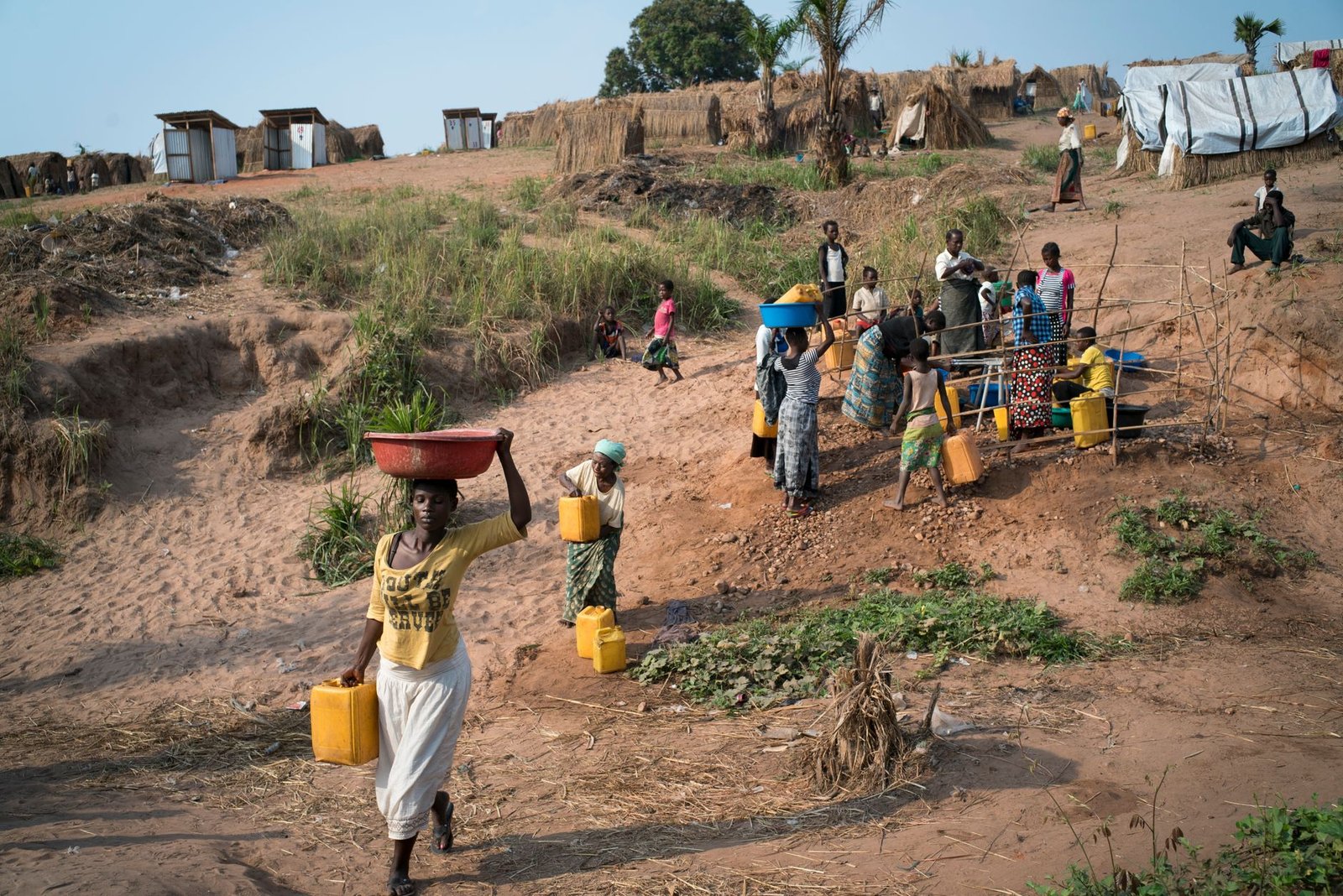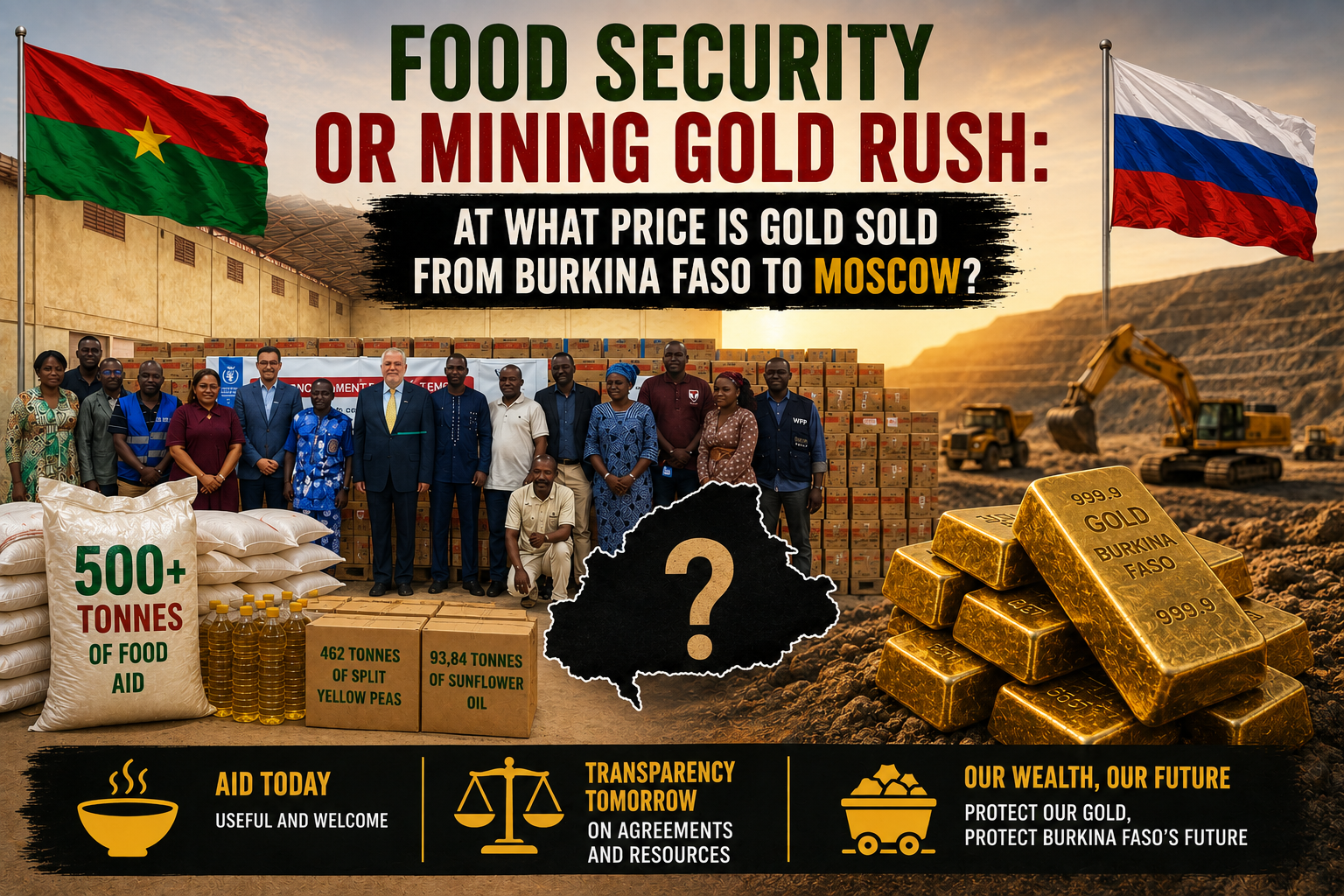
The announcement was made through official channels in Burkina Faso’s capital, Ouagadougou, as the Russian diplomatic mission disclosed the delivery of over 500 metric tons of food aid to the country, valued at approximately $942,500. The shipment included 462 tons of yellow split peas and 93.84 tons of sunflower oil, framed as an act of fraternal solidarity amid heightened humanitarian and security challenges.
Beyond humanitarian gestures: the hidden costs of partnership
While such aid provides immediate relief to populations grappling with food insecurity, it raises critical questions about the broader economic and strategic terms of Burkina Faso’s engagement with Moscow. In geopolitical dealings, states prioritize their own interests, and humanitarian gestures often serve multiple, intertwined purposes. For the people of Burkina Faso, transparency regarding agreements signed in their name is not just desirable it is essential.
The unequal equation: food today, gold tomorrow
Burkina Faso’s economy is deeply tied to its mineral wealth, particularly gold. The arrival of food aid, however substantial, cannot obscure the long-term value of the country’s extractive resources. The true concern is not whether to accept assistance but to understand what Burkina Faso gains or surrenders in return. A few hundred tons of food, consumed within weeks, cannot equate to the decades-long exploitation of gold reserves, the revenues of which must fund national development.
Key issues demand scrutiny: Does Burkina Faso process its gold domestically to capture greater value? Are mining contracts structured to ensure fair revenue sharing? Are the terms publicly accessible? Do oversight mechanisms prevent exploitation? Do mineral earnings translate into tangible benefits for infrastructure, education, health, and security?
The strategic stakes of gold
Gold is not merely a commodity; it is a strategic asset, a store of national wealth, and a potential engine for sustainable development. Any shift in its extraction, trade, or export pathways must be subjected to rigorous evaluation. Citizens have every right to demand clarity on who purchases Burkinabè gold, at what price, under what contractual terms, and with what degree of state oversight.
The fundamental difference between food aid and mineral wealth is permanence: food is consumed, while gold, once extracted, is gone forever. This disparity must inform any economic partnership strategy. A balanced approach would prioritize long-term national interests over short-term concessions.
From colonial critique to new dependencies
Rejecting former colonial ties does not automatically guarantee sovereignty. A transition from one external influence to another whether Russian, Chinese, Turkish, or another only fosters true independence if Ouagadougou retains control over its resources and decision-making processes.
Sovereignty cannot be measured by the number of foreign flags in ceremonies or the volume of new partnerships secured. It is demonstrated through the capacity to negotiate from a position of strength, protect national assets, and remain accountable to the population.
The modern face of dependence
Dependency today rarely manifests as overt foreign administration. Instead, it can emerge through opaque mining contracts, foreign military equipment, preferential resource access, or exclusive trade agreements. Burkina Faso must guard against replacing one form of dependence with another.
A sustainable partnership model would diversify alliances without surrendering control over strategic sectors. It would strengthen domestic capabilities rather than ceding long-term mastery to foreign entities.
Separating humanitarian aid from political narratives
Food aid is a lifeline for those in need, regardless of its origin. Dismissing its immediate value would be unjust. Yet, it should never serve as a smokescreen for opaque economic agreements.
Food meets an urgent need; mining policy shapes generations. Confusing the two would be a strategic miscalculation. Burkinabè citizens can and should acknowledge aid while demanding transparency on mineral contracts, concessions, export terms, and revenue allocation. There is no contradiction between gratitude for assistance and insistence on accountability.
The path to economic sovereignty
For Burkina Faso’s transitional leadership to prove genuine mastery over its destiny, new partnerships must withstand public scrutiny. What mining agreements have been signed with foreign firms? What tax terms apply? What percentage of earnings returns to the state? How many local jobs are created? What industrial processing occurs within the country? What controls govern exports? Where are mineral revenues invested?
These questions, rather than political rhetoric, will reveal the reality of economic sovereignty. The Burkinabè people do not seek isolation from foreign partners; they demand that such partnerships never compromise long-term national interests.
Seeing beyond the aid packages
The Burkinabè people must not be lulled into complacency by shipments of oil or split peas, nor by symbolic displays of international solidarity. While aid is welcome, it must never serve as a political quid pro quo for the concealment of resource exploitation.
True independence is not achieved by swapping one dominant partner for another. It is secured when a state can engage with all parties from a position of strength, without belonging to any. Burkina Faso possesses resources capable of funding development for decades. The question is whether these riches will build schools, hospitals, and roads or simply vanish into the coffers of new geopolitical alignments.
The Sahel does not need new masters. It needs fair partners. The distinction lies in Burkina Faso’s ability to defend its interests, secure equitable agreements, and remain accountable to its citizens.
Before celebrating each foreign shipment as a diplomatic triumph, one question must be asked: What is the true cost of this newfound proximity to Moscow, and who will pay the price when the food is gone and the gold has departed?