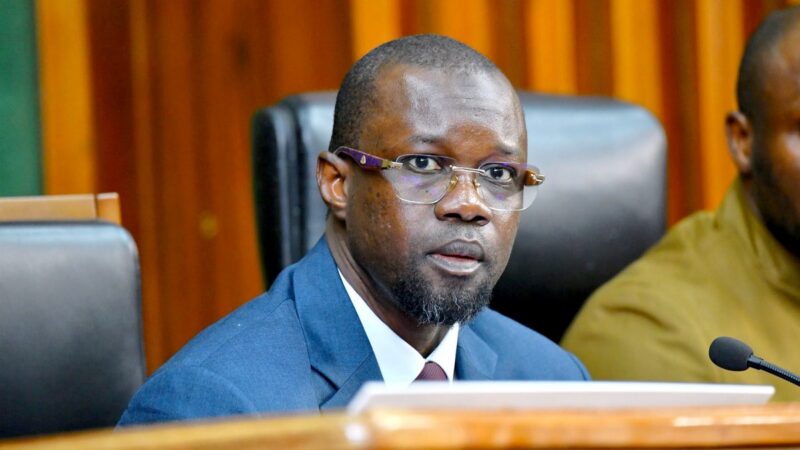
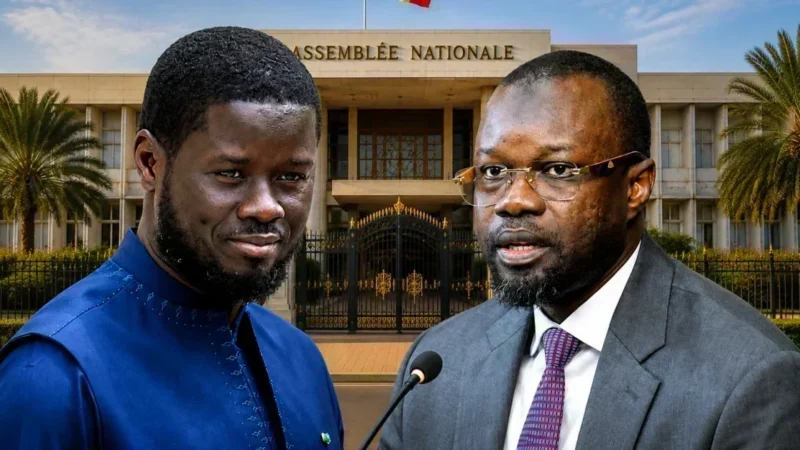
Behind Senegal’s local election delays: how Bassirou Diomaye Faye’s strategic ambiguity reshapes the political landscape
Published today at 19:04 Reading time: 7 minutes.
File generated on
In the corridors of power in Dakar, a deliberate silence has become the defining feature of Senegal’s political moment. President Bassirou Diomaye Faye is maintaining a calculated ambiguity over the timing of the country’s next local elections, a move that analysts say is far from indecisive—it is a strategic play to consolidate his political base while keeping rivals off balance.
The local elections, theoretically slated for January 2027, have become a subject of intense speculation. By refusing to announce a definitive date, the president is effectively controlling the political tempo, forcing both allies and opponents to prepare for multiple scenarios. Behind the scenes, this uncertainty serves a dual purpose: it allows the ruling party to strengthen its grassroots networks through the Kiiraay – Les Patriotes républicains movement, while preventing potential challengers from mounting a coordinated campaign.
Why the silence is not indecision—it’s strategy
The absence of a clear electoral calendar is not a sign of administrative paralysis. Instead, it reflects a deeper calculation within the presidential camp. By keeping the date fluid, Bassirou Diomaye Faye retains the element of surprise, a tactical advantage that can be deployed when the political ground is most favorable.
This approach mirrors the president’s broader governing style: measured, opaque, and highly attuned to the dynamics of power. Supporters argue that such caution prevents unnecessary political agitation and allows for better preparation. Critics, however, warn that prolonged ambiguity erodes public trust and creates fertile ground for rumors and instability.
The grassroots gamble: building Kiiraay from the ground up
While the electoral date remains undefined, the machinery of the president’s political movement, Kiiraay – Les Patriotes républicains, is far from idle. The delay provides valuable time to deepen its reach across Senegal’s regions, particularly in rural areas where local elections are often decided by community-level mobilization.
This grassroots strategy is crucial. Local elections in Senegal are not merely about choosing mayors and municipal councils; they are a barometer of national political sentiment. A strong showing for Kiiraay would solidify the president’s mandate ahead of the 2027 presidential race, while a poor performance could embolden opposition forces.
By postponing the vote, the president buys time to fine-tune his party’s organizational capacity, recruit influential local figures, and neutralize potential dissent within his own coalition.
The risks of playing the long game
Yet the strategy is not without peril. Every month without a confirmed date adds to the anxiety of local officials, who operate on uncertain mandates. Civil society groups have raised concerns that the delay could undermine democratic accountability and leave citizens without proper representation.
Moreover, the opposition is not standing still. While the president’s ambiguity may frustrate his rivals, it also gives them a unifying grievance: the perceived manipulation of the electoral process. This could transform into a powerful rallying cry if the delay is seen as excessive or self-serving.
Internationally, Senegal’s reputation as a stable democracy in a turbulent region is at stake. Prolonged uncertainty over local elections could invite unwanted scrutiny and complicate relations with partners who expect predictable governance.
What to watch in the coming months
All eyes will be on the presidency for any signal—a decree, a statement, or a legislative move—that clarifies the timeline. Until then, the political class is engaged in a waiting game, with each faction interpreting the silence to its advantage.
For Bassirou Diomaye Faye, the gamble is clear: use the time to build an unassailable political machine, then call the vote when conditions are optimal. But if the delay drags on too long, the same silence that now projects control could begin to look like evasion.
In a country where local elections are a key test of democratic vitality, the president’s next move will reveal whether his strategic ambiguity is a masterstroke or a miscalculation.