The roots of a two-track strategy
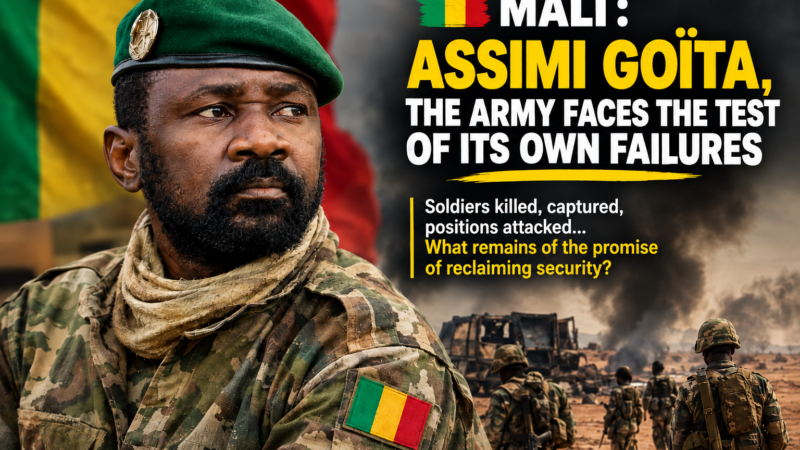
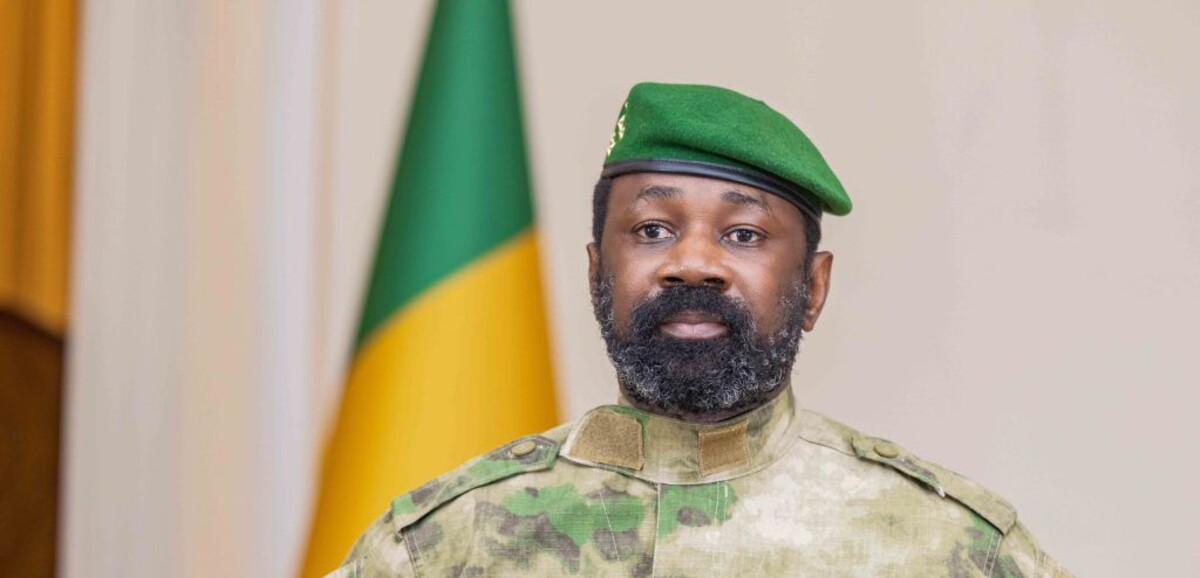
Mali’s transitional president used a radio and television broadcast on Monday evening to reaffirm his commitment to territorial integrity and national unity while keeping the door open to talks. “Remaining open to dialogue and reconciliation between Malian brothers, our firm will to defend the integrity of our territory and national unity remains intact,” he declared. He also pledged to intensify operations against armed jihadist groups at a time when Malian forces face a sharp rise in attacks. “In this context, the fight against insecurity and armed terrorist groups will be strengthened further,” he added.
The timing is no accident. The address came just days after an assault on a military camp in central Mali that left more than 100 soldiers dead, according to available information, with dozens more taken prisoner. The Group for the Support of Islam and Muslims (JNIM), an Al-Qaeda affiliate, claimed or was accused of several operations against military positions. That attack marked another setback for an army that has been battling jihadist groups for years, and it helps explain why Goïta chose to pair a hardline military message with a call for national cohesion.
Dioura: a wake-up call that reshaped the calculus
The September 10 attack on the Dioura camp in central Mali stands out as the deadliest single blow in recent weeks. More than 100 Malian soldiers were killed, and several dozen others were captured. For a military that has staked its legitimacy on restoring security, the scale of the loss exposed gaps in intelligence, force protection and rapid response. It also raised uncomfortable questions about the army’s ability to hold territory while expanding its reach into areas where jihadist influence continues to grow.
Analysts note that such reversals often push governments toward a dual approach: a public show of force to reassure the base and a discreet opening to dialogue to split armed movements and buy time. Goïta’s speech fits that pattern. By honouring fallen soldiers and vowing to strengthen the armed forces, he addressed the morale of the troops and their families. By invoking “reconciliation between Malian brothers,” he left room for negotiations that could reduce the number of active fronts.
Moscow’s role and the search for military capacity
The Malian leader also reaffirmed his intention to boost the army’s capabilities, citing continued cooperation with Russia. Moscow has become Bamako’s main strategic partner since French forces and several Western partners gradually withdrew from the country. That partnership has brought equipment, trainers and, according to many observers, a tougher posture on the ground. But it has also tied Mali’s security trajectory to a narrow set of external actors, raising questions about long-term sustainability and the conditions attached to such support.
Behind the scenes, the cooperation with Russia serves multiple purposes: it fills a capacity gap left by departing Western missions, it signals sovereignty to domestic audiences, and it provides a counterweight to regional pressure. Yet the Dioura attack suggests that hardware and advisers alone cannot solve a problem rooted in local governance, community grievances and the ability of jihadist groups to exploit ungoverned spaces.
What the double message reveals about Mali’s endgame
Goïta’s address was more than a ceremonial independence speech. It was a carefully calibrated signal to three audiences. To the military and its families, he promised reinforcements, honours and resolve. To potential interlocutors among armed groups, he extended a conditional hand. To international partners, he underlined that Mali will keep fighting and keep its Russian alliance.
The 66th anniversary of Mali’s independence, marked on September 22, unfolded under particularly tense security conditions. Jihadist groups continue to mount attacks against security forces and seek to expand their influence across several regions. In that context, the real test of Goïta’s doctrine will not be the rhetoric of war and reconciliation, but whether it can translate into fewer ambushes, stronger local governance and a political process that draws fighters away from armed groups without alienating the communities caught in the middle.
- jihadist attacks Mali
- Russia
- Mali
- Assimi Goïta
- AES
- counter-terrorism
- FAMA
- Malian army