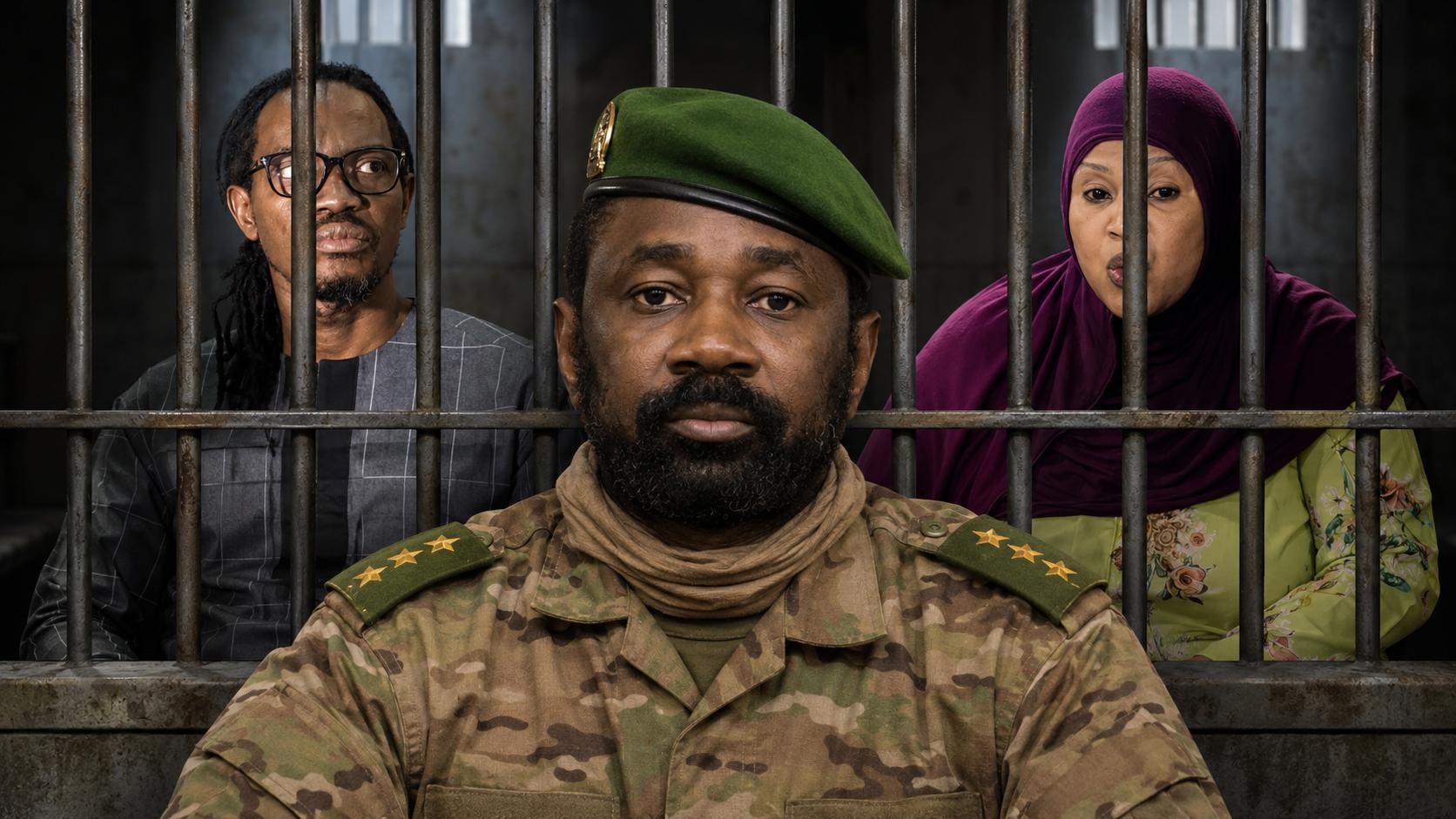
In Bamako, a military tribunal has delivered a harsh verdict that sends a chilling signal across Mali. Radio commentator Mohamed Youssouf Bathily, widely recognized as Ras Bath, alongside social media influencer Rokia Doumbia, known popularly as Rose « la vie chère », were sentenced to ten years in prison. Of this total, three years are suspended, leaving seven years of actual incarceration to serve. Their crime? Persistent criticism of the transitional authorities led by General Assimi Goïta, prosecuted under charges of « conspiring to commit crimes » and « undermining state credibility ».
From isolated cases to systemic repression
Their conviction is not an anomaly but part of a deliberate pattern gripping Mali, where dissent is increasingly met with severe penalties. The list of those silenced continues to grow:
- Political voices silenced: Étienne Fakaba Sissoko, a respected economist and former presidential advisor, is currently serving prison time for publishing a book that questions the management of the transitional process. He joins former Justice Minister Malick Coulibaly and several opposition party leaders who have faced arbitrary arrests or legal harassment.
- Civil society under pressure: Clément Dembélé, a prominent anti-corruption activist, was detained after publicly challenging key strategic decisions made by the authorities. Social media activists have also faced severe consequences, including account suspensions or imprisonment, for sharing critical views on Mali’s security or economic situation.
- Press freedom stifled: Local journalists operate under constant threat of arrest or broadcast bans, while international media outlets remain barred from operating freely within Mali’s borders.
Justice weaponized to stifle debate
Legal representatives for Ras Bath and Rose « la vie chère » argue that this verdict exemplifies the judiciary’s role as a tool to suppress public discourse. While the defense has vowed to appeal the decision to the Supreme Court, the message is clear: challenging economic hardship or military governance in Mali has effectively become a prosecutable offense. The space for open dialogue is rapidly shrinking, with dire consequences for democratic principles.