Cameroun: military reshuffle fuels fears of ethnic power struggle
With President Paul Biya’s prolonged absence stretching beyond 57 days, a series of controversial military appointments has intensified concerns over a potential ethnic succession crisis and a dangerous power vacuum in Cameroon.
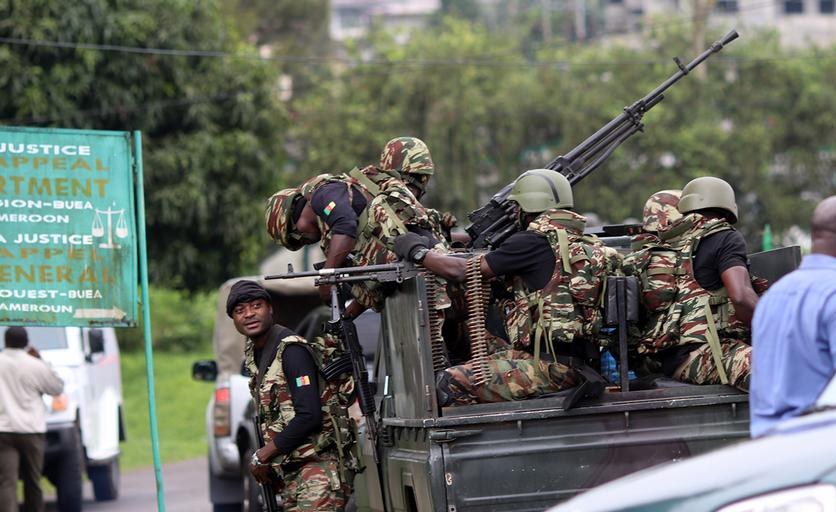
Since the 93-year-old leader left for what was officially described as a brief private stay in Europe on June 7, 2026, the country has slipped into uncharted territory. His absence has coincided with sweeping changes in the military hierarchy, including the appointment of five new brigadier generals, a new commander of the Presidential Guard, and a major general for the joint chiefs of staff—all reshaping the security apparatus in ways that raise serious questions about motives and timing.
Yaoundé gripped by uncertainty as Biya remains out of sight
No public appearance, no official statement beyond assurances from government spokesman René Sadi that Biya is alive and soon to return. Yet rumors persist—some suggest a knee surgery in early July, others warn of serious postoperative complications. What is certain is that Cameroon’s leader has not been seen in public since departing for Geneva, leaving citizens and observers alike demanding answers.
« Why manipulate the electoral process only to spend weeks abroad when the nation needs stability? » asks Roger Justin Noah, secretary-general of the Cameroon Renaissance Movement (MRC). « If the president is unwell, the people deserve to know. »
Security reshuffle raises alarms over tribal influence
On August 3, 2026, a presidential decree (No. 2026/265) installed Brigadier General Beko’o Abondo Raymond Jean Charles as head of the Presidential Guard—a critical role overseeing the protection of the president and state institutions. The move was not isolated. At the same time, authorities appointed:
- Five new brigade generals
- Major General Ebaka Hippolyte as new chief of staff
- Six new territorial commanders across four of Cameroon’s five military regions
« No such appointments can be made without the president’s direct authorization, » noted a retired colonel who spoke on condition of anonymity. Yet with Biya out of the country, the timing and scale of these changes have fueled speculation about a preemptive power grab.
« How can command structures be altered without the head of state present? Who is really in control at the highest level of Cameroon’s security apparatus right now? » queries a political analyst.
Two rival factions vie for control
Behind the scenes, a quiet war is unfolding within the corridors of Etoudi Palace. Two dominant factions are jockeying for influence:
- The consanguine faction: centered around Franck Biya, the president’s eldest son, seen as a symbol of regime continuity.
- The First Lady’s faction: led by Chantal Biya and Ferdinand Ngoh Ngoh, the powerful secretary-general of the presidency.
This rivalry has intensified since April 2026, when parliament approved a constitutional amendment reintroducing the vice-presidency—ostensibly to secure a smooth transition in case of a power vacuum. Yet the position remains vacant, leaving the succession mechanism frozen and tensions escalating.
« The prolonged absence of Paul Biya—now over 50 days in Switzerland—has plunged Yaoundé into total uncertainty, » observes a political commentator.
Fear of ethnic militarization echoes dark regional history
The shadow of Rwanda looms large. In 1994, a fragile political transition fueled by ethnic manipulation within the military led to genocide. In Cameroon, where ethnic divisions run deep, the fear is real: that one group could come to own the state. The current militarization of command posts, critics warn, risks turning institutional power into tribal advantage.
« We are witnessing not just the militarization of succession, but its ethnicization—a path no one can predict the end of, » writes filmmaker and commentator Jean-Pierre Bekolo.
Opposition demands constitutional clarity
The Cameroon Renaissance Movement, led by Maurice Kamto, has taken legal steps, calling on the Constitutional Council to recognize a power vacuum. Deputy Jean-Michel Nintcheu stated bluntly: « The Council must acknowledge that the presidency is vacant. »
But without a vice president, the constitutional succession mechanism cannot be activated. Cameroon is stuck in an institutional deadlock.
What explains the rush to reshuffle?
Government officials claim the appointments are routine administrative measures. Critics beg to differ. « If President Biya is truly returning soon—as officials insist—why proceed with such sensitive decisions in his absence? Why not wait for his return? » asks Bekolo.
Rumors have even surfaced about the authenticity of some decrees, with the government forced to deny claims of forged documents. Once distrust takes root, it is hard to uproot.
Can Cameroon avoid the brink?
The situation is dire, but not irreversible. Key steps could still avert disaster:
- Transparency: The government must disclose Biya’s health status and return timeline.
- National dialogue: A structured dialogue among political forces to ease communal tensions.
- Appoint a vice president: Restore institutional balance and public confidence.
« History remembers both actions and inaction, » warns Bekolo. « Cameroon stands at a crossroads. Playing with fire today may leave no tomorrow for regret. »