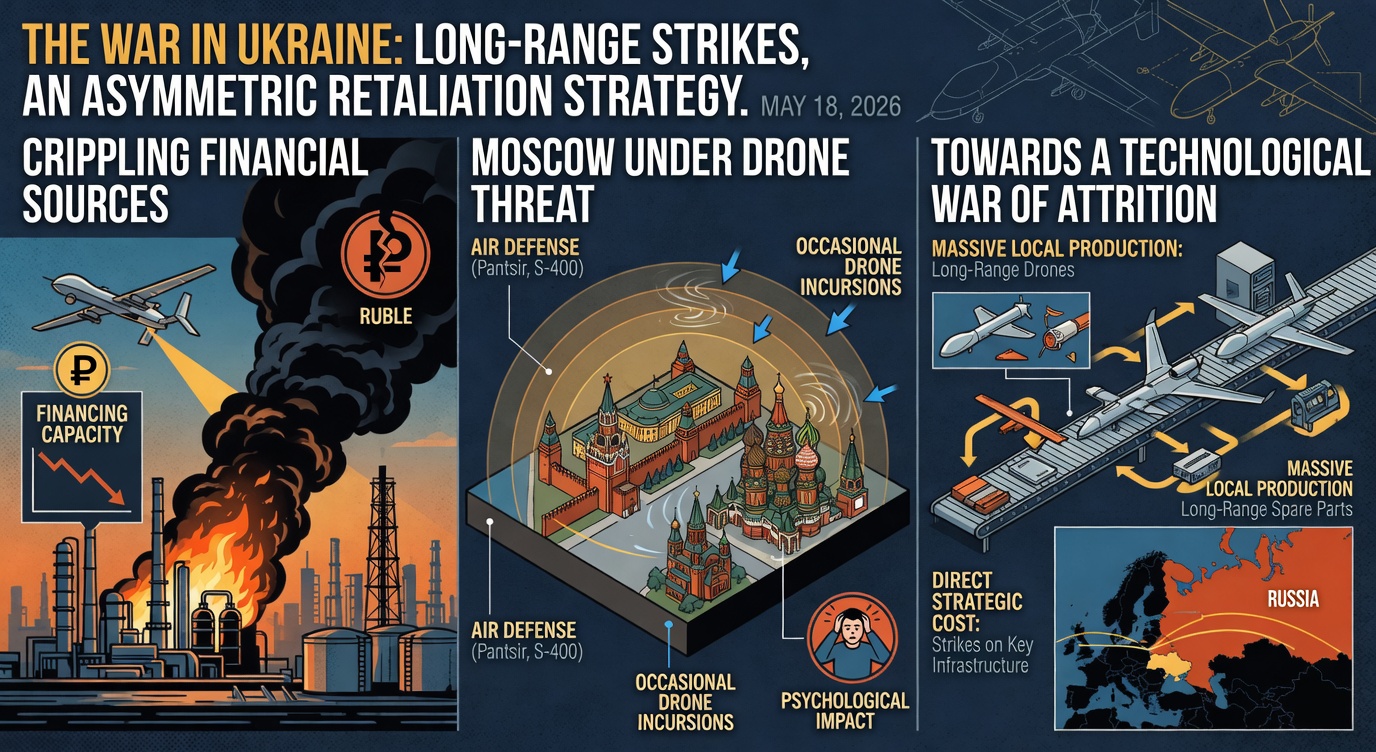
For over four years, the war has raged with relentless intensity, as Russian forces have systematically bombarded Ukrainian cities, infrastructure, and civilian areas. Now, the conflict has evolved beyond traditional frontlines, with Ukraine adopting a bold new strategy to strike deep into Russian territory. By deploying long-range precision strikes, Kyiv is not only retaliating but also reshaping the aerial and naval dynamics of this prolonged confrontation.
Cutting off the lifelines of Russia’s war machine
The Ukrainian military’s approach is straightforward: disrupt the enemy’s logistics to weaken their offensive capabilities. Targeting both military installations and critical energy infrastructure—such as oil refineries and fuel depots—Kiev is systematically eroding Moscow’s ability to sustain its war effort. These operations serve a dual purpose: they directly hinder the supply lines feeding Russian troops on the front, while simultaneously choking off the financial resources that fuel the Kremlin’s military ambitions.
The Russian economy, heavily reliant on hydrocarbon exports and processing, faces severe strain as these strikes reduce production and export capacities. By undermining Moscow’s economic engine, Ukraine aims to prolong the conflict’s financial burden, forcing Russia to reassess its long-term war strategy.
Psychological and logistical blow to Moscow
While drone incursions near Russia’s capital have become more frequent, direct strikes on Moscow itself remain relatively rare. Located over 400 kilometers from the Ukrainian border, the capital benefits from an advanced air defense network designed to intercept incoming threats. Yet, even sporadic drone attacks on Moscow carry immense strategic weight.
The psychological impact on Russian civilians cannot be overstated. The mere presence of Ukrainian drones in the skies above the capital shatters the illusion of safety, instilling doubt and fear among urban populations. Meanwhile, the Russian military command is compelled to divert critical air defense systems—such as Pantsir or S-400 platforms—away from the frontlines to protect key government and military sites. This redistribution of resources weakens Russia’s defensive and offensive capabilities in Ukraine, creating new vulnerabilities.
From battlefield to technological warfare
Ukraine’s long-range strike campaign marks a pivotal shift toward a war of technological attrition. By leveraging domestically produced long-range drones, Kyiv has demonstrated an ability to project power far beyond its borders. This strategy sends a powerful message to both the international community and its own people: despite relentless Russian aggression, Ukraine possesses the means to impose a direct and costly response.
The transition from conventional warfare to asymmetric strikes reflects a broader evolution in modern conflict. No longer confined to frontline skirmishes, this war now encompasses strikes on strategic, economic, and psychological targets deep within enemy territory. As Ukraine continues to refine its long-range strike capabilities, the balance of power—and the very nature of the war—undergoes a fundamental transformation.