Updated today at 2:51 PM Read time: 4 minutes.
File generated on
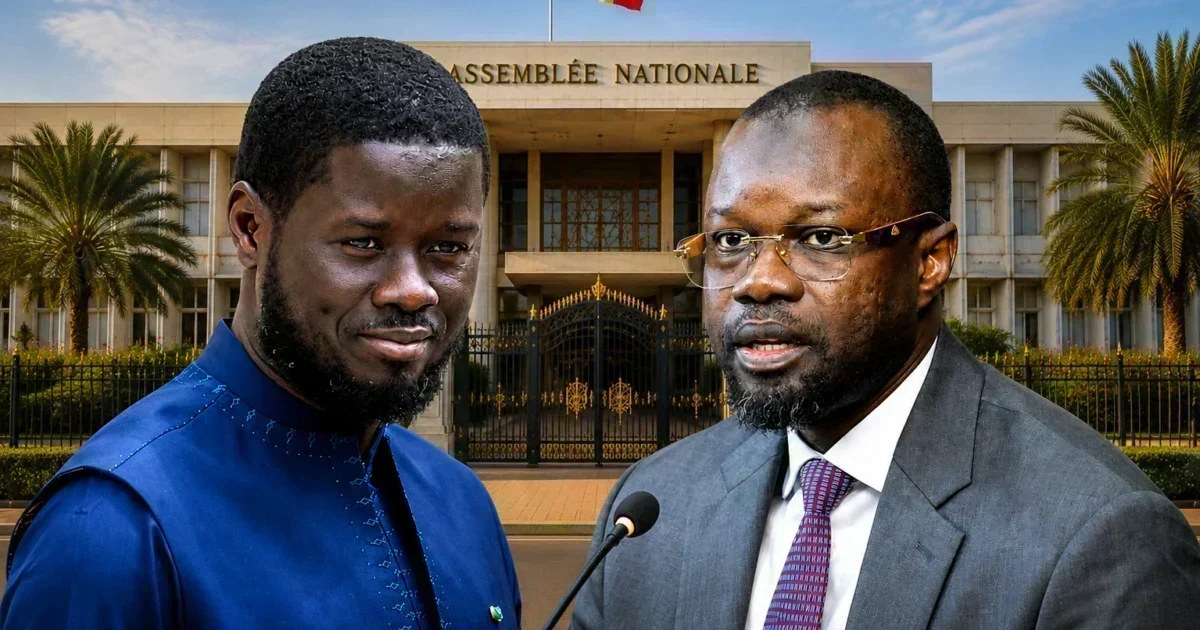
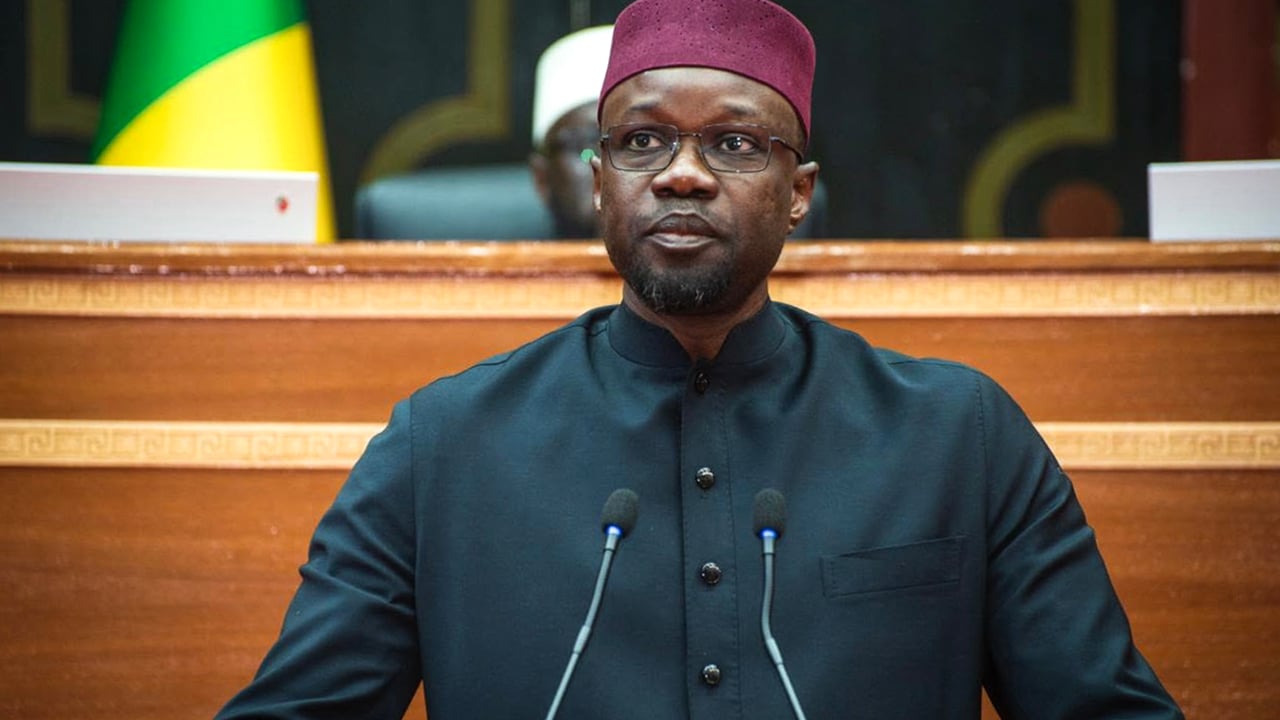
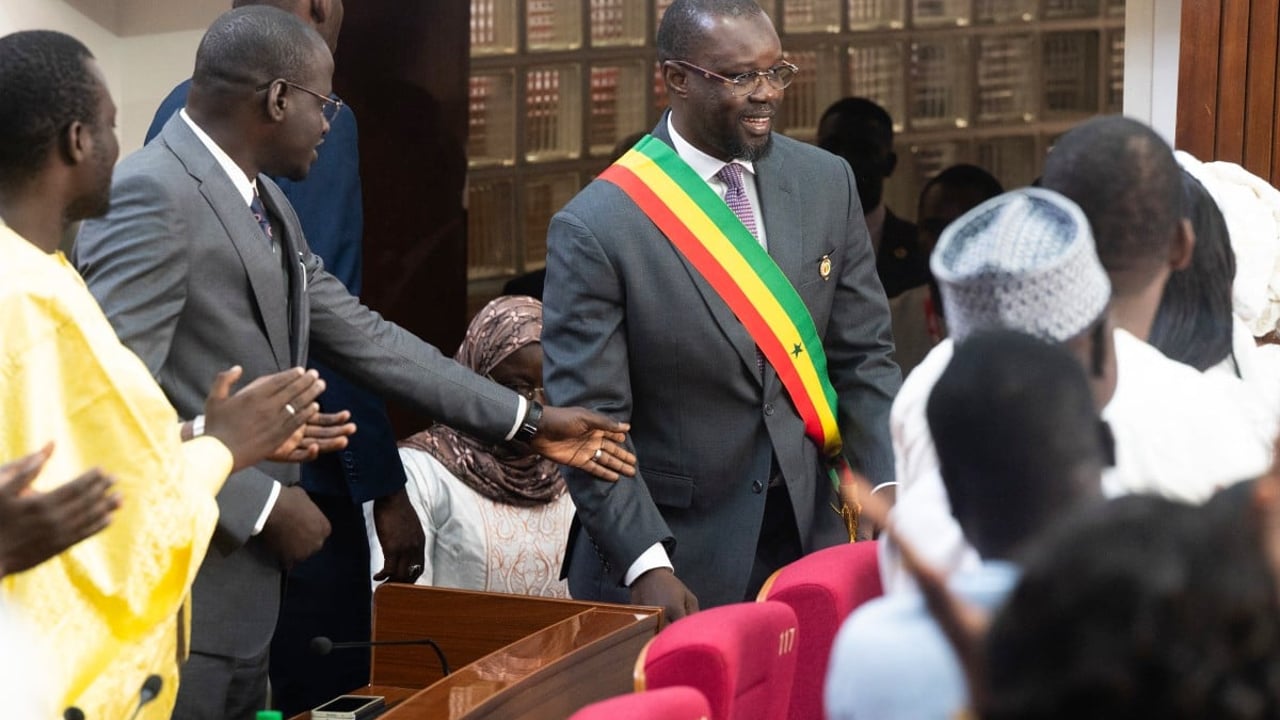
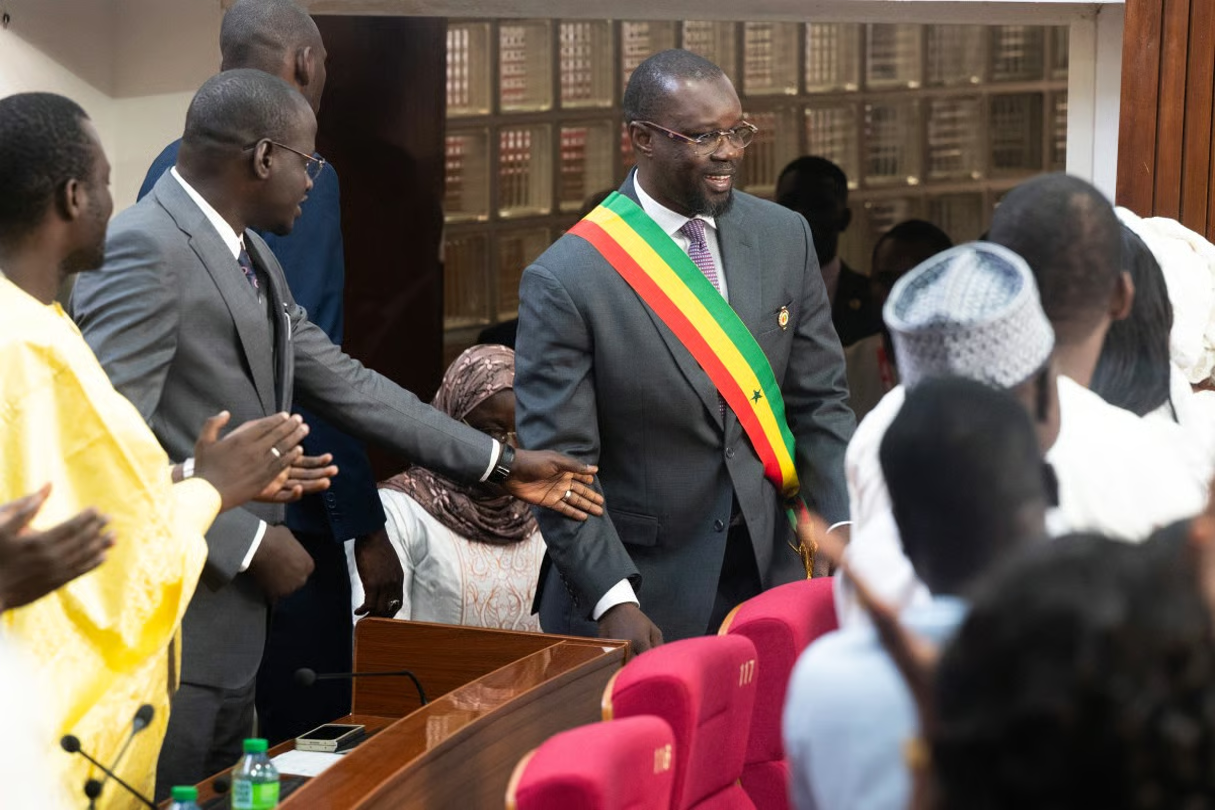
Within days of his dismissal as Prime Minister by President Bassirou Diomaye Faye on May 22, Ousmane Sonko has been swiftly elected President of Senegal’s National Assembly. The session, which began at 9 a.m. on May 26, unfolded with remarkable speed. Sonko, often referred to by allies as the “guardian of the revolution,” delivered his inaugural address to the legislature in his new capacity.
The opposition has wasted no time in denouncing what they describe as a political masquerade. Critics argue that the rapid legislative proceedings lack transparency and fail to reflect the democratic principles Senegal’s citizens expect. Accusations of procedural irregularities have surfaced, with detractors questioning the legitimacy of Sonko’s new role.
Rapid political shifts in Senegal
Sonko’s ascent to the Assembly presidency follows a period of intense political maneuvering in Dakar. His removal from the Prime Minister’s office marked a dramatic turn in the country’s governance, signaling a potential realignment of power within the ruling coalition. Observers suggest that his new position could further consolidate his influence over national policy decisions.
Reactions from political circles
The announcement has sparked sharp divisions among Senegal’s political elite. While Sonko’s supporters praise his resilience and vision for reform, opponents warn that his leadership could undermine institutional stability. The Sahel Vision initiative, a key policy framework under discussion, has become a focal point of debate, with some viewing it as an opportunity for progress and others as a threat to democratic norms.
The international community, particularly West African regional bodies, is closely monitoring the situation. Analysts anticipate that the outcome of this political transition could have ripple effects across the Sahel region, influencing both security dynamics and humanitarian efforts in neighboring countries.
What’s next for Senegal’s political landscape?
With Sonko now at the helm of the legislature, questions abound about the future direction of Senegal’s government. Will his leadership bridge divides or deepen them? How will the opposition respond to these rapid changes? As Senegal navigates this pivotal moment, the answers could redefine the nation’s trajectory for years to come.
- Key takeaway: Ousmane Sonko’s election as Assembly President marks a significant shift in Senegal’s political landscape, with potential implications for regional stability.
- Impact on policy: His new role may accelerate or alter the implementation of key initiatives like Sahel Vision.
- Opposition response: Critics have already labeled the proceedings a ‘political masquerade,’ raising concerns about transparency and legitimacy.
As Senegal’s political drama unfolds, all eyes remain on Dakar, where the balance of power continues to shift at an unprecedented pace.