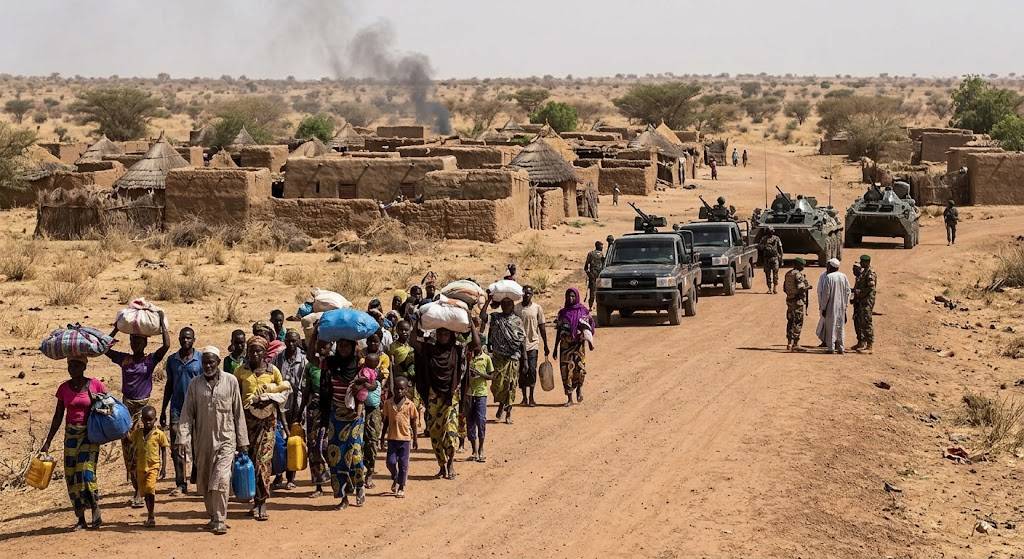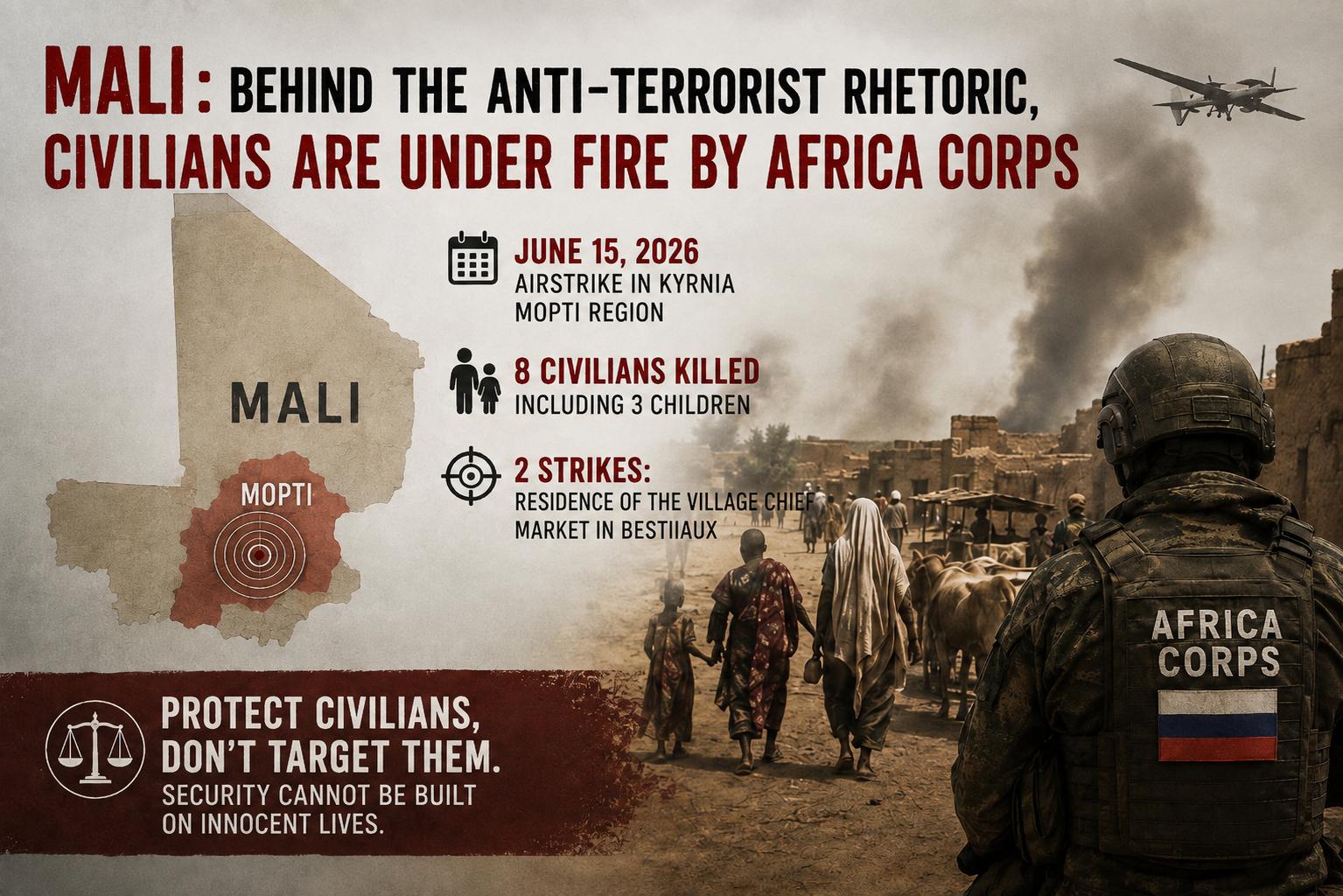
In a stark assessment of military operations in central Mali, a recent investigation has brought to light allegations of civilian harm resulting from an aerial strike conducted by Africa Corps forces on June 15, 2026. The attack, which targeted the Kyrnia village area in the Mopti region, reportedly resulted in the deaths of eight civilians, including three children. Independent observers have raised serious concerns regarding the legality of the operation, which was allegedly carried out without adequate distinction between combatants and non-combatants.
The strike reportedly struck near the village chief’s residence and a livestock market, areas that witnesses confirm were populated exclusively by civilians at the time of the attack. According to detailed accounts, no armed group members were among the casualties. The investigation included testimonies from 19 local residents, satellite imagery analysis, and publicly available footage, all of which corroborate the civilian nature of the victims.
Military strategy under scrutiny
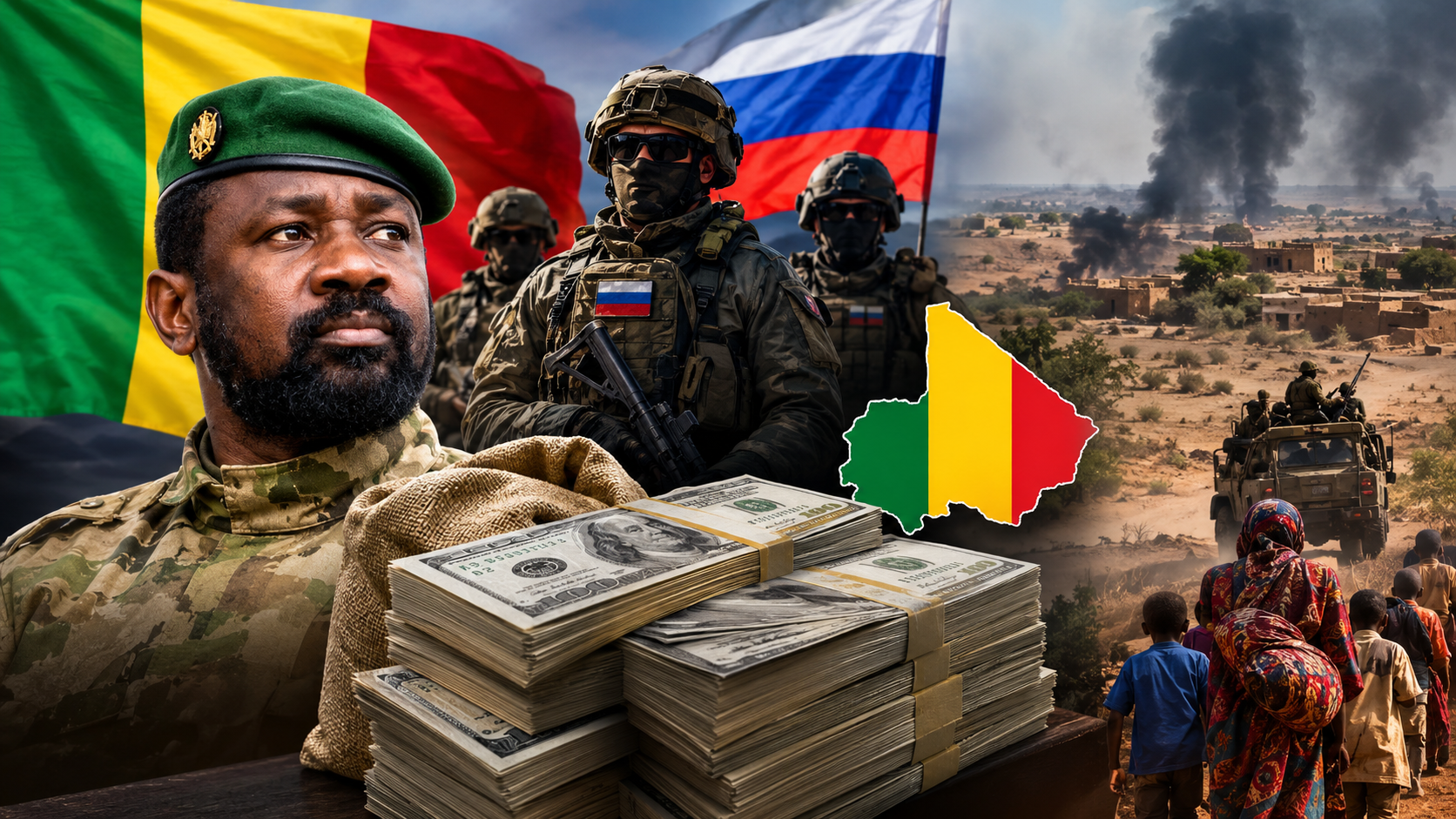
The incident has reignited debates over Mali’s security partnership with Russia, particularly through the Africa Corps, which has replaced the Wagner Group in supporting local counter-terrorism efforts. Under the leadership of transitional authorities, this collaboration has expanded, but its effectiveness is now being questioned not only in terms of operational success but also in protecting civilian lives.
Several critical issues have emerged from this operation:
Systemic conflation of civilians with armed groups: In rural areas, where communities such as the Fulani often face accusations of collaboration with Islamist militants, the risks of misidentification are heightened. Past counter-insurgency operations have already demonstrated the dangers of such generalizations.
Target identification failures: While witnesses reported the presence of suspected armed group members in Kyrnia, the strike indiscriminately affected civilian infrastructure. This raises doubts about the quality of pre-operation intelligence and the precautions taken to minimize civilian harm.
Disproportionate use of force: The operation’s stated objective was to target a gathering of armed elements. However, the destruction of civilian property and loss of life suggest a lack of proportionality, violating international humanitarian law standards.
Discrepancies in military communication: Africa Corps officials initially claimed the strike had neutralized several commanders at a terrorist gathering. Yet, verified evidence confirms that all victims were civilians, highlighting a troubling gap between official narratives and ground realities.
Broader implications for Mali’s security approach
The tragedy in Kyrnia underscores a critical flaw in Mali’s counter-terrorism strategy: an overreliance on military force without sufficient safeguards for civilian protection. Effective security operations must extend beyond high-impact strikes to include reliable intelligence, precise targeting, community trust-building, and accountability mechanisms.
Moreover, the incident risks exacerbating existing social fractures. When civilians feel unfairly targeted, resentment toward security forces grows, potentially driving individuals toward armed groups in search of protection or justice. This vicious cycle undermines long-term stability and plays into the hands of extremist recruiters.
Accountability and the failure of justice
Another pressing concern is the lack of accountability for violations committed by both state forces and allied groups. Investigations into civilian casualties are often delayed, incomplete, or nonexistent, leaving victims without recourse. This culture of impunity not only denies justice but also erodes public trust in institutions tasked with ensuring safety.
Mali’s sovereignty cannot be used as a shield against scrutiny. The government’s decision to engage foreign military partners does not absolve it of its duty to protect civilians or investigate abuses on its territory. Transparency and independent oversight are essential to restore credibility and prevent further harm.
Reassessing counter-insurgency methods
The Kyrnia incident should serve as a catalyst for re-evaluating Mali’s approach to counter-insurgency. Success cannot be measured solely by the number of strikes conducted or militants eliminated. True security for communities requires:
Accurate and verifiable intelligence before operations;
Strict adherence to the principles of distinction and proportionality;
Measures to shield populated areas from collateral damage;
Immediate and thorough investigations into civilian harm;
Structured support for affected families and communities.
Behind the statistics lie human lives. In Kyrnia, eight individuals three of them children were killed. For their families, this was not merely a failed operation; it was the irreversible loss of loved ones. The true test of Mali’s security strategy will not be the volume of its military actions, but its ability to restore safety without sacrificing the very people it aims to protect.