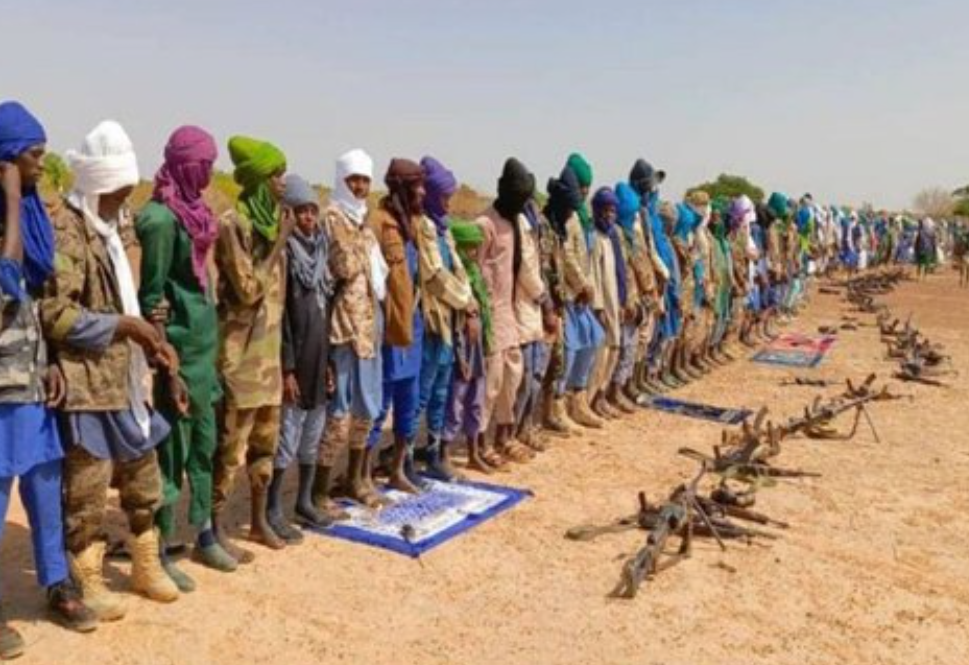
The Mopti region in Mali became the epicenter of coordinated violence on Sunday, July 19, as the Group for the Support of Islam and Muslims (JNIM) launched a series of simultaneous attacks targeting government forces and their allies. The claims, made through the group’s propaganda channels, underscore its persistent operational capacity five years after the Assimi Goïta-led coup d’état.
Coordinated assaults reveal JNIM’s evolving tactics
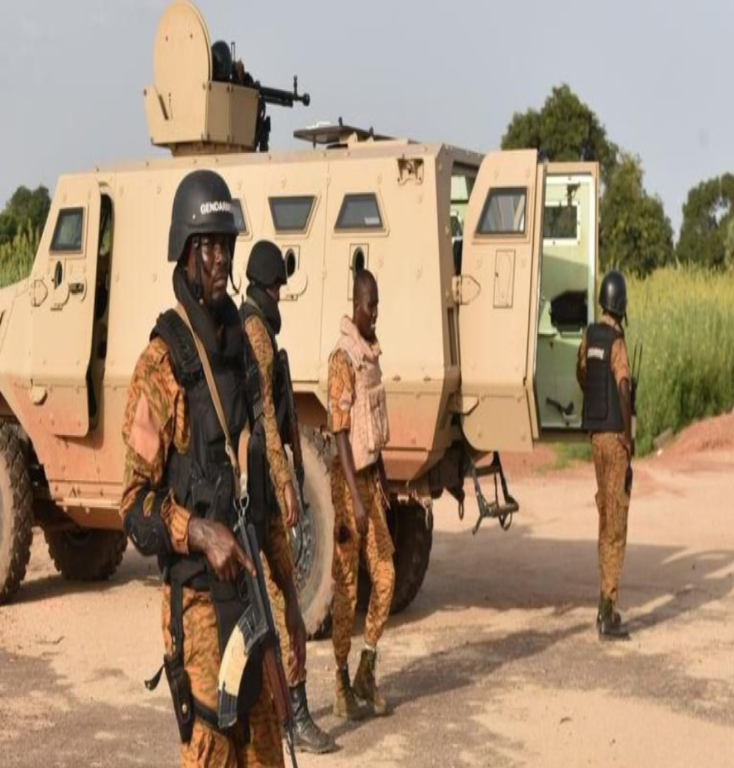
The JNIM reported four separate strikes in the Mopti region, demonstrating a refined ability to disrupt military logistics. In the Douentza area, three improvised explosive devices (IEDs) were detonated against a military convoy, a supply truck, and a motorcycle detachment shared by Malian Armed Forces (FAMa) and Russian-backed Africa Corps mercenaries. Further west, near Kansila, the group engaged in direct combat with local Dozo militias—traditional hunter groups often deployed as auxiliary forces by Bamako. The group’s statement claims three Dozo fighters were killed.
Goïta’s junta struggles against a worsening security landscape
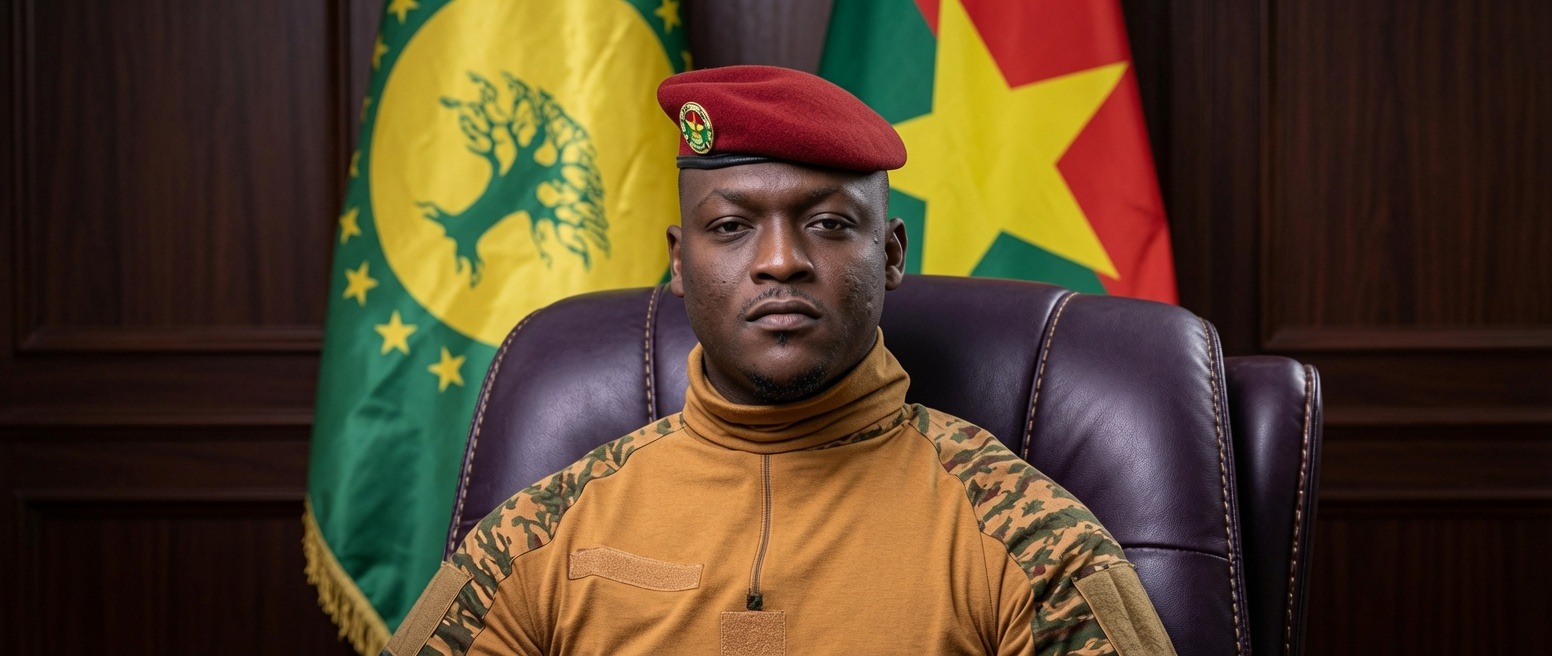
Since seizing power in 2019, the Assimi Goïta administration has pledged to restore territorial integrity and stabilize the country. However, independent conflict tracking data reveals a stark contrast: violence-related fatalities have surged in key provinces, with deaths attributed to political and terrorist violence doubling or tripling since the pre-coup period. The conflict has also fragmented, with the rise of Africa Corps and the systematic targeting of certain ethnic communities fueling interethnic tensions and inadvertently boosting jihadist recruitment.
The frequency of attacks has intensified, with IEDs and ambushes becoming near-daily occurrences. This relentless campaign has crippled major road networks, severely limiting mobility for both civilians and military assets.
Territorial retreat and the silent humanitarian collapse
Despite official declarations of progress, the Malian state’s control continues to erode. While symbolic victories—such as the recapture of Kidal in late 2023—have been achieved, sustaining control over reclaimed areas remains elusive. Vast swaths of the country’s North and Central regions now operate as ungoverned zones, devoid of public administration and basic services.
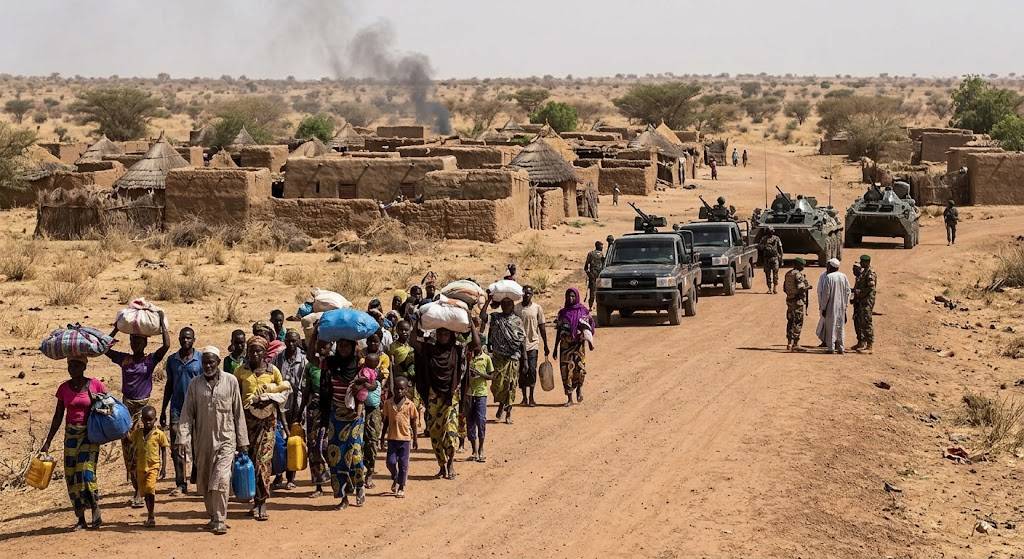
The human cost is staggering: United Nations agencies report over 400,000 internally displaced persons, as families flee both jihadist brutality and collateral damage from military operations. Blockades imposed by groups like JNIM and the Islamic State in the Greater Sahara (EIGS) have plunged entire regions into acute food insecurity. The inability to secure supply routes has stalled humanitarian aid deliveries, transforming a security crisis into a silent humanitarian catastrophe.
Africa Corps: a partnership with high human and strategic costs
In a bid to fill the void left by departing French forces and the UN’s MINUSMA mission, Mali turned to Moscow. What began as cooperation with the Wagner Group evolved into formal engagement with Africa Corps, a Kremlin-aligned paramilitary force directly under Russia’s Ministry of Defense. Despite heavy deployment, the Russian contingent has failed to curb the insurgency.
Human rights organizations have documented repeated abuses by Africa Corps troops, including the Moura massacre, which has driven local populations toward armed groups that position themselves as protectors. Militarily, the Russian forces lack the numbers and counterinsurgency expertise required to stabilize a territory as vast as Mali. Casualties among personnel remain high, and operational effectiveness has been minimal.
Air power’s limitations: a flawed counterinsurgency tool
Facing critical shortfalls in ground troops, Bamako has heavily invested in aerial capabilities, purchasing attack helicopters and drones—primarily from Russia and Turkey—including Bayraktar TB2 drones and Mi-24 attack helicopters. While these assets initially enabled large-scale strikes, maintenance and operational challenges have undermined their utility.
Technical breakdowns and crashes have grounded several aircraft, including Albatros L-39 jets and Mi-24 helicopters, often due to delayed or unavailable Russian spare parts. The insurgents have adapted: JNIM and allied groups now operate in smaller units, blending into civilian areas or dense vegetation, rendering air strikes less effective and increasingly prone to civilian harm.
A dead end for the all-military approach
The July 19 attacks in Mopti are not isolated incidents but symptoms of systemic failure. The junta’s “all-military” strategy has reached a deadlock. By severing diplomatic channels, alienating regional partners, and tying the nation’s fate to Russian mercenaries—whose priorities lie more in resource extraction than nation-building—Bamako has isolated itself. Without a holistic political strategy that restores governance, re-establishes public services, and protects civilians, Mali risks further territorial fragmentation under the relentless pressure of an expanding Sahelian jihadism.