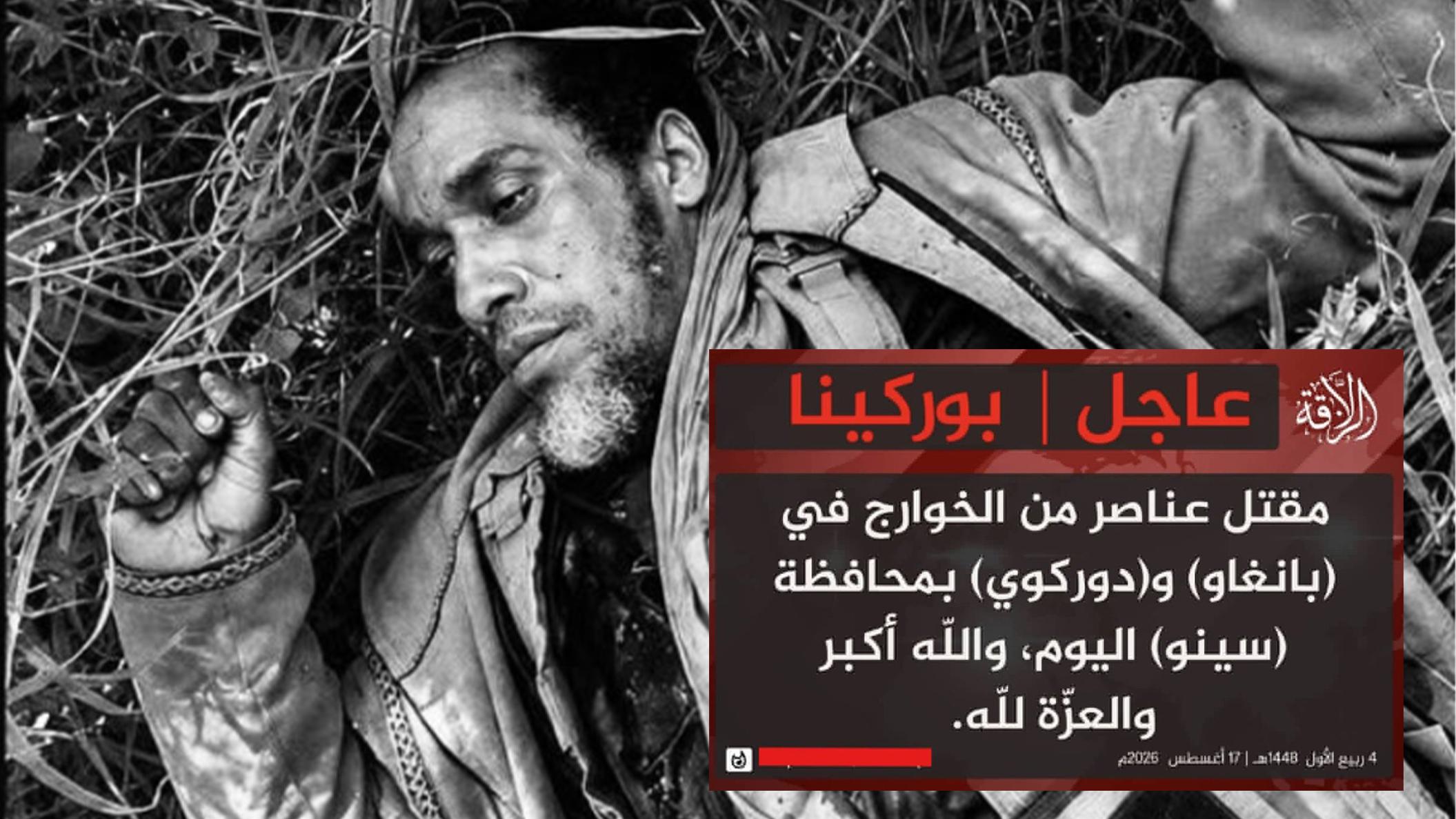
In a dramatic turn of events, a leading figure of the Islamic State in the Sahel (EIS), Abou Zeid Al-Burkinabi, was killed on August 17, 2026, not by Burkina Faso’s armed forces as initially claimed, but in a violent confrontation with a rival jihadist faction. The deadly clash unfolded in the Séno province, a region plagued by insurgency and bordering Niger, where armed groups have long exploited the instability for their operations.
Abou Zeid Al-Burkinabi: a key figure in the Sahel’s terror network
A native of Burkina Faso, Abou Zeid Al-Burkinabi had risen through the ranks of the EIS to become one of its most influential commanders. His deep understanding of the local terrain and his extensive network of supporters in the Séno and neighboring provinces made him a critical asset for the group’s expansion. As a zone commander, he orchestrated ambushes against defense forces, intimidated civilian populations, and enforced brutal extortion through forced zakat collection. His death leaves a significant gap in the EIS’s command structure, already weakened by military pressure and fierce competition from the JNIM.
The misinformation campaign following his elimination
The announcement of Abou Zeid Al-Burkinabi’s death triggered a flurry of conflicting narratives. Pro-government accounts and official channels quickly attributed his demise to a military operation involving Burkina Faso’s defense forces and the Voluntaires pour la défense de la patrie (VDP). However, ground reports and corroborated details from rival sources painted a different picture: the jihadist leader was killed in a brutal internal clash with the Jama’at Nasr al-Islam wal-Muslimin (JNIM), an Al-Qaeda-affiliated group. The incident underscores the growing importance of information warfare in the Sahel’s conflict landscape, where narratives are as fiercely contested as territory.
JNIM vs. EIS: a bloody rivalry reshaping the Sahel’s terror landscape
The confrontation in Bangao and Dorkoye is not an isolated incident but the latest chapter in a protracted and violent feud between the JNIM and the EIS. Though both groups share a common goal of toppling regional governments and imposing their radical ideologies, their differences run deep:
- Ideological divide: The JNIM, loyal to Al-Qaeda’s central leadership, adopts a more pragmatic approach, often seeking alliances with local leaders. In contrast, the EIS enforces a ruthless doctrine marked by takfirism—mass excommunication—and indiscriminate violence against civilians deemed disloyal.
- Resource rivalry: Control over smuggling routes, artisanal gold mines, and transhumance corridors is vital for funding. The two groups are locked in a constant struggle to dominate these lucrative zones.
- History of clashes: Since 2020, violent confrontations have erupted across the Sahel, particularly in Mali’s Gourma and the Liptako region. In 2022 and 2023, clashes in Ménaka (Mali) and northern Burkina Faso escalated to large-scale battles involving hundreds of fighters and heavy weaponry.
The August 17 battle highlights that despite government offensives, the hatred between these factions remains undiminished, with civilians bearing the brunt of the fallout.
A shifting power dynamic and enduring insecurity for civilians
The EIS’s loss of Abou Zeid Al-Burkinabi could temporarily shift the balance of power in the Séno province. By eliminating a high-ranking EIS commander, the JNIM aims to solidify its territorial dominance and eliminate its rival from strategic border areas. However, for the civilian population, this internal strife offers little relief. While such clashes may weaken both groups, they also expose residents to retaliatory violence and perpetual insecurity. The elimination of terror leaders at the hands of their rivals underscores the Sahel’s complex security challenges, where one group’s defeat often benefits another equally dangerous faction.
A stark reminder of the Sahel’s multi-layered conflict
The death of Abou Zeid Al-Burkinabi marks a significant moment in Burkina Faso’s ongoing counterterrorism struggle. Far from the official narrative of a direct military victory, this event reveals the Sahel’s intricate conflict, where internal jihadist dynamics play a decisive role alongside state-led operations. For regional observers and policymakers, tracking these internal fractures is essential to understanding the future trajectory of security in Burkina Faso and the wider Sahel.