Patriotism Through Recreation: A New Approach in Burkina Faso
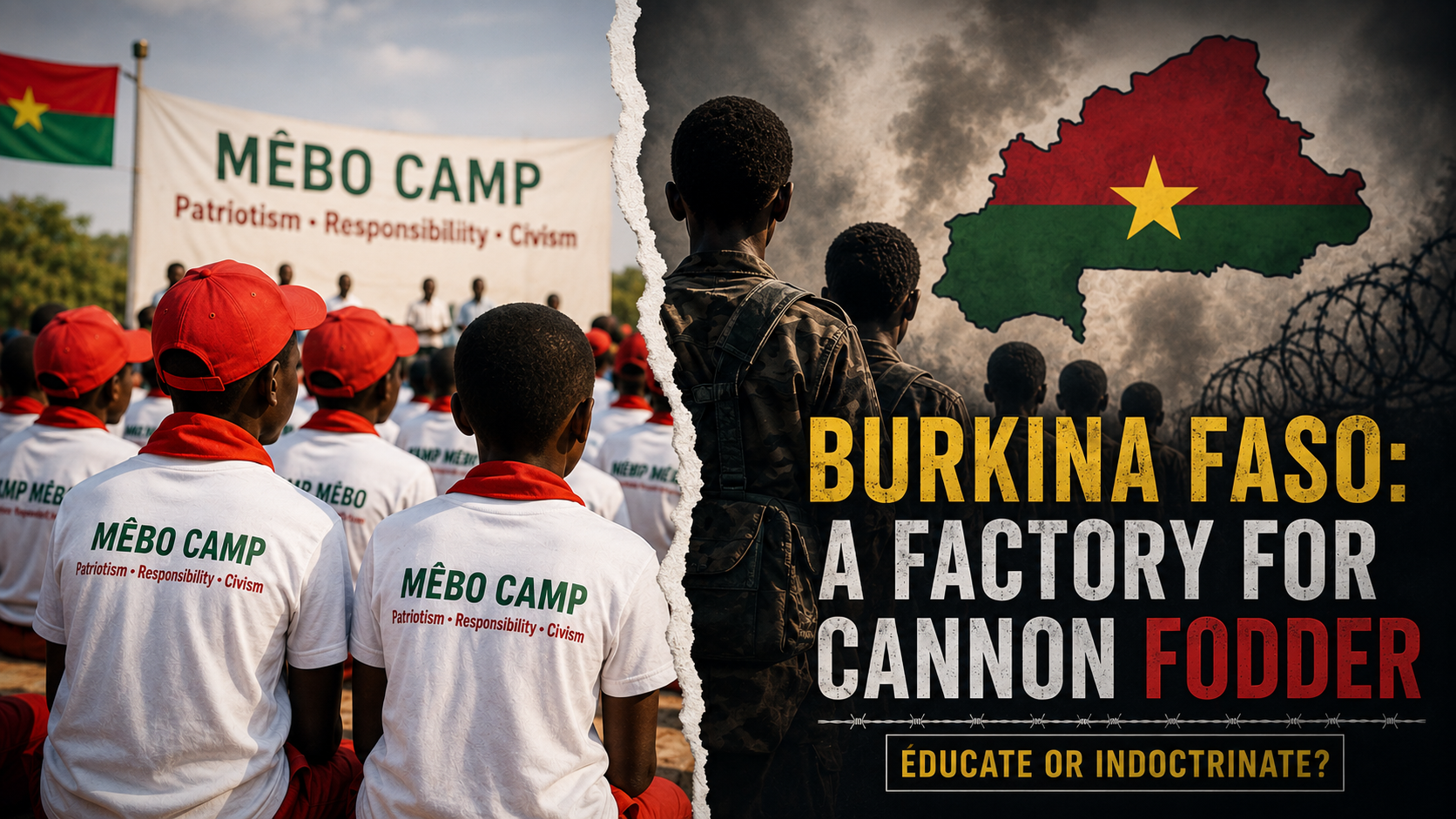
The Mêbo holiday camp in Burkina Faso has recently drawn thousands of young participants to its cultural, sporting, and community-focused activities. Organised under the banner of national pride and civic responsibility, these gatherings appear, at first glance, to be a conventional civic initiative. Yet beneath the veneer of institutional virtue, a more troubling question has begun to surface: are these large-scale events inadvertently laying the groundwork for the systematic militarisation of youth?
Beyond Civic Education: The Fine Line Between Service and Submission
The intent to instil civic values such as respect for institutions, solidarity, and the common good is not inherently problematic. Instilling these principles in young minds is, in fact, a legitimate educational goal. The concern arises when patriotism is weaponised as a political tool, when blind obedience replaces critical thinking, and when national defence is framed not as a choice but as an unending obligation. This is where the distinction between civic duty and ideological indoctrination begins to blur.
Such strategies are not without precedent in Africa. Historical accounts from Sierra Leone, Liberia, and the Democratic Republic of the Congo reveal how early indoctrination campaigns have often blurred the boundaries between civic education, ideological mobilisation, and youth recruitment in conflict zones. When power leverages national sentiment to influence an impressionable audience, the risk is real: civic education may quietly evolve into a recruitment mechanism.
Language That Shapes Perception: The Normalisation of Military Service
Another critical factor lies in the rhetoric employed. When terms such as fatherland, sacrifice, enemy, national defence, and commitment are repeatedly associated in youth-oriented discourse, the idea that military service constitutes the natural endpoint of citizenship can become subtly ingrained. Yet a child’s primary developmental need is not to serve a political or military cause, but to learn, debate, create, and grow.
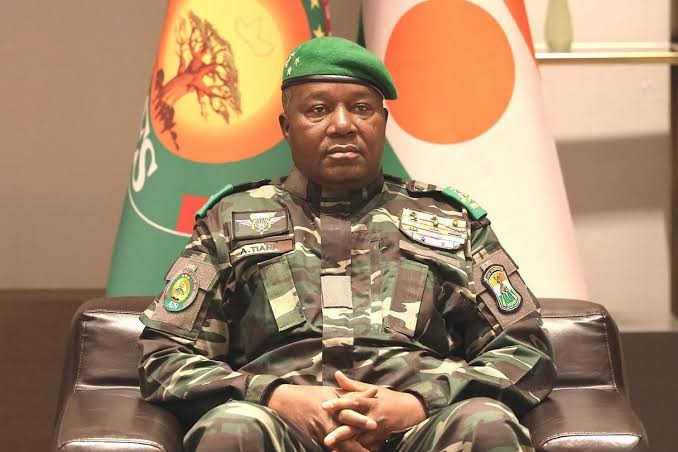
The current security crisis in the Sahel amplifies these concerns. Burkina Faso, under the leadership of Captain Ibrahim Traoré, faces an ongoing conflict that has reshaped society, displaced communities, and thrust national defence into the heart of public discourse. In such a climate, patriotic mobilisation can easily be repurposed. The pressing question then becomes: where should the boundaries be drawn in cultivating a defensive mindset among the youth?
From Civic Pride to Blind Obedience: The Risks of Unchecked Mobilisation
By fostering a youth deeply aligned with official narratives, does the government whether intentionally or not gradually erode the space for dissent and critical thought? A truly civic-minded youth should not be one that unconditionally endorses authority. It should be one capable of defending the nation while questioning its leaders, respecting the state without conflating it with the regime, and serving the community without becoming a political tool.
The danger also lies in the premature normalisation of sacrifice. When the ultimate expression of patriotism is framed as dying in combat, young minds may come to accept a perilous interpretation of national duty. True love for one’s country should not be measured by a child’s willingness to embrace violence, but by their commitment to education, healthcare, agriculture, innovation, social cohesion, and sustainable development.
Symbols, Uniforms, and the Psychology of Confrontation
Particular attention must also be paid to the role of military symbols, uniforms, and war-centric rhetoric within these programmes. Individually, these elements do not necessarily indicate militarisation. Yet when they accumulate within a context of perpetual national mobilisation and armed conflict, they demand scrutiny. It is in these grey areas that distinctions between civic education, patriotic propaganda, and psychological preparation for war can dissolve.
The age of participants cannot be overlooked. While an adult possesses the maturity to weigh the political and military implications of engagement, a child lacks both the experience and discernment to make such choices independently. It is the responsibility of institutions to shield young minds from exploitation and to ensure their education fosters emancipation—not submission to a logic of perpetual confrontation.
Security Through Education: A Dangerous Paradox
In times of acute crisis, the impulse to militarise the minds of an entire generation is strong. Yet responding to a military threat by ideologically conditioning youth for confrontation may only perpetuate a cycle of violence. The more society conditions its young to perceive enemies and sacrifice as inevitable, the more violence risks becoming the default response to political and social disagreements.
True patriotism lies in breaking this cycle. To love Burkina Faso is not merely to be prepared to die for it, but to strive for a nation stable enough for its children to live, learn, work, and build their futures without constant exposure to war. It is to accept that citizens may support their country while remaining free to critique its government.
The Need for Transparency and Guardrails
Before endorsing uncritically the rhetoric of youth mobilisation and patriotism, it is essential to demand clarity. What are the stated educational objectives of these camps? How much space is given to critical thought? Are participants allowed to voice dissent? Do the activities include military or paramilitary components? And most critically, where does the line lie between raising responsible citizens and conditioning a generation to accept war as inevitable?
Burkina Faso requires a youth that is engaged, educated, and aware of its duties. Yet it must also ensure that this same youth retains its autonomy of thought. The nation’s future depends not on raising soldiers, but on cultivating citizens who can build a peaceful and prosperous society. The question remains: are these young people being prepared to construct the Burkina Faso of tomorrow—or to serve as expendable resources in future conflicts?