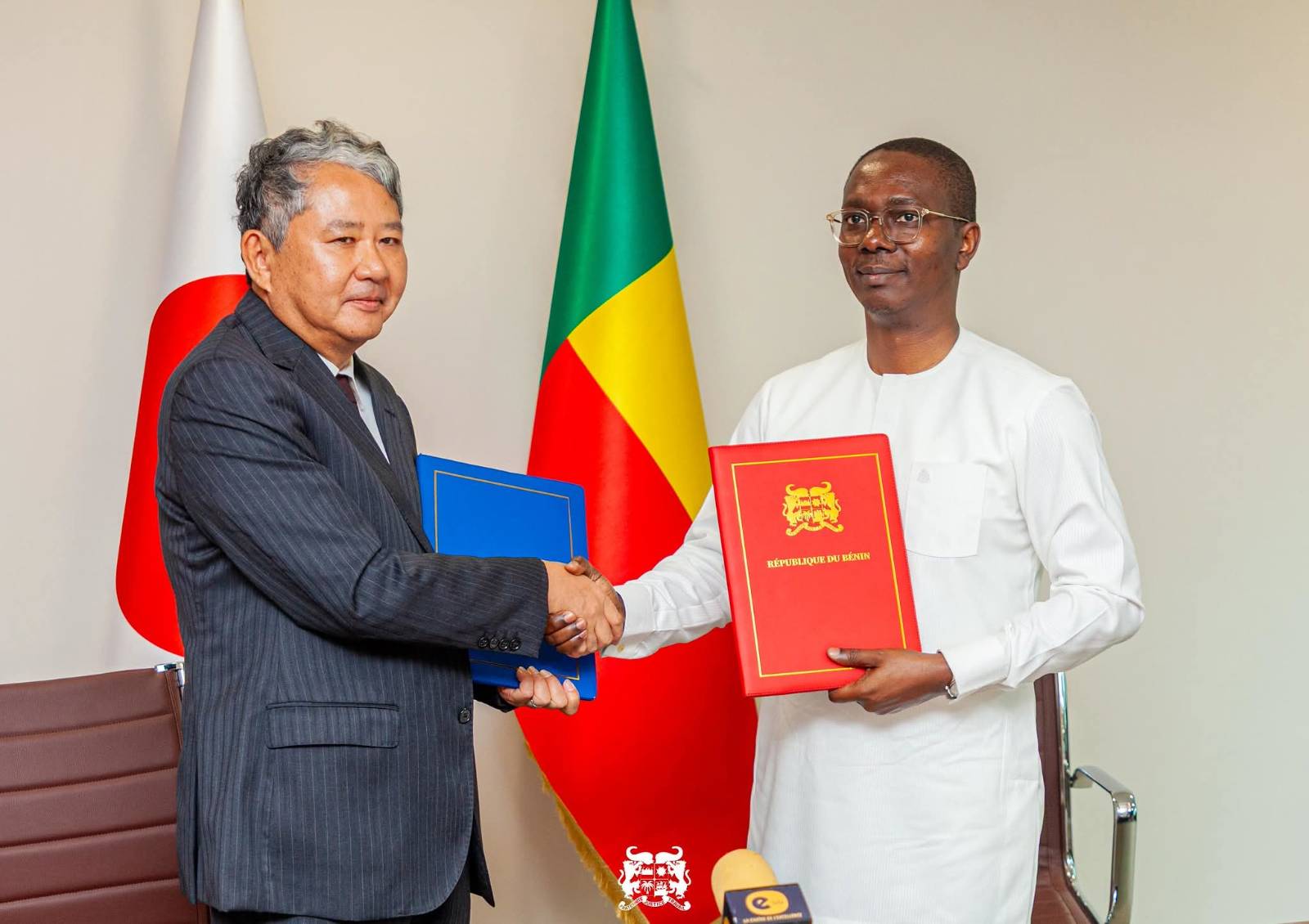
The ink is barely dry on the latest Benin-Japan agreement, yet the conversation in Cotonou has already shifted from the signing table to the street. On 9 October 2026, the two governments concluded a fresh grant of 10.8 billion FCFA to bankroll the second phase of the Vêdoko interchange, lifting the announced total for the project to 26.228 billion FCFA. But for the thousands who squeeze through this crossroads every day, the real question is not how much money was pledged — it is what happens now, and whether the finished structure will actually change their mornings and evenings.
A second injection of cash for a project already under way
The Vêdoko junction scheme is not starting from scratch. Ground was officially broken on 28 October 2025, in a ceremony attended by Japan’s ambassador to Benin, and construction has been moving forward since. What the new accord does is top up the funding so that phase two can proceed without stalling.
Officials have indicated that the money will go toward an east-west overpass as well as the supporting works — drainage, land development and the smaller engineering tasks that hold a project of this size together. The ambition, stated plainly, is to untangle traffic at one of the busiest points in Benin’s economic capital and to cut down the congestion that swallows hours from commuters’ lives.
Why Vêdoko keeps appearing in every traffic conversation
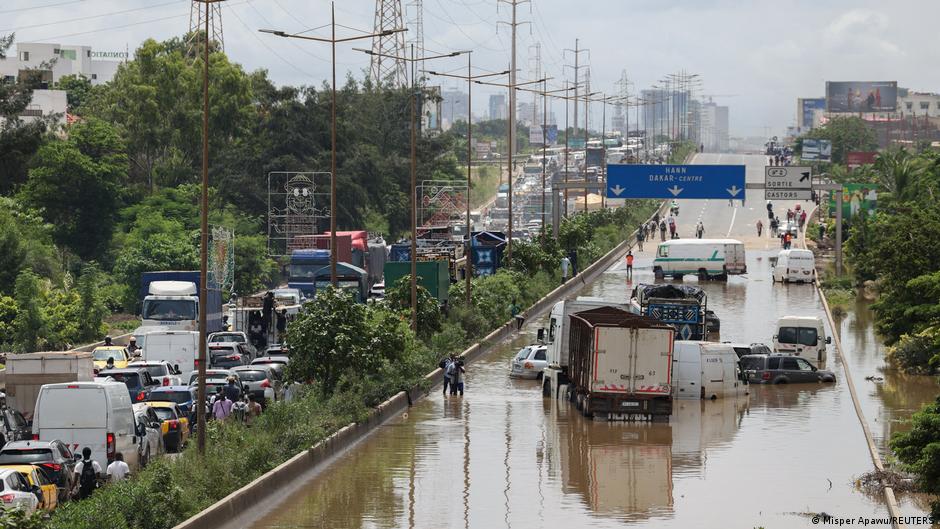
Anyone who has driven, ridden or walked through Vêdoko during rush hour knows the pattern: cars, motorcycle taxis, minibuses and pedestrians all converging at once, each flow slowing the others. The result is a bottleneck that ripples outward, affecting not just the junction itself but the arteries feeding into it.
The knock-on effects reach well beyond lost minutes. Employees leave home earlier to hedge against delays. Traders and delivery riders see schedules slip. Public transport operators struggle to promise predictable journey times, which makes planning harder for everyone who depends on them.
The overpass is designed to separate conflicting movements and let vehicles move through more smoothly. Still, engineers and urban planners will tell you that a single structure rarely solves everything on its own — how well it connects to the surrounding road network, and how nearby intersections are managed, will shape the real outcome.
What residents hope to gain, and what remains unproven
Ask people in Cotonou what they want from this project and the answers are refreshingly practical. Shorter commutes. Reliable school runs. Deliveries that arrive when promised. Less time idling in queues.
There is also an environmental dimension that rarely makes headlines but matters over time: fewer stop-start cycles mean lower fuel consumption, and less idling translates into reduced noise and tailpipe emissions in the immediate area.
None of this is guaranteed yet. The benefits hinge on how quickly the work advances, how well it is executed, and how traffic volumes evolve in the years ahead. The funding agreement is a milestone, not a finish line.
The disruption phase: patience will be required
Because construction is already in progress, residents and road users are living through the messy middle. Large road projects inevitably bring diversions, temporary lane restrictions and shifting traffic patterns, sometimes changing from one week to the next.
How smoothly this period goes will depend heavily on communication. Clear signage, well-publicised route changes and visible on-the-ground coordination can make the difference between manageable inconvenience and daily chaos. Drivers, motorcyclists, pedestrians and people living near the worksite all need advance warning to adjust their routines.
In that sense, the project’s success will be judged on two fronts: the quality of the finished interchange and the ability of those running the site to keep disruption to a minimum while it is built.
A partnership with more than concrete at stake
Japan’s continued financing underscores its role as a partner in Benin’s infrastructure drive. The additional 10.8 billion FCFA strengthens a bilateral relationship that, in this instance, is squarely focused on improving mobility in Cotonou.
The project also involves collaboration between Japanese and Beninese firms, with an explicit aim of transferring skills and technical know-how — a detail highlighted when works were launched in October 2025. Beyond the physical structure, the stakes are economic and social: smoother movement of people and goods supports businesses, improves access to jobs and keeps urban services running.
Yet money alone does not guarantee results. The long-term value of the interchange will depend on construction quality, ongoing maintenance and how well it fits into a broader strategy for managing urban travel.
The road ahead: from pledge to proof
With 26.228 billion FCFA now on the table, the Vêdoko interchange stands among Cotonou’s most significant bets on urban mobility. The October 2026 agreement provides the resources to keep an active construction site moving.
For the public, the expectation is straightforward: less time stuck in traffic, easier journeys and more predictable daily travel. But those expectations can only be fairly assessed once the structure is complete, open to traffic and its effects measured against real data — journey times, queue lengths and traffic conditions before and after.
The challenge at Vêdoko is no longer simply about financing and building. It is about converting investment into tangible improvement for the people who use that junction every single day. Only then will the interchange have kept its promise of smoother traffic and urban mobility better suited to the daily needs of Cotonou’s residents.