France expels two Nigerien intelligence agents: a fresh test for a broken relationship
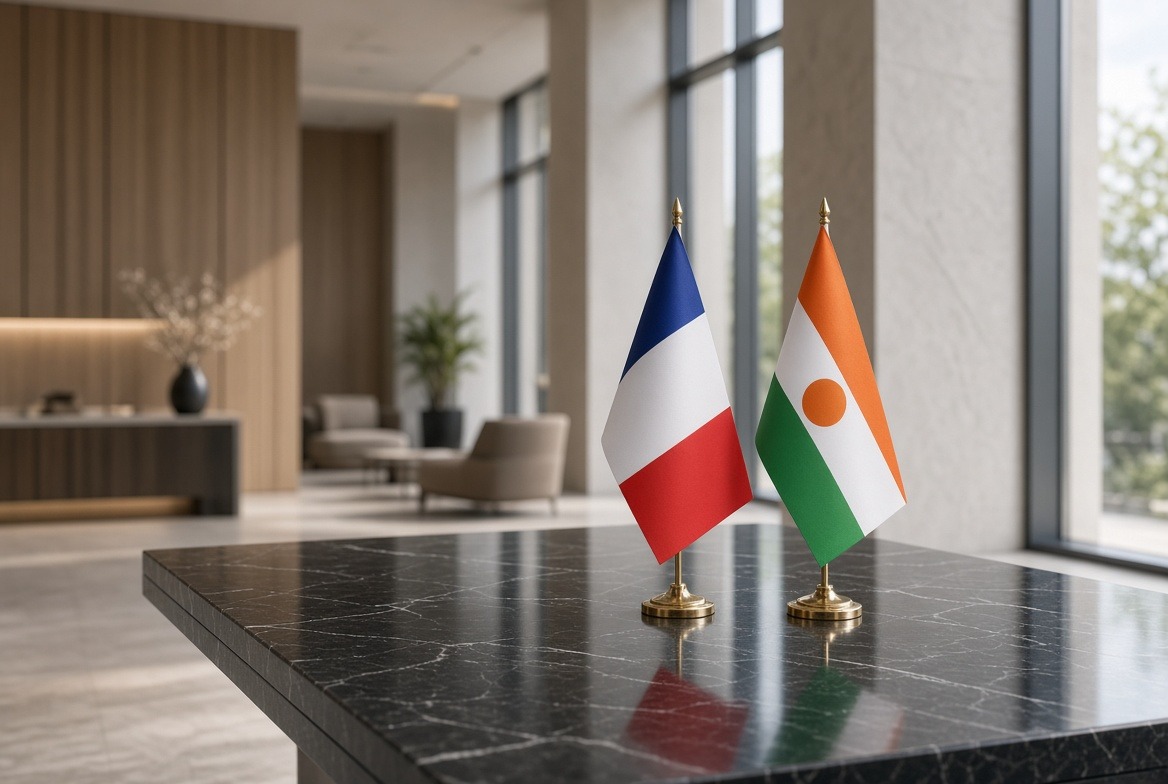
France has declared two agents of Niger’s General Directorate for Documentation and External Security (DGDSE) persona non grata. The two men were officially assigned to Niger’s embassy in Paris. The decision, which came to light on 8 October 2026, has reignited public debate about how far the diplomatic rift between Paris and Niamey can go, and what it means for the future of bilateral ties.
The two agents were ordered to leave France on 16 September and departed three days later. A French diplomatic source said their presence could no longer be justified because bilateral cooperation had ground to a halt. A Nigerien source, however, claimed one of the men was suspected of conducting surveillance on Nigerien opposition figures living in France. The expulsion has fuelled fresh questions about the state of relations and the prospects for any future dialogue.
Fallout in Paris and Niamey: a public debate over trust and sovereignty
The case has sparked a wider discussion about the role of intelligence officers in embassies and the limits of diplomatic immunity. In Paris, commentators have framed the expulsions as a necessary response to a partner that no longer cooperates. In Niamey, the move is seen as further proof of French interference and a reason to harden the country’s stance.
The fallout goes beyond the two individuals. The episode has exposed how quickly diplomatic channels can narrow when political trust collapses. It also raises uncomfortable questions for both governments about how to manage sensitive files—security, migration, consular affairs—without direct lines of communication.
How the crisis escalated: from the 2023 coup to reciprocal reprisals
To understand this latest development, it is necessary to look back at 26 July 2023, when President Mohamed Bazoum was overthrown by soldiers of the National Council for the Safeguard of the Homeland (CNSP), led by General Abdourahamane Tiani.
Paris refused to recognise the new military authorities and demanded the restoration of constitutional order. Niamey denounced what it called French interference in its internal affairs. The crisis soon moved beyond rhetoric. On 25 August 2023, Niger’s authorities gave French ambassador Sylvain Itté 48 hours to leave. Paris rejected the demand, arguing that the new authorities lacked the legitimacy to end his mission. After weeks of standoff, President Emmanuel Macron announced on 24 September 2023 that the ambassador would return home and French troops would be withdrawn. The military pullout was completed by the end of 2023.
Restrictions on travel and visas followed. In February 2024, several French citizens were turned back on arrival in Niamey despite holding valid travel documents. Paris also revoked visas for some Nigerien nationals. The French embassy in Niamey later closed, with French authorities citing serious obstacles to its work. In May 2024, the French foreign ministry confirmed to the Senate that the closure would continue until further notice.
A deeper political and security realignment
Beyond expulsions, the crisis reflects Niger’s political reorientation. Niamey has strengthened ties with Mali and Burkina Faso, both led by military governments installed after coups. Together they formed the Alliance of Sahel States (AES), aimed at boosting political and security sovereignty.
At the same time, France’s military presence in Niger—long presented by Paris as vital to fighting armed groups—has ended. Nigerien authorities have sharply criticised French policy in the Sahel, while Paris has defended its actions and condemned obstacles placed before its representatives. These developments have put questions of sovereignty, security, military partnerships and resource control at the centre of public debate.
What next for Paris–Niamey dialogue?
The expulsions are another sign of how weak bilateral relations have become. They do not necessarily mean a total diplomatic break: Niger’s embassy in Paris remains open. But they confirm that cooperation is severely hampered.
For ordinary Nigeriens and French citizens, the consequences go beyond diplomacy. Fewer institutional exchanges can complicate consular procedures, economic ties, cooperation projects and regional security coordination.
The key question is what conditions could lead to normalisation. That would require working communication channels, a clarification of disputes and the political will on both sides to resume dialogue without abandoning core positions. For now, the expulsion of the two agents is another episode in a crisis that began in July 2023 and whose effects are still being felt. Between mistrust, accusations and strategic distancing, Paris and Niamey face a major challenge: preserving the means of diplomatic communication even as the trust that once underpinned it has eroded.