A cross-border fraud that has sparked a wider conversation
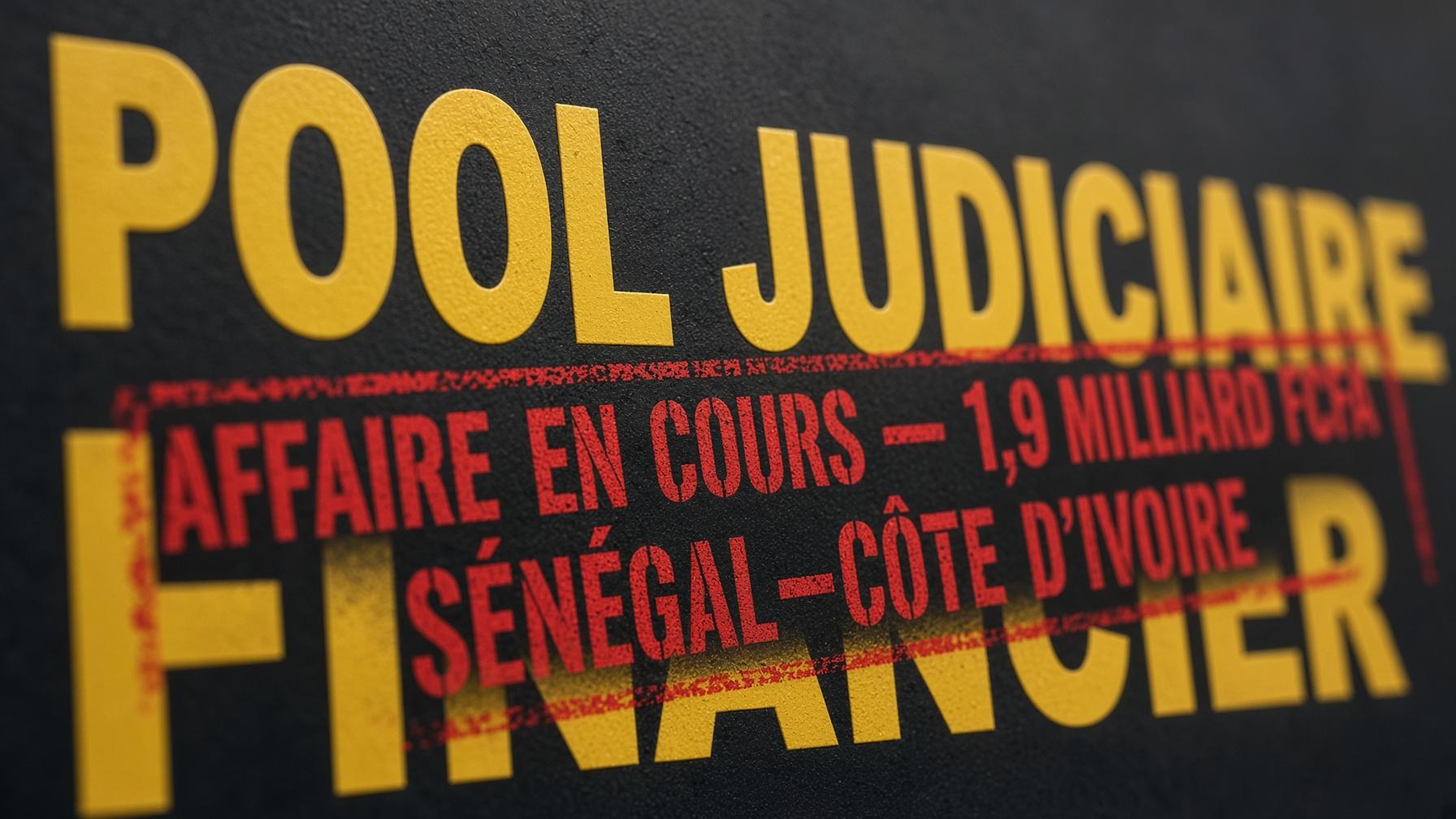
A suspected bank fraud involving an estimated 1.9 billion CFA francs has triggered intense public debate between Dakar and Abidjan, raising urgent questions about how two financial institutions were allegedly caught in a web of forged transfer orders. In Dakar, the Research Section has already made initial arrests, and the fallout is now being felt far beyond the banks directly involved. As the investigation unfolds, the focus is shifting to accountability, the tracing of funds, and the broader implications for banking security across the region.
The 1.9 billion FCFA loss at the center of the storm
The sheer scale of the alleged fraud—1.9 billion CFA francs—has amplified public concern. This substantial sum is at the heart of a probe involving two banks operating between Senegal and Côte d’Ivoire.
Preliminary findings suggest the institutions were manipulated through fake transfer orders. This method, which involves passing off fraudulent instructions as legitimate transfer requests, poses a serious threat to the integrity of banking operations, especially when multiple players and financial circuits are involved.
In such schemes, perpetrators typically exploit validation procedures, gaps in document verification, or weaknesses in internal controls. A falsified transfer order, if not properly authenticated, can trigger the movement of funds to unauthorized beneficiaries.
However, the exact circumstances remain unclear. Investigators must determine how the forged documents entered the banking chain, when irregularities were detected, and how the funds were allegedly moved.
Forgeries and the method under scrutiny
The use of false transfer orders is the main known element of the case. While technical details are not yet public, this method raises pressing questions about the control mechanisms in place at the banks concerned.
In a legitimate transfer, an order must undergo checks covering the identity of the instructing party, the authenticity of the instruction, the availability of funds, and the necessary authorizations. When these controls are bypassed or poorly applied, the risk of fraud escalates dramatically.
The possible sophistication of the scheme, the use of forged documents, and the potential involvement of multiple individuals are all avenues investigators are likely to examine. It is still too early to claim that internal complicity, a cyber intrusion, or identity theft played a role.
The challenge now is to reconstruct the chain of operations—from the preparation of the fraudulent orders to their processing by the banks, including the recipient accounts and any subsequent movements of the funds.
This reconstruction will be crucial to understanding whether the events stem from an organized operation, a series of failures, or a combination of factors.
Dakar’s Research Section takes the lead
In Dakar, the investigation has reached a first milestone with the arrest of suspects by the Research Section. This unit of the national gendarmerie, tasked with complex judicial investigations, will help shed light on the circumstances of the alleged fraud.
The initial arrests are significant, but they do not prejudge the guilt of those involved or the outcome of the proceedings. Investigators still need to gather statements from suspects, compare available evidence, and search for material or documentary proof.
Analyzing bank statements, disputed transfer orders, communications between parties, and transaction trails could be essential to establishing the facts. The investigation must also determine who prepared the documents, who transmitted them, and who benefited from the funds.
At this stage, the exact number of people involved, their respective roles, and the possible charges cannot be considered definitively established.
The investigation may lead to further hearings or arrests if sufficient evidence emerges to identify others who may have participated.
A cross-border dimension that complicates the probe
The Senegal-Côte d’Ivoire aspect adds another layer of complexity. When banking operations span multiple jurisdictions, investigations may require information exchanges between authorities and cooperation with the financial institutions involved.
The priority is to trace the 1.9 billion CFA francs allegedly diverted. Investigators must identify beneficiary accounts, verify successive transfers, and determine whether the funds were withdrawn, moved to other accounts, or converted into assets.
This is essential to measure the true extent of the loss and assess the chances of recovery. In financial fraud cases, speed can be decisive, as transfers can happen quickly and complicate locating the funds.
Cooperation between stakeholders, in line with applicable procedures, could therefore be critical to consolidating evidence and preventing financial movements from hindering the investigation.
Banking security under renewed scrutiny
Beyond the amount involved, the case raises a fundamental question: the reliability of controls over banking operations. Financial institutions regularly face fraud attempts that exploit administrative procedures, digital tools, and human behavior.
Systematic verification of sensitive instructions, separation of authorization and execution duties, confirmation of unusual requests with clients, and monitoring of atypical transactions are among the measures that can mitigate these risks.
Banks are also urged to strengthen staff training and improve detection mechanisms for suspicious operations. Extra vigilance is needed when amounts are high or transactions show unusual characteristics.
It would be premature, however, to conclude that a specific failure occurred at the banks concerned before the investigation’s findings are published. Only the probe will establish whether control weaknesses contributed to the alleged events.
What next: accountability and the fate of the funds
The case of the alleged 1.9 billion CFA francs diverted between Dakar and Abidjan has now entered a phase of investigations whose conclusions will be decisive. After the initial arrests by Dakar’s Research Section, several questions remain: How was the fraud executed? Who are the real beneficiaries? Can the funds be recovered? And did others participate?
These are questions investigators must answer based on verifiable evidence.
Meanwhile, the case serves as a reminder that bank fraud is not just an immediate financial loss. It can weaken client trust, expose institutions to legal risks, and test cooperation between authorities in multiple countries.
The file remains open and responsibilities are yet to be established. One thing is certain: in an economy where financial flows cross borders daily, securing transactions and ensuring a swift judicial response are major challenges. The next steps in the investigation will determine whether this alleged operation involved an organized network and clarify the fate of the funds at the center of this financial scandal.