The recent decision has generated little surprise, as the rationale for its rejection had already been widely discussed among informed observers. These arguments were consistently reiterated by the head of government, who maintained that the proposal infringed upon the executive’s exclusive regulatory authority.
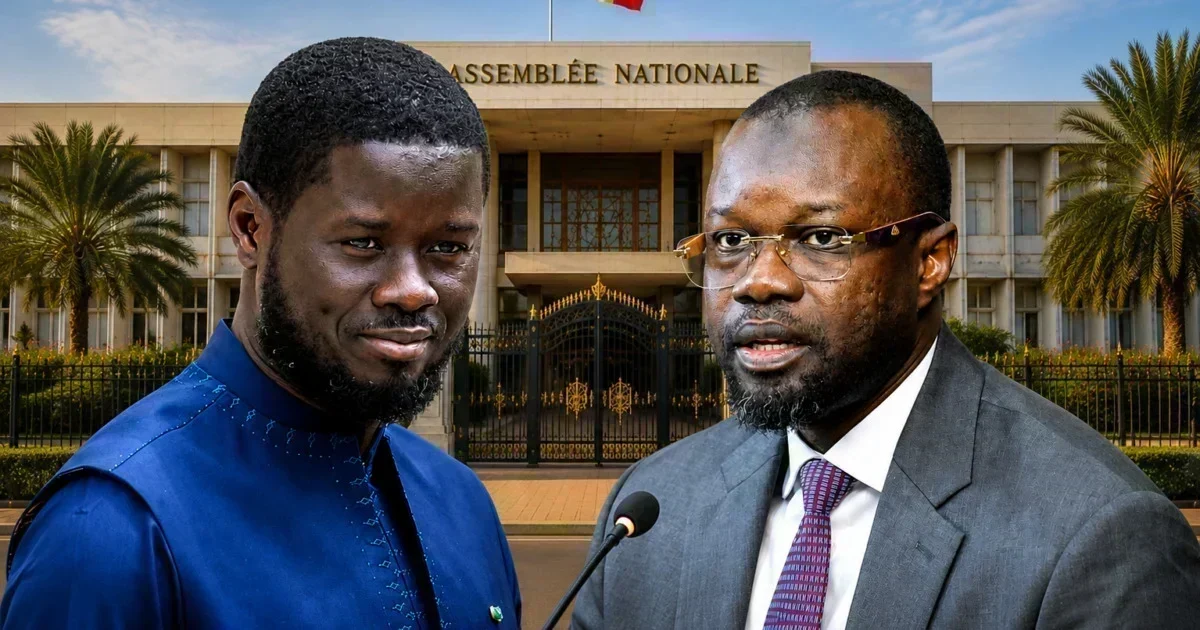
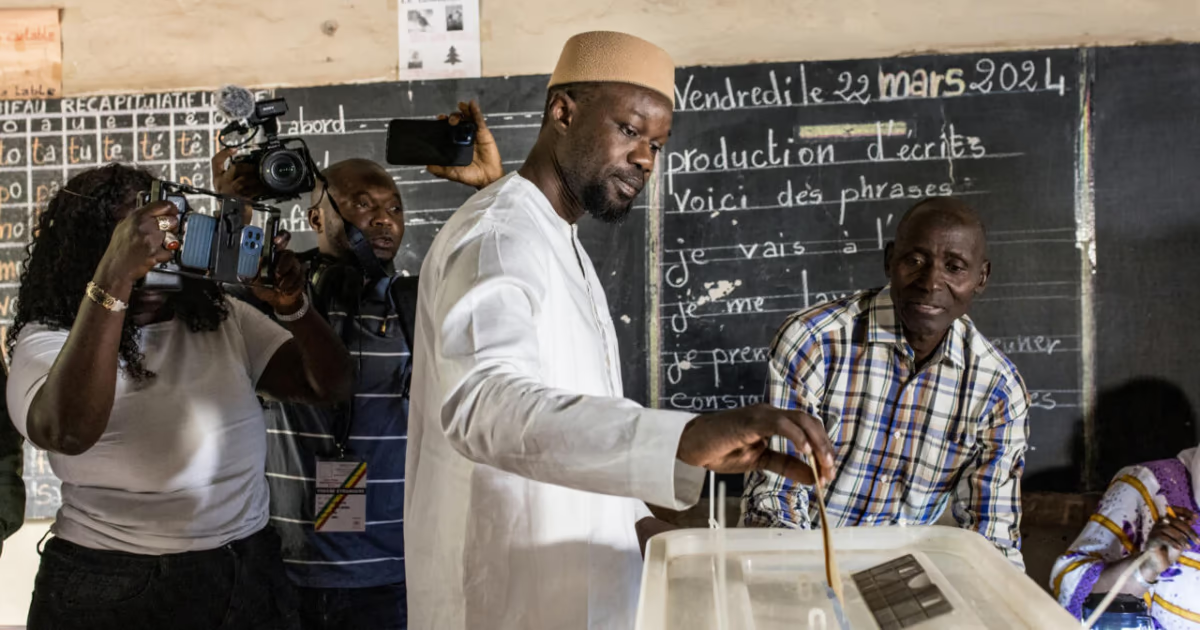
On September 1st, the head of government is set to present his General Policy Statement to the deputies, immediately after a legislative proposal to regulate special funds, which he championed, was declared inadmissible. The question looms: will he face a motion of censure, or is such a challenge unlikely given the minimal political upside for his opponents? The coming weeks and months in Senegal’s political landscape are expected to be dominated by strategic maneuvering. In this dynamic environment, Ousmane Sonko appears to hold a strong hand, under the watchful gaze of the populace.
A Pyrrhic victory for the government
The back-and-forth between the executive and legislative branches, under the arbitration of the Conseil constitutionnel, continues with renewed intensity. The latest development is decision n°7/C/2026 from the ‘Seven Sages,’ which deemed the proposed bill to regulate special credits inadmissible. This ruling was largely anticipated, as the reasons for its rejection had already been publicly articulated by numerous experts and subsequently echoed by the head of government, who argued that it encroached upon the executive’s specific regulatory domain.
In essence, the Conseil constitutionnel‘s conclusion mirrored these earlier sentiments. However, beyond the legal technicalities, which will undoubtedly see further extensions, the most significant gains will be made in the political battleground. On this front, Ousmane Sonko seems to be maintaining a strong position, closely observed by the citizens of this West Africa Sahel nation.
The camp of President Bassirou Diomaye Faye has secured another victory: the Conseil constitutionnel‘s decision n°7/C/2026 declared inadmissible the bill initiated by Guy Marius Sagna, which aimed to establish a framework for special funds. Yet, this could prove to be a Pyrrhic victory, as the political advantage from this rejection was immediately seized by Pastef. In a communiqué, the party denounced what it called a betrayal of its commitments regarding…