The loss of a Nigerian Air Force ATR-42 near Igbokoda has triggered an outpouring of grief and a wave of public debate across Nigeria, with 32 people — 25 passengers and seven crew members — believed to have been on board when the aircraft went down on Monday, 5 October. As rescue teams pressed on through the difficult terrain of Ondo State’s coastal belt, the focus was already shifting to the fallout: what the disaster means for the families left waiting, for the communities around the crash site, and for the future of military air operations in the country.
A routine flight that ended in silence
The aircraft was conducting a routine mission between Benin City and Lagos when air traffic controllers lost contact with it at approximately 9:13 a.m. Radio calls to re-establish communication went unanswered, and within hours authorities confirmed the plane had crashed in the Igbokoda area of Ondo State, close to a naval base.
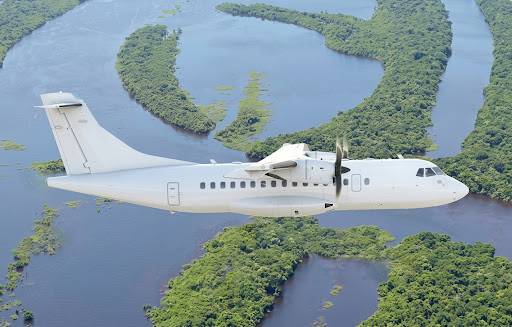
The Nigerian Air Force identified the downed aircraft as an ATR-42, a type used by the service for transport as well as some surveillance and reconnaissance duties. The minister of aviation and aerospace development, Festus Keyamo, said the wreckage had been located and that search-and-rescue operations were launched immediately. He also stressed that the information available so far remained preliminary.
What we know about those on board
Officials have put the number of people on board at 32 — 25 passengers and seven crew members. No identities have been officially released, and no definitive casualty toll has been made public while rescue efforts continue. Authorities have urged the public not to circulate unverified claims, as early images and accounts from Igbokoda fuelled anxiety across the region.
That caution has become a central part of the story’s aftermath: in a country where rumors travel fast, the gap between official silence and public speculation has left families desperate for any word on the fate of their loved ones.
Difficult terrain, urgent rescue efforts
The crash site lies in a coastal, swampy environment around Igbokoda, complicating access for emergency teams. Debris was reportedly found near a waterway. Nigerian forces mobilised to search for possible survivors and secure the area, with the air force coordinating alongside local authorities and emergency agencies.
In a region where communities are scattered and some areas are hard to reach by road, locating the wreckage quickly was itself an essential first step. The hours that followed were expected to clarify the extent of the damage and the fate of those aboard.
Why the cause remains a mystery
No official explanation has been offered for the crash. The loss of radar contact and the breakdown in radio communications are the main known elements of the timeline, but they alone cannot determine whether mechanical failure, weather, human error or another factor was involved.
An investigation is expected to examine flight data, the technical condition of the aircraft, communications with controllers and the weather at the time. Securing the debris to preserve evidence will also be critical to reconstructing the final minutes of the flight.
A fresh test for Nigeria’s military aviation
The accident comes as Nigeria’s armed forces rely regularly on their air fleet for transport, surveillance and support to military operations. The ATR-42 is among the aircraft used for such missions; the lost plane, identified by tail number NGR 931, was on what officials described as a routine flight.
The disaster inevitably raises questions about fleet condition, maintenance procedures and the circumstances in which military air missions are flown. Drawing conclusions before the investigation reports, however, would be premature — a point officials have been keen to emphasise.
In Igbokoda, a community waits and worries
News of the crash spread alarm through the Ondo State locality. Early reports were contradictory — some initially mentioned a helicopter before the air force confirmed an ATR-42. Local authorities called for calm and urged residents to rely on official information.
For the families of the 32 people on board, the priority now is answers. As rescue teams continue working around the site, attention is fixed on identifying possible victims and searching for survivors.
What comes next for Nigeria
The human toll and the cause of the crash remain officially unknown. What is certain is that the disaster has set off a major emergency operation in Ondo State and placed Nigerian authorities under pressure to shed full light on what happened in the sky between Benin City and Lagos.
Beyond the immediate response, the coming weeks will test how the country reckons with the fallout: how it supports the families, how transparently it handles the investigation, and whether the tragedy prompts a broader reckoning over the safety of military aviation. For now, a nation waits — and a debate over accountability has only just begun.