A transit milestone that is forcing a regional rethink
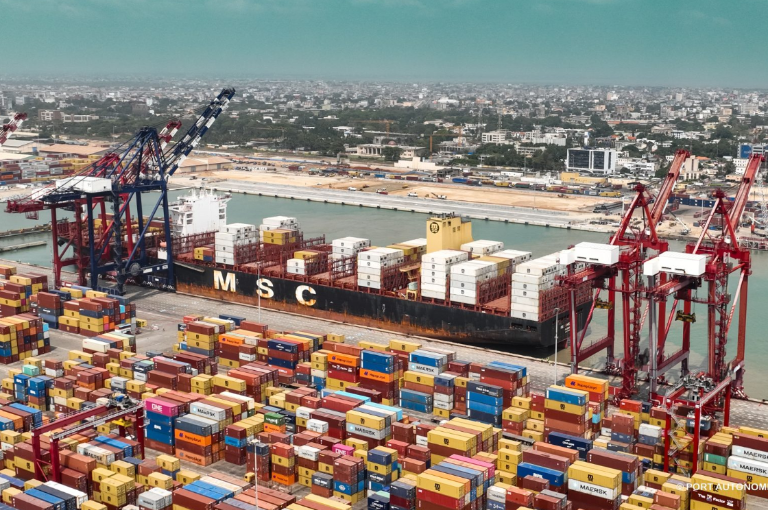
When Burkina Faso’s freight volume through the port of Cotonou climbed to nearly one million tonnes in 2025, it did more than flatter Benin’s port statistics. It triggered a wider conversation about how West Africa’s landlocked economies move their goods, who benefits from those routes, and whether the old assumptions about Sahel trade corridors still hold. The figures, dominated by petroleum products, have reignited a public debate in both countries about dependence, diversification and the durability of new commercial alliances.
How the Niger crisis redrew the map
For years, Niger was the anchor of Cotonou’s transit business. Geography favoured it: the road corridor linking the port to Niamey made Benin’s harbour a natural gateway for Nigerien trade.
That arrangement unravelled after the political upheaval in Niger in July 2023 and the subsequent deterioration in relations between Niamey and Cotonou. The closure of the land border and friction over the movement of Nigerien crude disrupted the historic corridor, leaving the port’s operators scrambling for alternatives while landlocked economies continued to generate transit demand.
It was in that unsettled environment that Burkina Faso moved up the ranks.
Burkina Faso steps into the spotlight
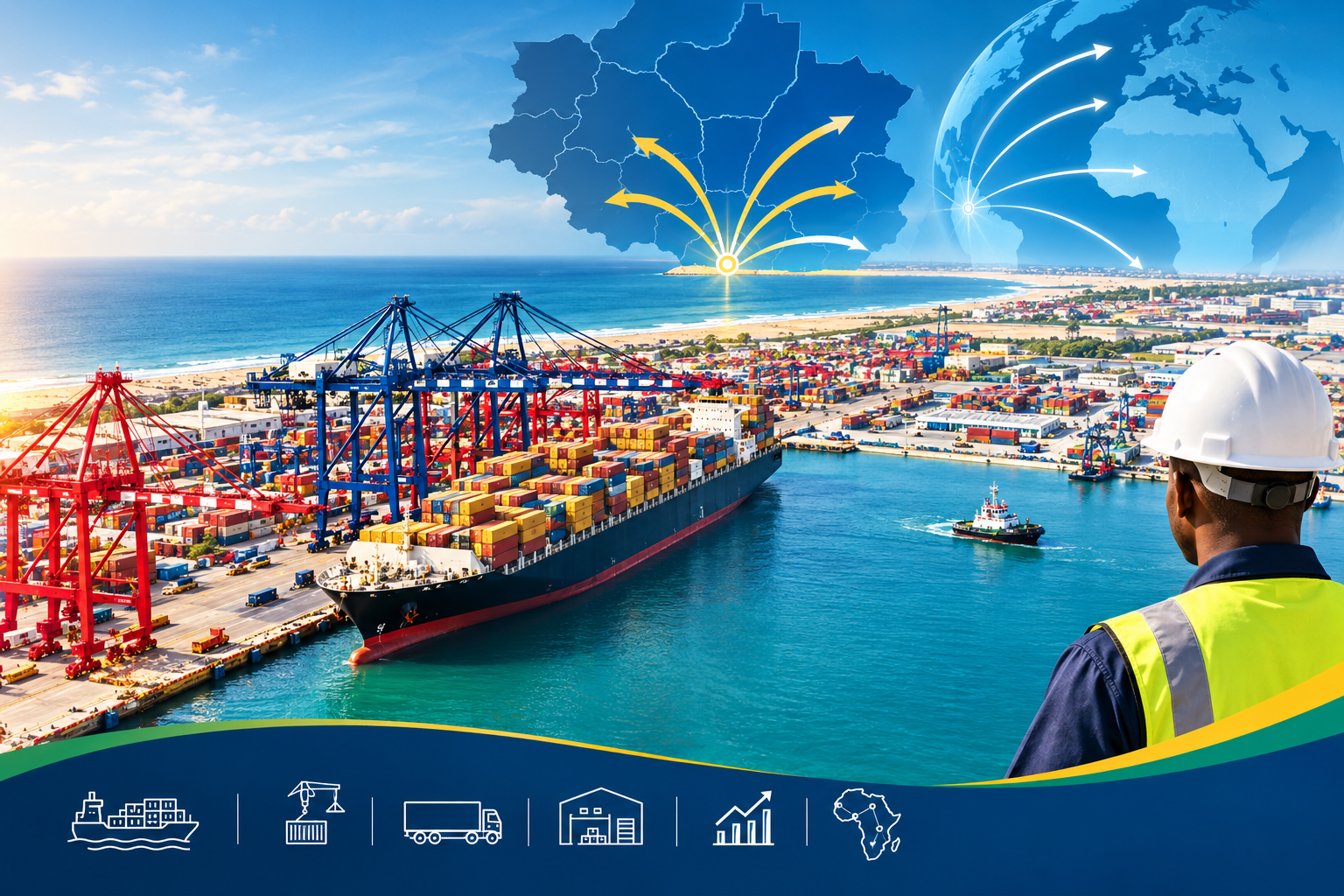
Data presented by the commercial directorate of the Port Autonome de Cotonou at a professional gathering in 2026 illustrate the scale of the shift. Transit accounted for 39.2 percent of port traffic in 2025, with Burkina Faso responsible for 16 percent — close to a million tonnes of goods, largely hydrocarbons.
The number reflects less the birth of a new route than the acceleration of an established one. Burkina Faso has long maintained several outlets to the sea — Abidjan, Lomé, Tema and Cotonou — and picks between them based on cost, fluidity, and the political and security climate.
The deterioration of the Benin-Niger axis therefore opened a window for Burkinabè traffic.
The trend is especially visible in the fuel market. Landlocked and hungry for energy, Burkina Faso relies on Gulf of Guinea ports for part of its petroleum supplies. Cotonou can serve as an entry platform before cargoes are trucked onward to Ouagadougou and other regions.
Why hydrocarbons are driving the shift
The heavy presence of petroleum products in flows bound for Burkina Faso is no coincidence. These cargoes generate large volumes and require a steady logistics chain linking the port, storage facilities and the regional road network.
That specialisation partly explains why Burkina Faso has become such a visible outlet in the port’s transit statistics. It also clarifies why the port is now working to consolidate its role as a regional hub. Growth no longer depends solely on serving the Benin market, but on Cotonou’s capacity to connect coastal economies with landlocked markets.
2026 Data confirm Cotonou’s resilience
Early 2026 results suggest the diversification strategy is paying off, even if available statistics do not yet allow a precise measure of Burkinabè tonnage for the full year.
In the first half of 2026, the port handled 7.79 million tonnes of goods, against 6.68 million a year earlier — a rise of 16.6 percent. That followed an exceptional 2025, when annual traffic jumped from 9.6 million to 14.7 million tonnes, a 52 percent increase.
The composition of the 2026 growth deserves scrutiny. Imports were nearly flat at 4.12 million tonnes versus 4.10 million, a gain of just 0.6 percent. Exports, by contrast, surged 33.3 percent, from 2.16 to 2.87 million tonnes. Transshipment posted a spectacular jump: 516,558 tonnes in the first half of 2026, compared with 204,928 tonnes a year earlier, a rise of 152.1 percent.
These figures do not directly measure road traffic to Burkina Faso, but they show Cotonou strengthening its role as a regional redistribution platform at a time when old trade routes are being redrawn.
A corridor with growing strategic weight
For Burkina Faso, the stakes are strategic. Multiplying political and security tensions across the region have made corridor diversification essential. No single port can be treated as a permanent solution for a landlocked country.
In that competitive landscape, Cotonou holds one clear advantage: its geographic proximity to Burkina Faso and a road corridor long used by Burkinabè operators. The port also boasts modernised infrastructure and is trying to cut processing times and improve fluidity. It has digitised truck movement management to ease clearance and transit operations.
The competition now plays out as much on infrastructure as on political stability and corridor security.
Niger has not left the stage
The new transit geography does not mean the Nigerien market is set to vanish from Cotonou’s horizon.
Oil flows prove the point. In 2026, Nigerien crude continued to use Benin’s infrastructure to reach international markets. A one-million-barrel cargo was shipped from the Sèmè-Kpodji terminal in August 2026.
The commercial relationship between the two countries thus remains paradoxical: the diplomatic dispute disrupts part of their overland trade, yet both economies stay linked by strategic infrastructure.
For Cotonou, the challenge is to stop depending excessively on a single hinterland market. Burkina Faso looks like one of the most promising answers to that new reality.
Will the realignment last?
With nearly one million tonnes of goods transiting to Burkina Faso in 2025, the country has installed itself among the port’s leading outlets. Data for 2026 do not yet confirm whether that volume has been maintained or exceeded, given the lack of detailed half-year figures by destination.
They do, however, deliver one essential lesson: despite the shock to the Nigerien corridor, Cotonou keeps growing. With 7.79 million tonnes in the first half of 2026 against 6.68 million a year earlier, the port is proving its ability to absorb and redistribute new flows.
Burkina Faso thus finds itself at the heart of a broader transformation. For Cotonou, the task is no longer merely to offset the loss of part of Nigerien traffic, but to build a port model less dependent on a single corridor.
The question now is whether this reshuffling will prove durable. If Burkinabè traffic keeps rising, the Cotonou-Ouagadougou corridor could establish itself as one of the new structuring axes of regional trade. And the Benin port, long associated with the Nigerien market, may well take on a different face.