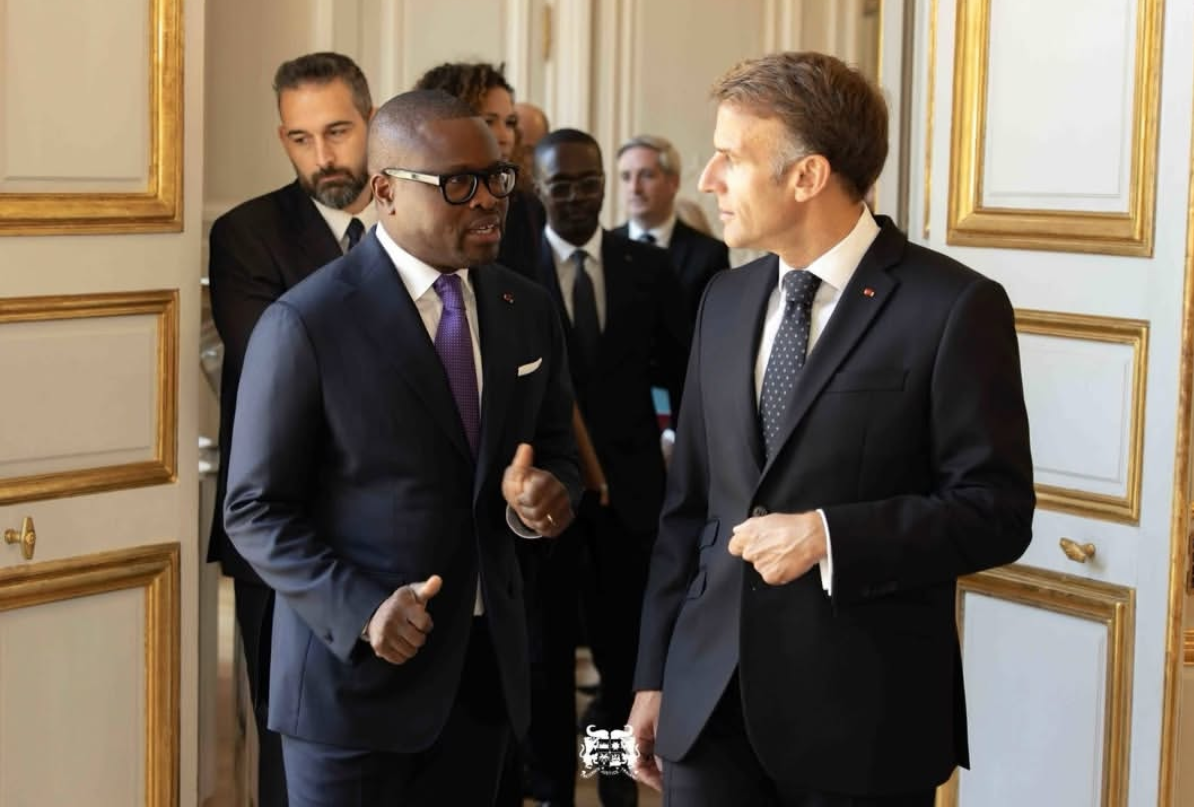
Benin and France have moved into a new phase of their partnership, and the reaction has been immediate. At a ceremony held at the Élysée on Monday, 5 October 2026, the two countries showcased a set of financial commitments worth a combined 65.5 billion CFA francs, aimed at backing structural projects in Benin. The funding, drawn together with French and European partners, is focused on electricity, agriculture and health — three areas that will now be watched closely as the debate shifts from signatures to delivery.
A partnership that now faces the test of expectations
The Benin-France relationship has found fresh momentum. Gathered at the Élysée on Monday, 5 October 2026 for the presentation of the agreements reached between the different parties, Beninese officials and their French partners stressed the weight of the new financial commitments meant to support the country’s development.
In total, 65.5 billion CFA francs have been mobilised. These resources are expected to support several structural projects in sectors considered vital for improving living conditions and strengthening Benin’s economic capacity.
Through these new accords, Cotonou and Paris intend to give concrete form to their shared desire to consolidate their partnership, prioritising investments capable of producing lasting effects on national development. Public attention is now turning to how quickly those effects will be felt.
Electricity: the priority that will shape the verdict
Electricity is among the sectors covered by the new funding. Access to reliable, available energy is a major issue for Benin’s economic and social development.
The announced financial support is expected to help reinforce infrastructure and capacity in this field. Improving energy supply matters for households, businesses, public services and productive activities alike.
With Benin seeking to accelerate its economic transformation, investment in the power sector is seen as decisive for supporting growth, encouraging new activity and improving essential services over the long term. Observers will be judging the deal largely on whether the lights stay on.
Agriculture: a strategic pillar under scrutiny
The agreements presented at the Élysée also cover agriculture. A major pillar of Benin’s economy, farming plays a central role in household incomes, employment and food security.
Funding mobilised with French and European partners should help support Benin’s ambitions in this area. The aim is to foster a more efficient, better structured agricultural sector, more capable of meeting people’s needs.
Through this focus, Franco-Beninese cooperation intends to back a sector tied directly to citizens’ daily lives. Stronger agricultural investment can also help improve productivity, create more value and open new prospects for those working in production and processing chains. That promise is now part of the public conversation about the deal’s real reach.
Health: a measure of the accords’ human impact
Health is the third major area highlighted under these new commitments. Investment in this sector reflects a desire to place people’s wellbeing at the centre of cooperation between Benin and its partners.
Strengthening the health system is a major challenge as the population grows and citizens’ needs increase. The resources mobilised should support projects capable of improving the sector’s capacity and, ultimately, the quality of services offered to the public.
By linking health issues to investment in energy and agriculture, the new accords outline a comprehensive approach to development, based on reinforcing sectors essential to the country’s economic and social life.
France and Europe at Benin’s side — and the questions that follow
Beyond the headline figure of 65.5 billion CFA francs, the Élysée ceremony also illustrates a wish to diversify and strengthen the partnerships mobilised around Benin’s development priorities.
The financial commitments bring together French and European partners around structural projects. This mobilisation reflects the interest shown in Benin’s ambitions and its development trajectory.
For Cotonou, the new funding offers opportunities to speed up projects with a direct or indirect impact on the population. For France and its European partners, it signals a willingness to continue cooperation based on concrete objectives and on supporting priorities defined by Benin. Whether that intent translates into results is the question now driving debate.
From agreements to results: the next chapter
Signing and presenting the accords is only one step. Their true significance will be measured through the effective implementation of the projects concerned and their results on the ground.
Expectations are particularly high in electricity, agriculture and health — three fields whose performance has direct consequences for people’s daily lives and for the country’s economic prospects.
With these new commitments, Benin intends to pursue efforts towards stronger, more inclusive development. Cooperation with France and European partners is thus reinforced around investments meant to answer priority needs.
The ceremony at the Élysée marks a new chapter in relations between Cotonou and Paris. By mobilising 65.5 billion CFA francs for structural projects, both sides are stating their ambition to make their partnership an instrument serving development, growth and the wellbeing of Benin’s people. The coming months will show whether that ambition holds up to scrutiny.