The disappearance of Moussa Kaka, a towering figure in Niger’s media landscape, has triggered a wave of reactions across the country and beyond. Since the July 26, 2023 coup that installed General Abdourahamane Tiani, journalists have faced mounting pressures — detentions, media suspensions, and legal harassment. Kaka’s vanishing on August 31 has become a flashpoint, raising urgent questions about what remains of press freedom and what comes next.
A disappearance that has stunned the nation
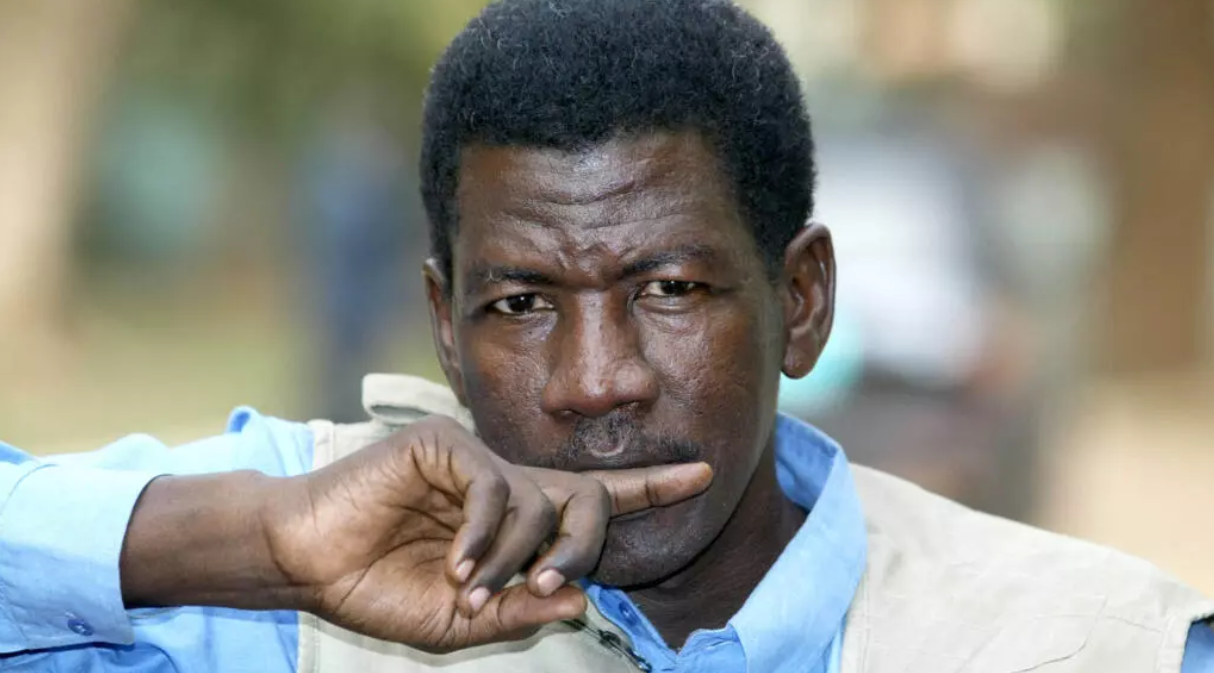
In newsrooms and homes across Niger, one question echoes: where is Moussa Kaka? The journalist and director of Radio-Télévision Saraounia has not been heard from since August 31, 2026. That evening, around 7 p.m., he left his office in Niamey to go home. He never arrived. His family, friends, and colleagues have had no news since.
Kaka’s disappearance comes after nearly four decades in journalism. A former correspondent for international outlets, he built Radio-Télévision Saraounia into a respected voice. His absence has left a void that many fear signals a darker turn.
Reporters Without Borders (RSF) has called on Nigerien authorities to do everything possible to find him and clarify the circumstances. The organization has also referred the case to the United Nations Working Group on Enforced or Involuntary Disappearances. So far, no public evidence links the authorities to his disappearance.
The shadow of a previous case
The context is heavy with precedent. In September 2024, Ivorian journalist Serge Mathurin Adou, based in Niamey and working for Canal 3, also vanished. He had told his wife he was responding to a summons from the judicial police. Weeks passed with no word. Professional organizations in Côte d’Ivoire raised alarm, and the Ivorian government said it was following the case and making representations to Nigerien authorities.
Adou was eventually found alive, detained by Nigerien authorities and charged with “endangering state security” in a case linked to accusations of destabilizing Burkina Faso. That episode showed that in Niger, a journalist can be considered missing for weeks before their detention is officially acknowledged. But it does not prove that Kaka’s disappearance follows the same script.
A climate of growing repression since the coup
On July 26, 2023, President Mohamed Bazoum was overthrown by soldiers led by General Tiani. The power shift marked a turning point for media. The transitional authorities quickly moved against several international outlets. Signals of RFI and France 24 were suspended, and relations with foreign media deteriorated.
RSF considers the coup a major turning point in the decline of press freedom in Niger. The organization has documented arrests, detentions, and prosecutions of journalists since then. In this environment, topics deemed sensitive — the military, security, governance, international relations, or the functioning of power — have become particularly difficult to cover.
Samira Sabou: an early warning sign
Just weeks after the coup, the case of journalist and blogger Samira Sabou caused alarm. On September 30, 2023, she was arrested in Niamey by men in civilian clothes claiming to be police. For days, her relatives had no idea where she was. RSF denounced a secret detention and demanded explanations. Sabou eventually reappeared at the judicial police headquarters and was held for several days before release. Her case became one of the first symbols of the new pressure on journalists after the regime change.
2024: Arrests multiply
In April 2024, Ousmane Toudou was arrested amid political tension. A journalist and former communications adviser to deposed President Bazoum, he faced charges including state security offenses. Days later, Soumana Idrissa Maïga, publication director of the daily L’Enquêteur, was picked up. His arrest followed an article about the alleged presence of listening devices in official buildings. He was charged with “undermining national defense” and detained. After more than two months in prison, he was granted provisional release in July 2024. The Committee to Protect Journalists (CPJ) and RSF condemned the charges.
2025: Pressure escalates
2025 confirmed the trend. In January, Seyni Amadou, editor-in-chief of Canal 3 TV, was arrested after broadcasting a “barometer” evaluating government ministers’ performance. The channel was suspended, and his press card was targeted. He was released days later. RSF denounced an attack on press freedom and urged authorities to stop pressuring media.
The same month, Gazali Abdou Tasawa, a Deutsche Welle correspondent, was arrested after a report on the living conditions of migrants and refugees in Niamey. RSF called his detention arbitrary. In May, three Sahara FM journalists — Hamid Mahmoud, Mahaman Sani, and Massaouda Jaharou — were arrested after a program on military cooperation between Niger and Russia. CPJ condemned another use of judicial procedures against media professionals covering sensitive topics.
Six journalists arrested in one case
On October 30, 2025, six journalists and media professionals were arrested in Niamey: Moussa Kaka, Abdoul Aziz Idé, Ibro Chaibou, Souleymane Brah, Youssouf Sériba, and Oumarou Kané. They were prosecuted over the social media sharing of an invitation to a press conference. Three were released under judicial supervision. Three others — Ibro Chaibou, Youssouf Sériba, and Oumarou Kané — remained in detention. Sériba and Kané were eventually freed in July 2026. Chaibou was released on August 28, 2026, after nearly ten months behind bars. Just days later, Kaka vanished. The timing is troubling, though it does not by itself establish a link.
Thirteen journalists arrested in 2025
According to the Media Foundation for West Africa, 13 journalists or media professionals were arrested in Niger in 2025. That figure hints at the scale of pressure on the profession, counting not only long-term detainees but also those arrested and later released. Add to that media suspensions and restrictions on foreign outlets.
RSF ranking: a measure of decline
RSF’s World Press Freedom Index offers another indicator. In 2025, Niger ranked 83rd out of 180 countries. In the 2026 index, it fell to 120th — a drop of 37 places in a single year. RSF attributes this to the multiplication of journalist arrests, prosecutions, and media restrictions since the 2023 coup. The organization also highlights the impact of cybercrime legislation, which can expose journalists to criminal charges for certain online content.
After arrests, disappearances: what remains?
Kaka’s disappearance should not be used to draw conclusions unsupported by facts. But it occurs in a context that cannot be ignored. Since the July 2023 coup, Nigerien journalists have faced arrests, detentions, suspensions, and legal proceedings. Some were freed after days; others spent months in prison. Serge Mathurin Adou was reported missing before his detention was revealed. Now Kaka is unaccounted for.
A transparent investigation is essential — for his family, his colleagues, and Nigerien society as a whole. Press freedom is not measured only by the number of newspapers or radio stations allowed to operate. It is also measured by the ability of journalists to investigate, question power, and report facts without fearing arrest, prosecution, or silencing.
In Niger, the question now goes beyond Kaka’s fate. It touches on citizens’ right to be informed. And when a journalist disappears in a context where so many others have already been arrested or detained, another question inevitably arises: what remains of press freedom when those tasked with exercising it are no longer sure they can make it home?