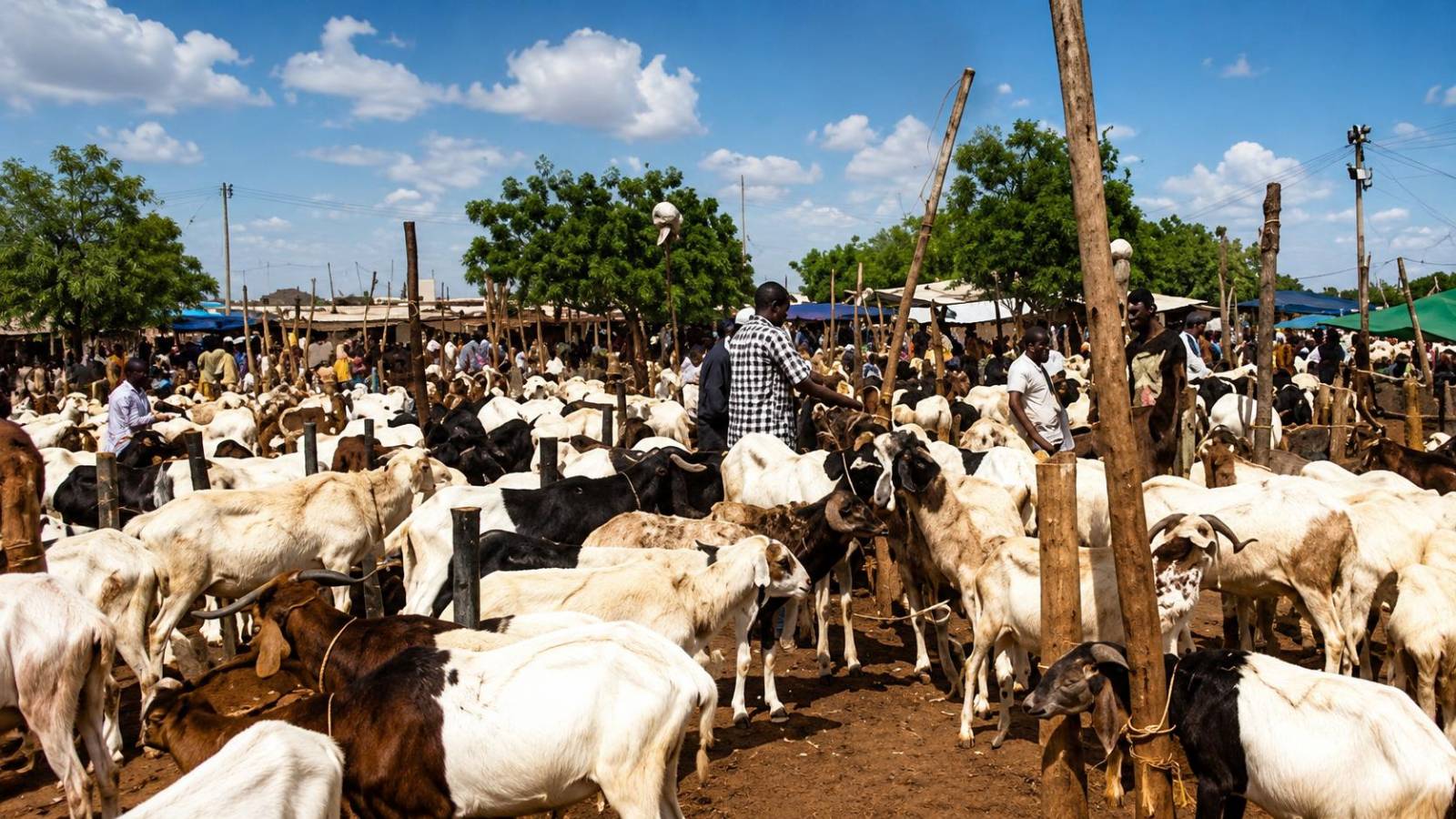
The Burkinabe government has made a bold move ahead of the Tabaski festival, banning livestock exports to prioritize local consumers. While the social intent is clear, this decision carries significant contradictions and economic risks that could backfire.
Protecting urban pockets at the expense of rural producers
The government’s strategy aims to lower sheep prices in cities like Ouagadougou, easing the financial burden on urban families. However, this comes at a steep cost for rural farmers, who already face severe challenges—including insecurity, cattle theft, and shrinking grazing lands due to the ongoing security crisis.
By cutting off lucrative export markets in Côte d’Ivoire and Bénin, Ouagadougou is forcing rural producers into a tighter financial squeeze. Essentially, the measure subsidizes urban celebrations while deepening poverty in the countryside.
Can Burkina Faso absorb its own livestock surplus?
The government’s logic assumes domestic demand can absorb the excess supply. Yet, the reality is far more complex. Tabaski is a short-lived event, and once the celebrations end, what happens to the unsold animals?
Livestock isn’t just a product—it’s a living asset that requires daily feeding and care. If farmers struggle to find buyers or are forced to sell at a loss, the entire sector could face financial collapse within months. While long-term investments in modern abattoirs are a step in the right direction, current infrastructure remains ill-equipped to handle such a sudden influx.
A risky geopolitical game with lasting consequences
This unilateral move sends a strong signal: Burkina Faso is willing to sacrifice regional economic ties for perceived sovereignty. By halting livestock shipments to Côte d’Ivoire and Bénin, Ouagadougou is wielding its cattle industry as a bargaining chip.
Yet, trade cuts both ways. Neighboring countries are already seeking alternatives—Côte d’Ivoire, for instance, is turning to Mauritania to meet its needs. Over time, Burkina Faso risks losing long-standing export markets permanently. This decision also exposes the fragility of regional integration, where short-term self-sufficiency trumps long-term cooperation.
On a macroeconomic level, this gamble is dangerously high-stakes. It endangers local farmers, jeopardizes the future of the livestock sector, and risks isolating Burkina Faso from its natural economic partners.