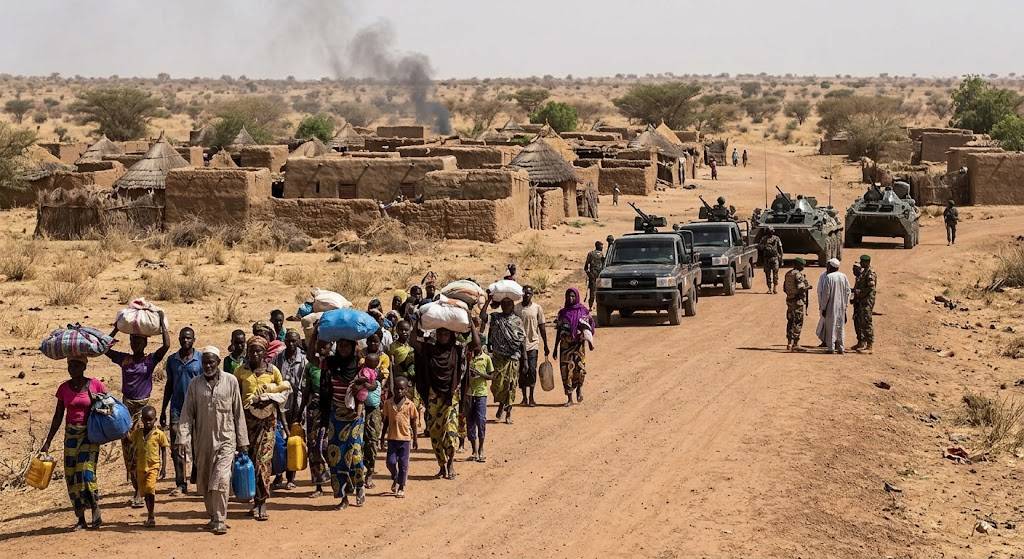
In a West African landscape already strained by deepening geopolitical rifts, the recent commercial decisions made by Niger’s transitional authorities have sparked sharp reactions among regional economic operators and analysts.
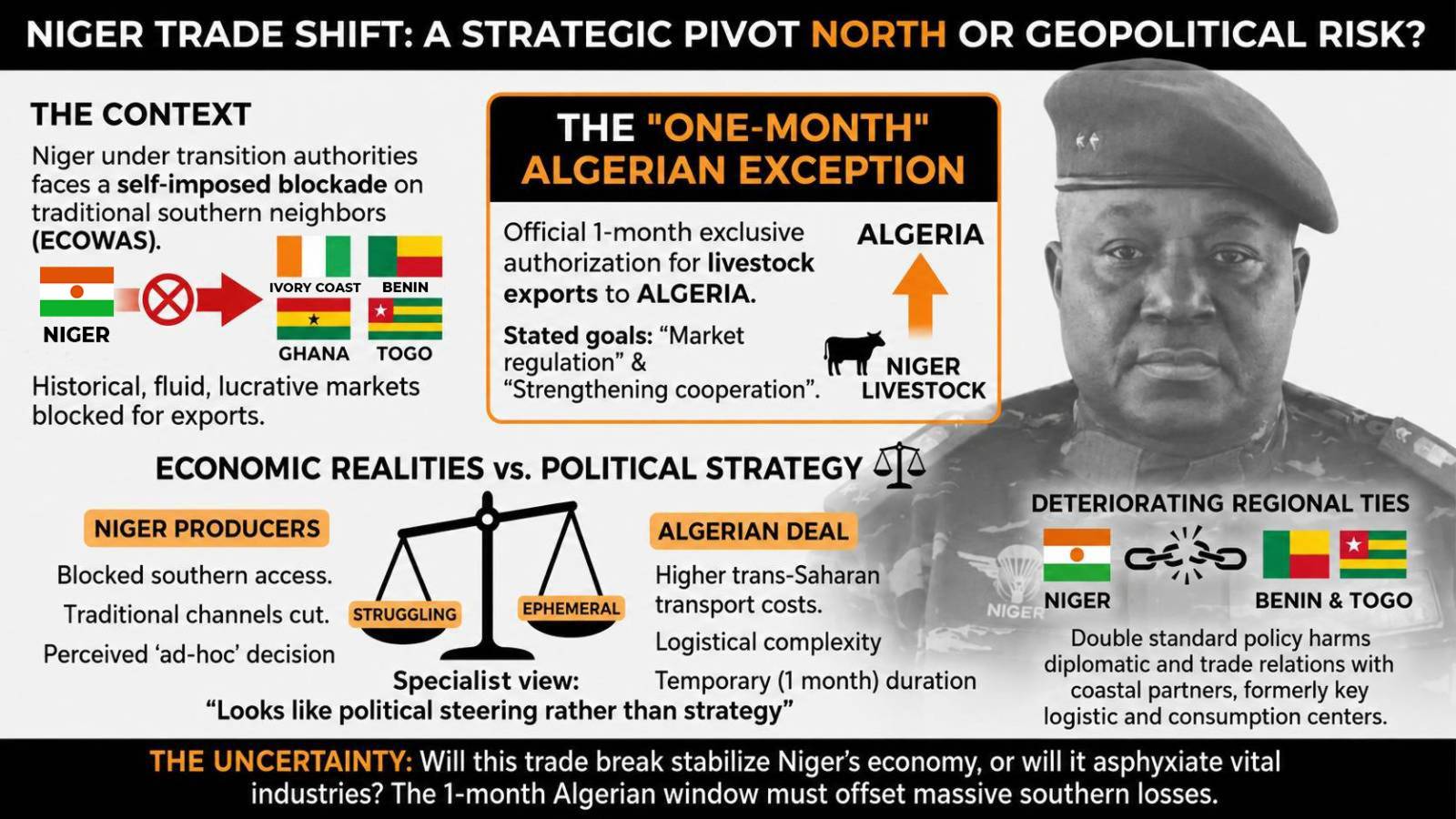
While trade routes to the Gulf of Guinea remain tightly controlled or severely restricted—particularly for exports to Côte d’Ivoire, Bénin, Ghana, and Togo—the government in Niamey has unexpectedly carved out a temporary pathway northward.
A one-month lifeline to Algiers
The Nigerien authorities have formally approved a singular concession: a one-month authorization for livestock exports to Algeria. Official channels frame this move as part of an effort to « stabilize domestic markets » and « bolster economic cooperation » between Niger and Algeria. Yet beneath the stated intentions, the economic implications for local producers reveal a far more intricate and restrictive reality.
Local producers caught in the crossfire
Economic stakeholders are struggling to reconcile the logic behind this asymmetry in trade relations. The Gulf of Guinea has long served as the most accessible and profitable outlet for Nigerien livestock, with established networks and consistent demand.
« Restricting access to natural southern markets while opening a fleeting northern window for just one month reflects less of a calculated economic strategy and more of a politically driven gamble, » observes a Sahel border trade analyst who requested anonymity.
The decision to favor Algeria over immediate Economic Community of West African States (ECOWAS) neighbors signals a deliberate shift, one that risks undermining an already fragile pastoral sector grappling with recurring crises.
Regional relations strain under shifting trade winds
This uneven approach has only deepened skepticism among regional partners, further eroding diplomatic and fraternal ties with coastal nations. Bénin and Togo, traditionally vital logistical and consumer hubs for Niger, now find themselves sidelined in favor of a Saharan corridor that is logistically burdensome and financially taxing.
With decisions perceived by some as reactive or devoid of broader microeconomic foresight, Nigerien herders are increasingly held hostage by geopolitical maneuvering. Even a one-month export window to Algeria may prove insufficient to offset losses incurred from the closure of Ivorian, Béninese, or Ghanaian markets. The prohibitive costs of trans-Saharan transport could further erode the already slim profit margins for producers.
The coming weeks will determine whether this economic diplomacy of rupture succeeds in stabilizing the country’s economy or ultimately suffocates its vital industries.