Gabon’s industrial future shaped by Yam’NA training program

Libreville, Saturday, July 11, 2026 — The debate over Africa’s ability to locally transform its natural resources is no longer confined to boardrooms, international summits, or government ministries. Today, it unfolds in university lecture halls, vocational training centers, and the academic paths of the continent’s rising generation.
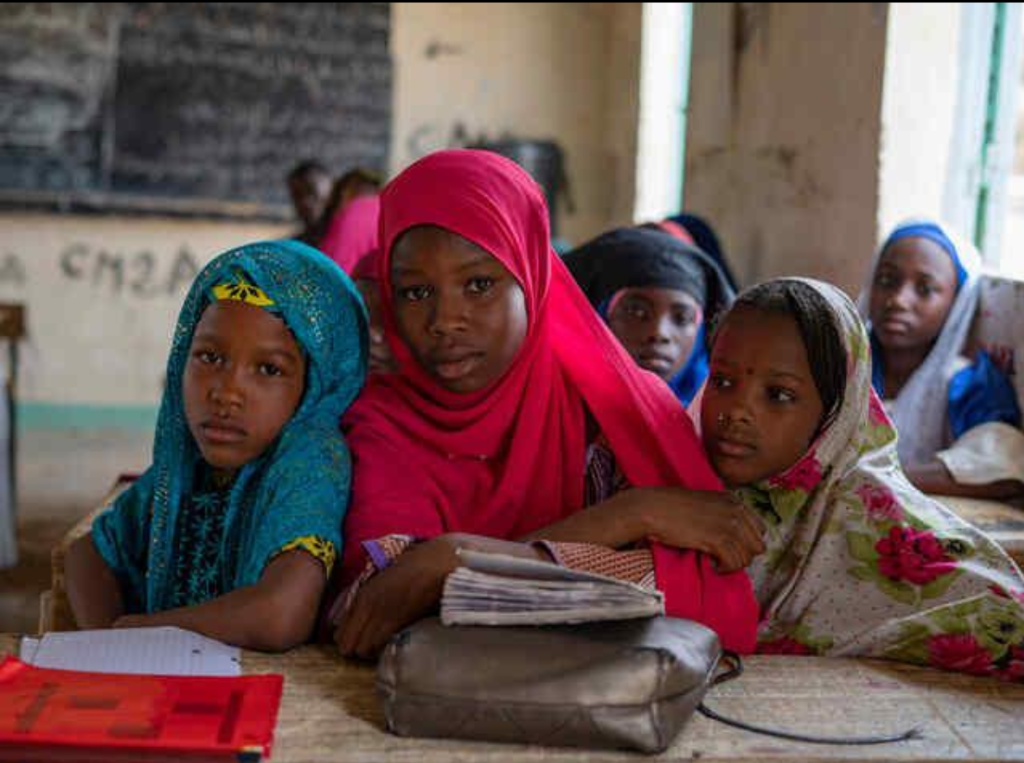
In Gabon, the third edition of the Yam’NA program, jointly launched by Eramet Comilog and SETRAG, embodies this shift. Behind the announcement of 50 new scholarships for Gabonese high school graduates lies a far-reaching ambition: preparing the skilled workforce that will drive the country’s industrial transformation in the coming decades.
Officially unveiled in Libreville on July 10, this latest edition builds on a concept introduced in 2024 under Eramet Comilog’s Beyond program and its corporate social responsibility strategy, Act for Positive Mining. To date, nearly 50 Gabonese students have benefited from support to pursue higher education within the country.
The inclusion of SETRAG as a partner marks a new chapter for Yam’NA, expanding its national scope by uniting the mining industry with the country’s most critical railway infrastructure under a shared mission: investing in Gabon’s human capital.
Building skills for tomorrow’s industries
For decades, extractive economies across Africa have exported raw materials while importing the technical expertise needed for their transformation. Gabon is now working to reverse this trend.
The 50 new scholarships for the 2026–2027 academic year will target fields identified as strategic for the nation’s future. Priorities include metallurgy, steelmaking, industrial chemistry, agribusiness, agroforestry, and green economy professions. This strategic pivot reflects national ambitions to deepen local resource processing, boost value addition within Gabon, and gradually reduce reliance on imported skills.
The stakes extend far beyond the professional integration of these students. The goal is to cultivate engineers, technicians, metallurgists, environmental specialists, industrial process experts, and mid-level managers who will spearhead tomorrow’s projects in manganese, iron, timber, and agricultural processing.
In a global landscape defined by energy transition and fierce competition for critical minerals, raw resource ownership is no longer sufficient. Countries must now cultivate the expertise to process these resources locally and capture their economic value.
Investing in economic sovereignty
The Yam’NA program targets Gabonese youth under 25 who secured a first-round baccalaureate and seek higher education in Gabon within technical, industrial, or environmental fields. Applications are open from July 8 to July 28, 2026.
Beyond financial support, the initiative bridges the gap between academic training and the real-world demands of Gabon’s economy. This challenge is familiar across African economies: companies struggle to fill specialized roles, while graduates face barriers entering oversaturated sectors with limited alignment to emerging industrial needs.
The partnership between Eramet Comilog and SETRAG offers a concrete response to this structural issue.
As Gabon’s largest private employer, with around 3,500 direct jobs—primarily through subsidiaries Comilog and the SETRAG railway—Eramet remains a key economic player in the country and the subregion. SETRAG, meanwhile, operates the 648-kilometer Transgabonais railway, connecting inland mining zones to the port of Owendo and annually transporting nearly nine million tons of goods and hundreds of thousands of passengers.
The development battle is now about skills
Africa is entering a new phase of economic development where the central question is no longer just infrastructure or investment, but the availability of skills to drive industrial change. In this global race, the nations that succeed will likely be those turning their youth into the primary engines of value creation.
The Yam’NA program aligns with this long-term vision. By steering students toward local processing careers and green economy professions, Gabon is not merely responding to today’s needs—it is anticipating tomorrow’s demands.
The objective is clear: nurture a generation capable not only of extracting the country’s resources but transforming them into sustainable economic value. Application details and eligibility criteria are available on the Yam’NA program’s dedicated platform.