Benin has emerged as one of West Africa’s most dynamic economic performers at a time when regional economies are grappling with global uncertainty. Fresh projections from the World Bank show the country holding a steady medium-term expansion path, closing the 2025-2027 period on a particularly strong growth trajectory.
A 7.7% growth rate projected for 2027
Following estimated performances of 8.1% in 2025 and 7.8% in 2026, the international financial institution expects gross domestic product (GDP) growth of 7.7% in 2027.
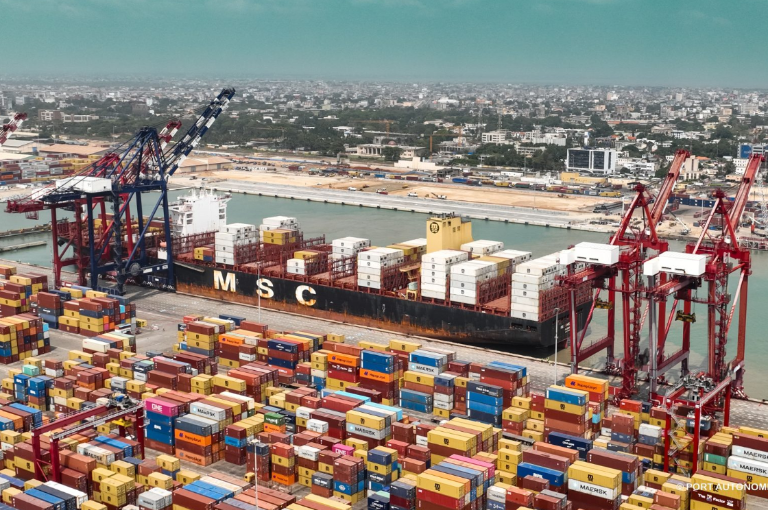
This path reaffirms Benin’s capacity to far outpace the sub-Saharan African average. Continuous investment in infrastructure, the modernisation of the port and agricultural logistics chain, and reforms aimed at cleaning up the business climate remain the main pillars of this expansion outside the extractive sector.
Price stability and poverty reduction
One of the striking elements of this outlook remains the control of price increases:
- Contained inflation: After an estimated low of 0.5% in 2026, inflation should see a slight technical rebound to 1.6% in 2027. This level remains well below the 3% community ceiling set by UEMOA, guaranteeing the preservation of household purchasing power.
- Social impact: Driven by this sustained growth and the rise of economic inclusion projects, the poverty rate should gradually decline to reach 22.3% by 2027 (compared with 31% recorded in 2024).
These forecasts consolidate Benin’s position at the top of high-growth economies within UEMOA, offering a stable macroeconomic framework to attract new public and private partnerships.