From crisis to crossroads: why Mali’s street begging epidemic demands urgent action
Every day at Bamako’s busiest intersections, the city’s most vulnerable—children, the disabled, and the elderly—confront passersby with outstretched hands. What was once dismissed as a marginal issue now saturates the urban fabric, exposing a state stretched thin by systemic failure. Despite repeated assurances from transitional authorities, the tide of begging continues unabated, revealing a governance model unable—or unwilling—to protect its own citizens.
Urban decay meets institutional paralysis
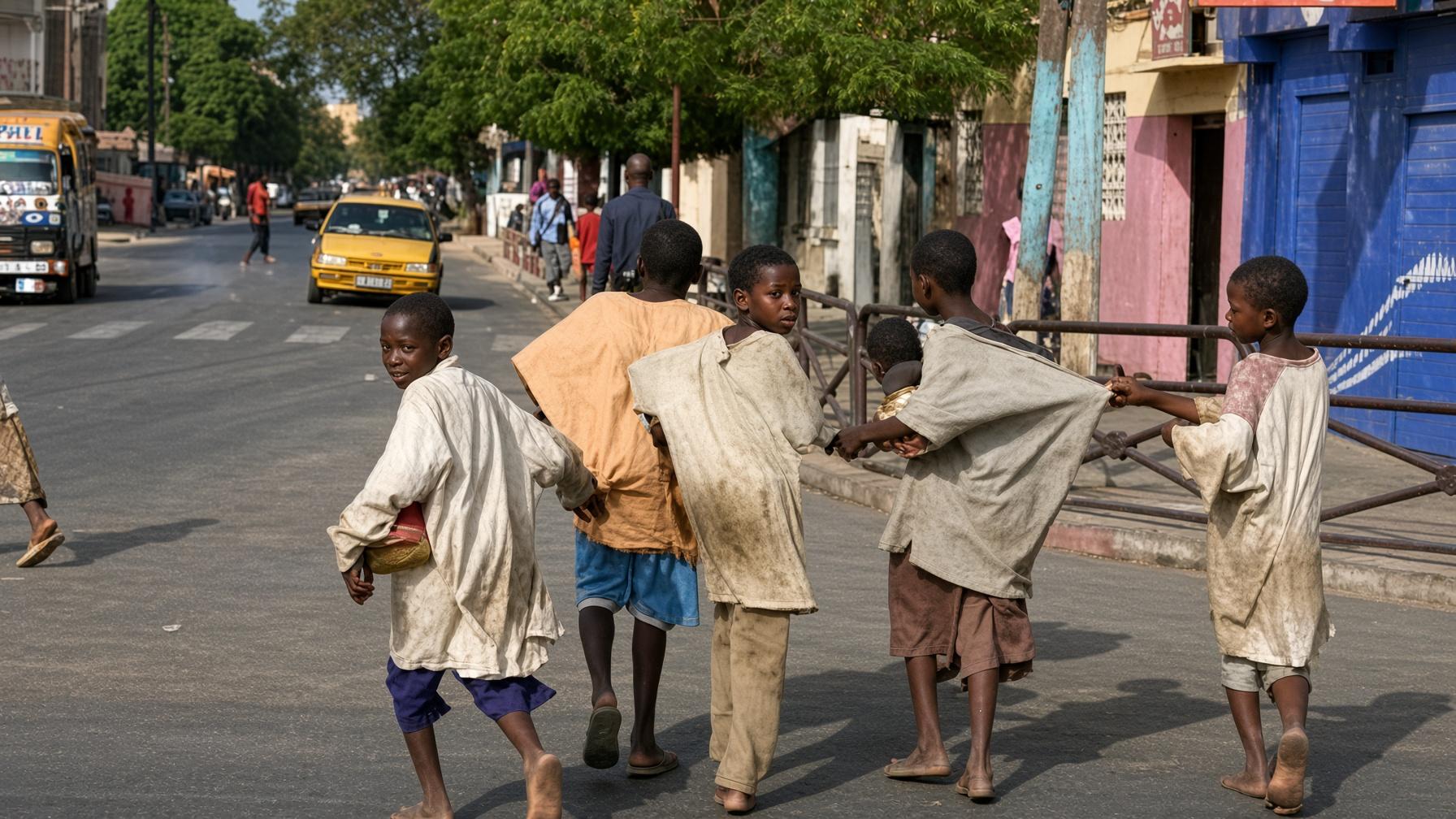
In Mali’s capital, the sight of minors darting between vehicles at red lights has become a grim routine. These are often talibés, sent by unregulated Quranic instructors, or children abandoned to their own devices. Official efforts to curb the crisis, including repeated crackdowns and social support initiatives, have yielded little more than temporary respite. The Ministry of Women, Children, and Family has launched awareness campaigns and street removals, yet without sustainable shelters, adequate funding, or follow-up mechanisms, those returned to the streets often return just hours later.
Broken promises and hollow campaigns
Public statements touting progress ring hollow against the reality on the ground. Families driven to desperation by poverty and underfunded social services have no choice but to let their children fend for themselves. Meanwhile, the government’s attempts to regulate Quranic schools—a known hotspot for forced child begging—remain stalled under the guise of religious sensitivity, allowing exploitation to thrive unchecked.
Governance failures that fuel the cycle of poverty
The roots of Mali’s begging epidemic run deep into the country’s institutional decay. Structural deficiencies in basic social services and economic neglect have left millions teetering on the edge of survival:
- Collapse of essential services: Chronic underfunding in education and healthcare has left families with no safety net. The state’s failure to provide free, quality schooling forces poor households to sacrifice their children’s futures to the streets.
- Unregulated religious education: Informal Quranic schools operate in legal gray areas, enabling the systematic exploitation of children. Authorities turn a blind eye despite clear legal frameworks prohibiting child labor and forced begging.
- Misallocation of public funds: While military expenditures and institutional upkeep dominate the national budget, allocations for human development and poverty eradication remain pitifully small.
- Institutional corruption and inefficiency: Social programs funded by public and international donors are routinely undermined by bureaucratic inefficiency and mismanagement. Funds intended for rehabilitation and reintegration often vanish into a labyrinth of red tape, leaving intended beneficiaries without support.
Beyond the streets: a ticking bomb of instability
The consequences of this crisis extend far beyond urban aesthetics. Desperate, uneducated, and unprotected youth represent prime recruitment targets for criminal networks and armed groups proliferating across the Sahel. The state’s inaction not only perpetuates human suffering but also fuels the conditions for future insecurity. Without decisive reforms, Mali risks deepening its social contract failures, leaving generations condemned to life on the margins.
Accountability or abandonment? The path forward
The turning point Mali faces is clear: either the government confronts the begging epidemic with meaningful policy shifts, enforceable laws, and transparent resource allocation, or it will continue to preside over the disintegration of its social fabric. The streets are no longer a fleeting issue—they are a mirror reflecting the collapse of state responsibility. A true reckoning demands more than rhetoric; it requires political courage and systemic overhaul.