
European parliament backs updated air deal with Morocco excluding western Sahara
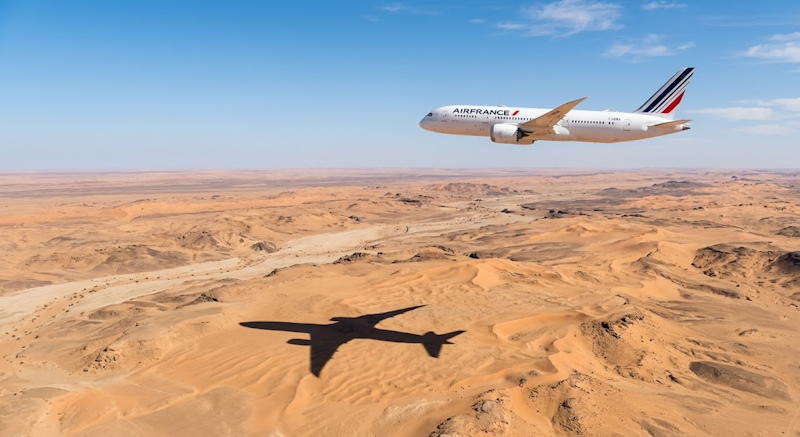

While the law is unambiguous, its application remains inconsistent. The recently revised air agreement explicitly excludes Western Sahara, yet European Commission officials continue to permit EU airlines to operate flights to the territory without adhering to this exclusion.
On July 8, 2026, the European Parliament formally endorsed a protocol updating the EU-Morocco aviation accord, following Croatia’s accession to the European Union.
The revised agreement passed with a decisive majority: 625 votes in favor, 16 against, and 20 abstentions.
The protocol is a technical adjustment, designed solely to incorporate Croatia’s EU membership into the existing framework. It does not alter the territorial scope of the aviation agreement.
Debate surrounding the vote revealed deep divisions over how the EU should address the practical implications of the accord. Observers noted that many MEPs supported the protocol precisely because it maintains the status quo, limiting its scope to Morocco’s internationally recognized borders—as affirmed by EU jurisprudence and repeated statements from the European Commission—thus excluding Western Sahara.
A small but vocal minority of parliamentarians opposed the measure, arguing that while the agreement itself does not apply to Western Sahara, the Commission has failed to prevent EU airlines from operating flights to the occupied territory outside the legal framework. This, they contend, creates a breach of international and EU law.
The Court of Justice of the European Union (CJEU) has consistently ruled that EU-Morocco agreements apply only within Morocco’s internationally recognized borders unless the people of Western Sahara consent. In a landmark 2018 decision, the Court concluded that the aviation agreement could not be interpreted to extend to Western Sahara.
The European Commission has publicly reiterated this stance, instructing EU carriers that the EU-Morocco aviation accord “does not cover routes connecting an EU member state to Western Sahara.”
Despite this clear legal guidance, several European airlines continue to operate flights to airports in occupied Western Sahara. Ryanair, for instance, has launched direct routes from EU cities to Dakhla, even though these services fall outside the EU-Morocco aviation framework. Beyond Ryanair, four other carriers have serviced Western Sahara in recent years, including Transavia (a subsidiary of KLM-Air France), Air Arabia (UAE-based), Binter Airlines (Spain), and Morocco’s state-owned Royal Air Maroc. Attempts to obtain comments from KLM-Air France and Air Arabia regarding their operations have gone unanswered.