The stark dilemma facing Togolese youth: flee for opportunity or stagnate at home
For countless young Togolese, the choice has become an agonising one: abandon their homeland in pursuit of a dignified future abroad, or remain trapped in a landscape where professional ambitions wither daily. This plight has intensified scrutiny of President Faure Gnassingbé’s leadership, now in its third decade. Critics argue that his administration’s governance model has systematically eroded hope, transforming what was once a land of promise into a place where departure seems the only viable path.
Where older generations once dared to dream of building futures within Togo’s borders, today’s youth increasingly view emigration not as an option, but as a necessity. This shift signals a profound fracture—not only between the young and the state, but between citizens and the very institutions meant to serve them. Confidence in the government’s ability to foster an environment conducive to personal and professional growth has eroded, leaving many with no faith in local opportunities.
The illusion of progress and the reality of job scarcity
Official narratives touting economic modernisation and reform belie a far grimmer reality on the ground. While government data may cite low unemployment rates, these figures obscure a bleaker truth: over 70% of young workers toil in precarious, informal employment or face chronic underemployment.
Each year, universities in Lomé and Kara churn out tens of thousands of graduates. Yet initiatives such as the National Employment Agency (ANPE) and the National Coalition for Youth Employment (CNEJ) offer little relief to the swelling ranks of job seekers. Without meaningful pathways to formal employment, legions of educated young people are forced into the informal sector—driving moto-taxis, selling goods in markets, or piecing together livelihoods through whatever means necessary. Their years of study and family sacrifices are rendered meaningless in an economy that fails to reward merit.
This wastage of human capital extends beyond individual disappointment. When an engineer sells fruit by the roadside or a law graduate drives a zémidjan, the loss is national. The economy forfeits valuable skills, stifling innovation, productivity, and global competitiveness. The industrial base remains underdeveloped, offering few high-value career opportunities to match the qualifications of the workforce.
A system entrenched in favouritism and exclusion
The sense of injustice runs deep. Families invest heavily in education, believing hard work will secure a brighter future. Yet in Togo, meritocracy has given way to patronage. Access to entrepreneurship, credit, and economic opportunity remains restricted to a privileged few connected to the ruling party, the National Union for Democracy and Development (UNIR). Without political ties—commonly referred to as “piston” support—young entrepreneurs and professionals find themselves locked out of public contracts, funding, and upward mobility.
This systemic bias fuels profound disillusionment. Many conclude that academic excellence, dedication, and perseverance are no longer sufficient for success. When the promise of equal opportunity vanishes, so too does faith in the social contract. The private sector, though capable of driving job creation, operates under severe constraints: bureaucratic hurdles, limited access to finance, weak purchasing power, and economic uncertainty all suppress growth and hiring.
Emigration as survival: the new national strategy
With success at home increasingly unattainable, emigration is no longer a choice—it is a survival strategy. This exodus manifests in two alarming trends that threaten the nation’s future:
- Diplomatic queues: Long lines form daily outside foreign embassies in Lomé—particularly those of France and Canada—as well as at Campus France offices and immigration agencies in Gulf states.
- Brain drain in critical sectors: Hospitals are depleted of doctors and nurses; engineers, computer scientists, educators, and entrepreneurs relocate in droves. The loss of these skilled professionals undermines healthcare delivery, technological advancement, and economic dynamism.
The irony is stark: Togo invests in training its youth, only for their talents to benefit foreign economies. While families sacrifice to educate their children, the returns flow to nations abroad. Meanwhile, Togo struggles to replenish its professional elite, weakening its capacity to innovate, attract investors, and modernise.
Political stagnation: the death of democratic renewal
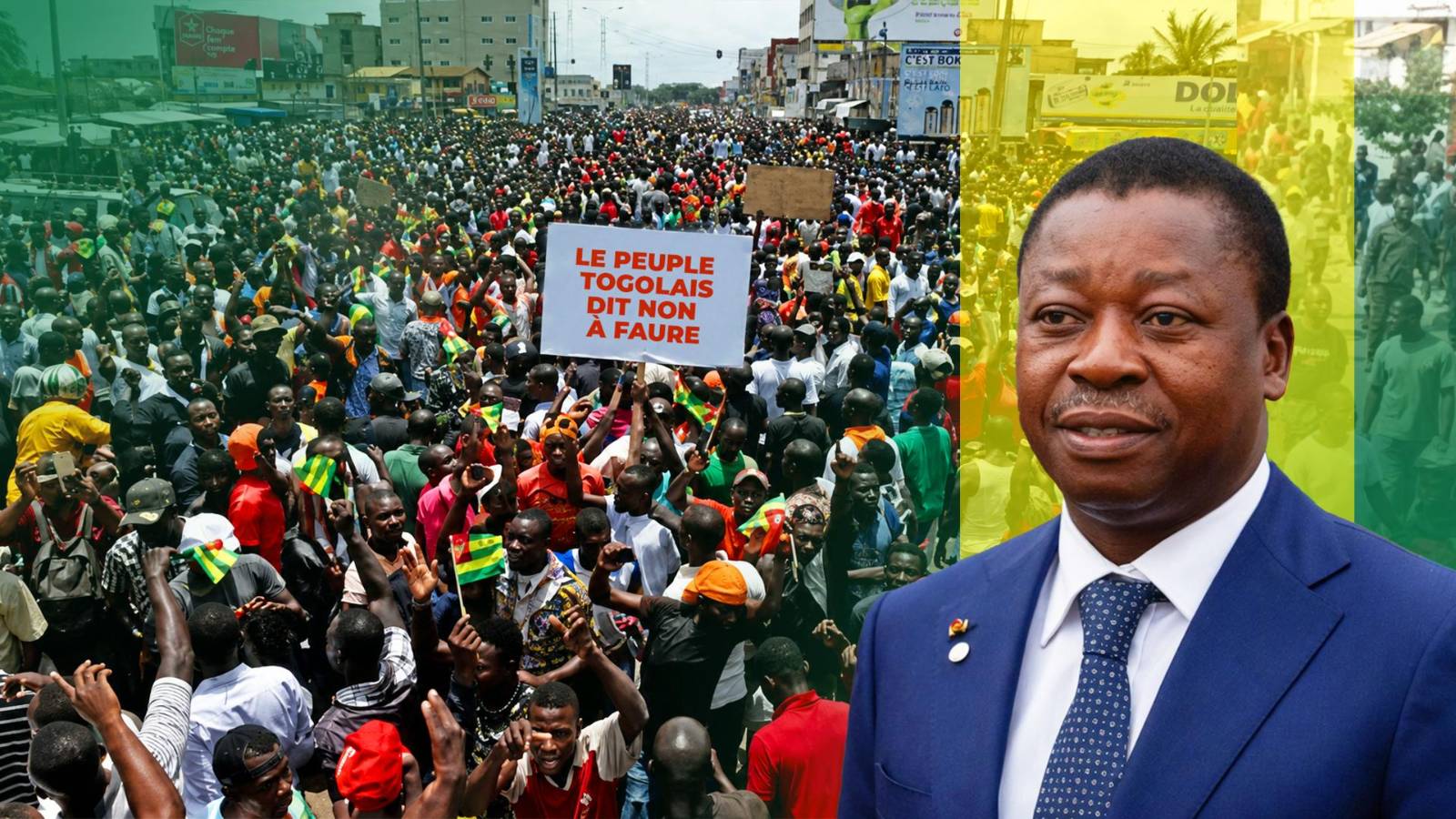
Economic despair is compounded by political stagnation. The controversial adoption of the Fifth Republic Constitution in 2024, which transformed the presidency into a parliamentary role, has dashed the last hopes for democratic change. To many young citizens, the reform was a legal manoeuvre designed to prolong Gnassingbé’s influence indefinitely. By eliminating prospects for generational renewal and democratic alternation, the regime has pushed a generation away from civic engagement and toward foreign shores.
For some, the crisis transcends economics. Without judicial independence, fair political competition, or real institutional renewal, economic reforms risk remaining hollow. The conclusion is inescapable: the future lies not in Togo, but beyond its borders.
This disillusionment extends to civic participation. Many young people withdraw from political parties, civil society, and public initiatives, convinced their voices carry no weight. Such disengagement weakens democratic vitality and silences the creative energy of an entire generation.
Can a nation thrive without its youth?
Critics place direct responsibility for this crisis on Faure Gnassingbé, who has led the country since 2005. Two decades of governance have failed to produce an inclusive economic model capable of meeting the aspirations of a rapidly growing youth population. Instead, wealth and opportunity remain concentrated in the hands of a narrow elite, while most citizens face poverty or contemplate exile.
History confirms that no nation can prosper when its brightest minds seek only to leave. Thriving societies retain talent, foster innovation, uphold fairness, and build trust between citizens and institutions. The question now facing Togo is urgent: how can a country develop when its most educated, ambitious, and dynamic youth see no future within its borders?
As long as unemployment persists, governance remains opaque, the business climate stagnates, and democratic aspirations go unmet, Togo will continue to lose its most vital asset—its people. Without decisive action to address these challenges, the nation risks not only a haemorrhage of talent, but a gradual erosion of its capacity to grow, innovate, and secure a shared future.