France pledges full support for drc’s un diplomatic push on natural resource governance
France pledges full support for DRC’s UN diplomatic push on natural resource governance
- Sécurité
-
The Democratic Republic of Congo (DRC), currently holding the presidency of the United Nations Security Council for July, has launched an ambitious diplomatic initiative. Kinshasa aims to firmly embed the critical issue of natural resource governance into international discourse, recognizing its profound impact on contemporary conflicts.
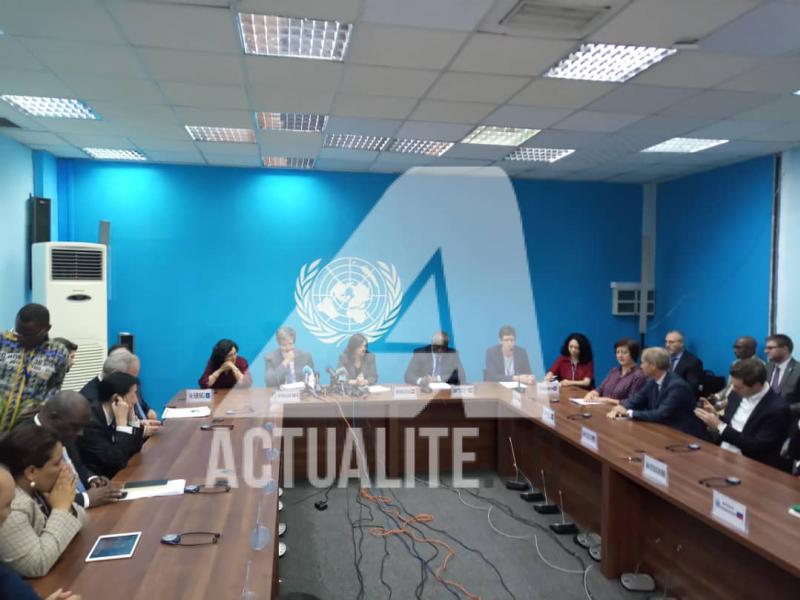
As part of this effort, the DRC hosted an “Arria formula” meeting in New York, United States, on Monday, July 13. This session specifically addressed the intricate links between the exploitation of natural resources and the pursuit of peace. The diplomatic push is set to culminate on July 22 with a high-level debate, presided over by President Félix Tshisekedi, under the theme: “The governance of natural resources, foundation for peace, security, and prosperity.”
Through this strategic move, the Congolese Ministry of Foreign Affairs, led by Thérèse Kayikwamba Wagner, has initiated a global discussion on what it identifies as a “normative gap” in the governance of natural resources within peace and security frameworks. Congolese authorities contend that existing mechanisms, such as mineral traceability, corporate due diligence, and measures to combat conflict financing, remain fragmented and lack comprehensive coherence. Consequently, Kinshasa is advocating for the development of a more integrated international framework, one capable of effectively connecting natural resource governance with conflict prevention and international security.
The DRC is championing a shift in the international approach: natural resources should no longer be viewed solely through an economic or commercial lens. Instead, they must be recognized as a strategic imperative for peace and security, deserving a prominent place on the United Nations Security Council’s agenda. This proactive stance has garnered significant attention, notably from France, whose Permanent Representative to the United Nations expressed Paris’s unwavering support for the initiative.
“Natural resources must serve as a catalyst for sustainable and equitable development, benefiting the populations and countries that host them. They must be safeguarded against predators and against their diversion for malicious purposes. Looking ahead, France supports the objective articulated by the DRC to work towards strengthening and harmonizing international initiatives aimed at the proper utilization of these resources. We are fully prepared to contribute to the Council’s work that will accompany the high-level debate the DRC will organize, with President Félix-Antoine Tshisekedi in attendance, next week,” stated Jérôme Bonnafont, Ambassador and Permanent Representative of France to the United Nations.
The DRC continues to advance the activities planned during its Security Council presidency. This crucial meeting on natural resources follows a Council briefing held on July 8, focused on conflict-related sexual violence, which was presided over by Prime Minister Judith Suminwa Tuluka. This diplomatic sequence aligns with the priorities established by the Congolese presidency. The earlier briefing underscored the devastating human cost of war economies and emphasized the urgent need to enhance prevention efforts, protect survivors, combat impunity, and establish effective reparation mechanisms.
These initiatives unfold against a backdrop of complex regional dynamics, including the strategic partnership forged between the DRC and the United States concerning critical minerals, as well as the Washington agreement signed between Kinshasa and Kigali. This agreement notably outlined measures for de-escalation, the gradual withdrawal of Rwandan forces from Congolese territory, and the neutralization of armed groups operating in eastern DRC, particularly the FDLR, which Kigali perceives as a threat to its security. Despite this diplomatic framework, which was widely praised upon its signing, the security situation on the ground remains exceptionally fragile. Furthermore, the Doha process, facilitated by the State of Qatar to foster dialogue between Kinshasa and the AFC/M23 rebellion, continues to be at an impasse.
The AFC/M23 rebels, whom Kinshasa, the United Nations, and several international partners accuse of receiving support from Rwanda, maintain control over the cities of Goma and Bukavu, alongside numerous other localities in North Kivu and South Kivu provinces. Clashes persist across various areas, while diplomatic endeavors struggle to yield lasting results. This ongoing situation once again highlights the persistent disparity between announced diplomatic breakthroughs and the harsh realities observed on the ground.