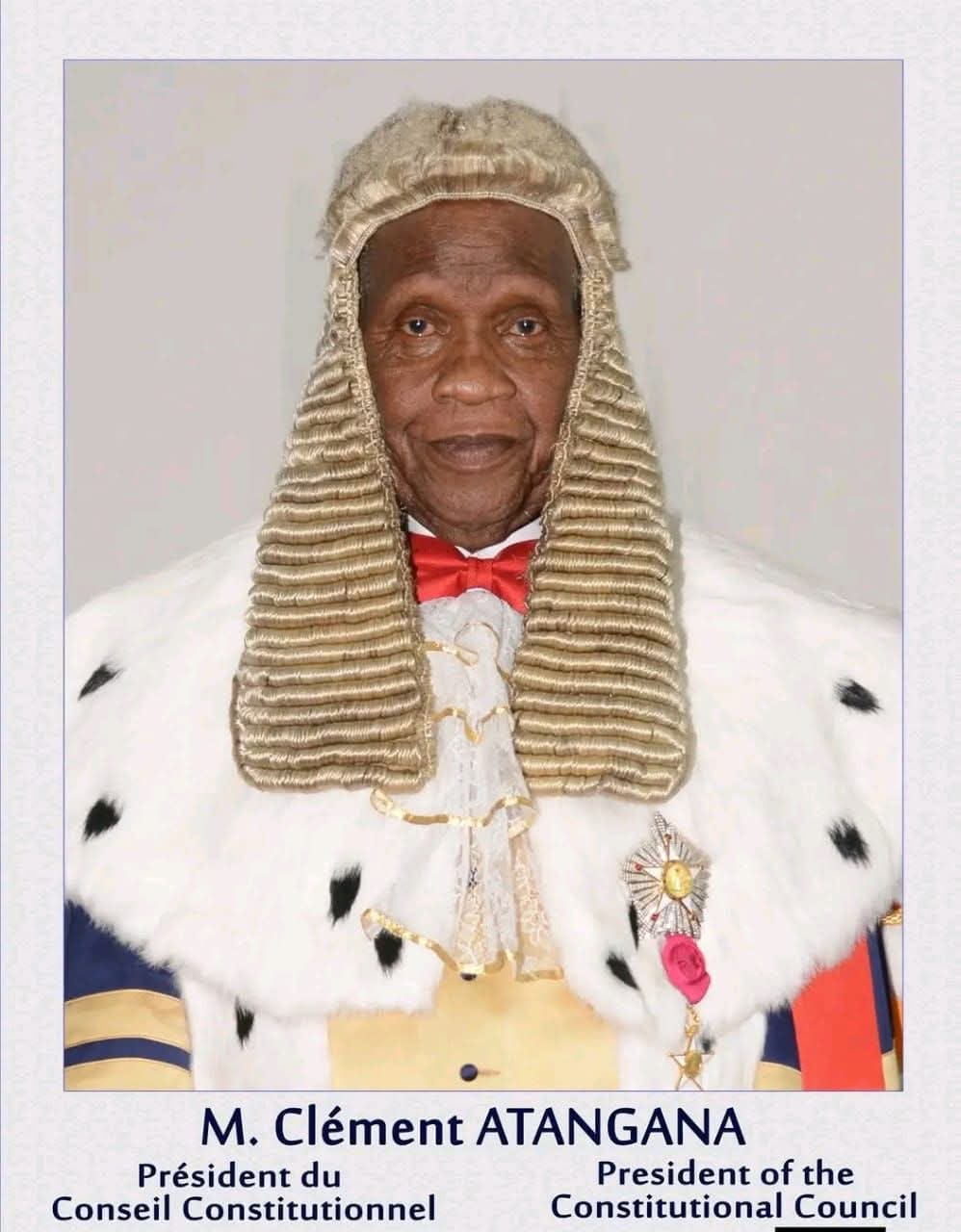
Cameroon is facing a moment of reckoning following the unexpected death of Clément Atangana, longtime president of the Constitutional Council. The 85-year-old magistrate, who was receiving medical care in Paris, passed away this morning, leaving behind a legacy shrouded in controversy and deep institutional questions.
The man behind the “irrecevable” era
Atangana, born in Ngomedzap in the Nyong and So’o department, leaves a complex legacy as a career judge who rose to become Cameroon’s top constitutional authority. His tenure was defined by the controversial rejection of nearly all electoral appeals during the 2018 presidential contest — a pattern that earned him the nickname “Irrecevable” among critics. The Constitutional Council, under his leadership, became synonymous with the phrase as it systematically dismissed opposition challenges to election results, reinforcing perceptions of institutional bias.
The controversy deepened with a now-infamous video that surfaced after the 2018 election. In the footage, Atangana was seen celebrating with supporters, declaring, “Your candidate has won,” referring to incumbent President Paul Biya and the ruling RDPC party. The moment became a symbol of perceived partiality, fueling accusations that the Council operated less as an impartial arbiter and more as an extension of the political establishment.
Public figures react to a polarizing legacy
Reactions to Atangana’s death have been swift and sharply divided. Supporters credit him with maintaining legal stability during turbulent times, pointing to his decades of service and professional experience. Others, however, allege that his leadership deliberately undermined democratic accountability, particularly in high-stakes electoral disputes.
Critics recall a 2025 incident in which Atangana attended a public meeting in Nyong and So’o, where a motion of support for President Biya’s reelection was adopted. Although Atangana later claimed the gathering was apolitical and that he did not endorse the resolution, the optics — captured by state-aligned media — further damaged public trust in the Council’s neutrality. For many opponents, the episode confirmed what they had long suspected: that the constitutional body operated under the influence of the ruling party.
What comes next for Cameroon’s electoral justice?
The death of Atangana — who had been in worsening health and was rushed to Paris for specialized care — has thrown Cameroon’s electoral institutions into uncharted territory. The Constitutional Council now faces a leadership vacuum at a time when faith in election integrity remains fragile. With the 2027 legislative and municipal elections on the horizon, the credibility of the electoral process is more critical than ever.
Legal experts and civil society leaders are calling for urgent reforms to restore public confidence. Among the key demands:
- Transparency in judicial appointments: Calls are growing for a transparent, merit-based process to select the next president of the Council.
- Independent oversight: Suggestions include establishing an oversight committee with civil society and opposition representation to monitor the Council’s operations.
- Electoral reform: Reformists argue for clearer legal frameworks governing election disputes to reduce perceptions of arbitrariness.
As Cameroon navigates this pivotal moment, the legacy of Clément Atangana serves as both a cautionary tale and a catalyst for change. The nation now faces a defining question: can its electoral justice system be rebuilt on principles of fairness and independence?
A nation watches: the fallout begins
Public debate has intensified across social media, radio talk shows, and political gatherings. Opposition figures have seized the moment to demand accountability, while government supporters defend Atangana’s record as one of stability and institutional continuity. The discourse reflects deeper national tensions over governance, democracy, and the role of justice in politics.
In the wake of this loss, one thing is clear: Cameroon’s journey toward credible and fair elections is far from over. The Atangana era may be closed, but the fight for electoral justice has only entered a new, critical phase.