Senegal’s budget breakthrough moment: how Ousmane Sonko could force a historic shift
Senegal’s budget breakthrough moment: how Ousmane Sonko could force a historic shift
The appointment of Ousmane Sonko as speaker of Senegal’s National Assembly has created a decisive turning point in the country’s budget politics. With the 2026 amended finance bill now in play, Sonko holds the constitutional levers to either reshape or block the economic plan that will define millions of Senegalese lives during a deepening crisis.
Read aloud
President Bassirou Diomaye Faye remains confident that the Pastef majority will approve the 2026 amended finance bill. Yet in the National Assembly, Ousmane Sonko commands real instruments to slow, rewrite, or even bring down the legislation. The key question is what the Constitution actually permits each side to do — and at what cost.
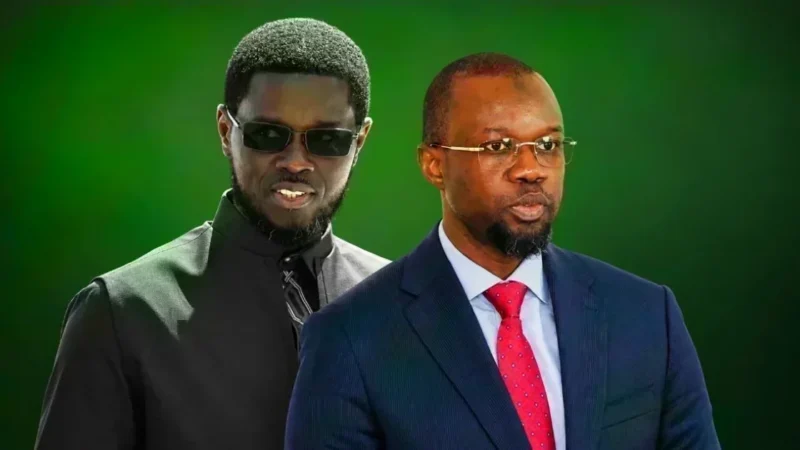
The head of state has no doubts about the outcome. For Bassirou Diomaye Faye, Ousmane Sonko — speaker of the National Assembly and leader of Pastef, which holds a commanding majority in the chamber — will have no choice but to join his deputies in validating the amended finance bill for the good of Senegalese citizens enduring a difficult period. That assurance also carries the tone of a warning aimed at the man who served as his prime minister for two years.
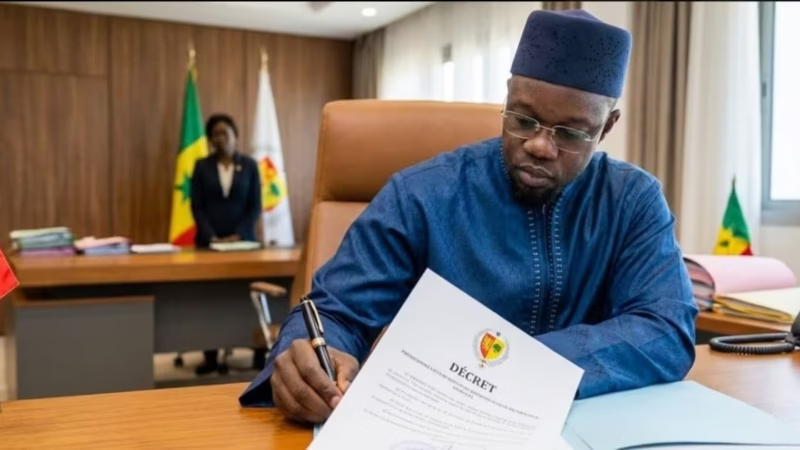
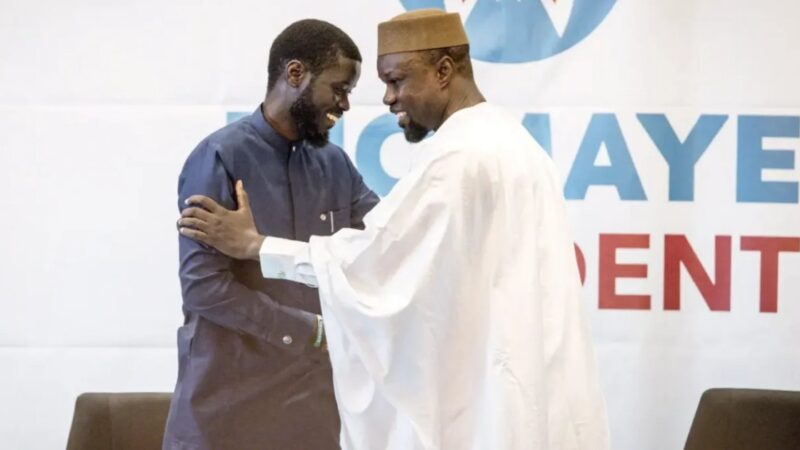
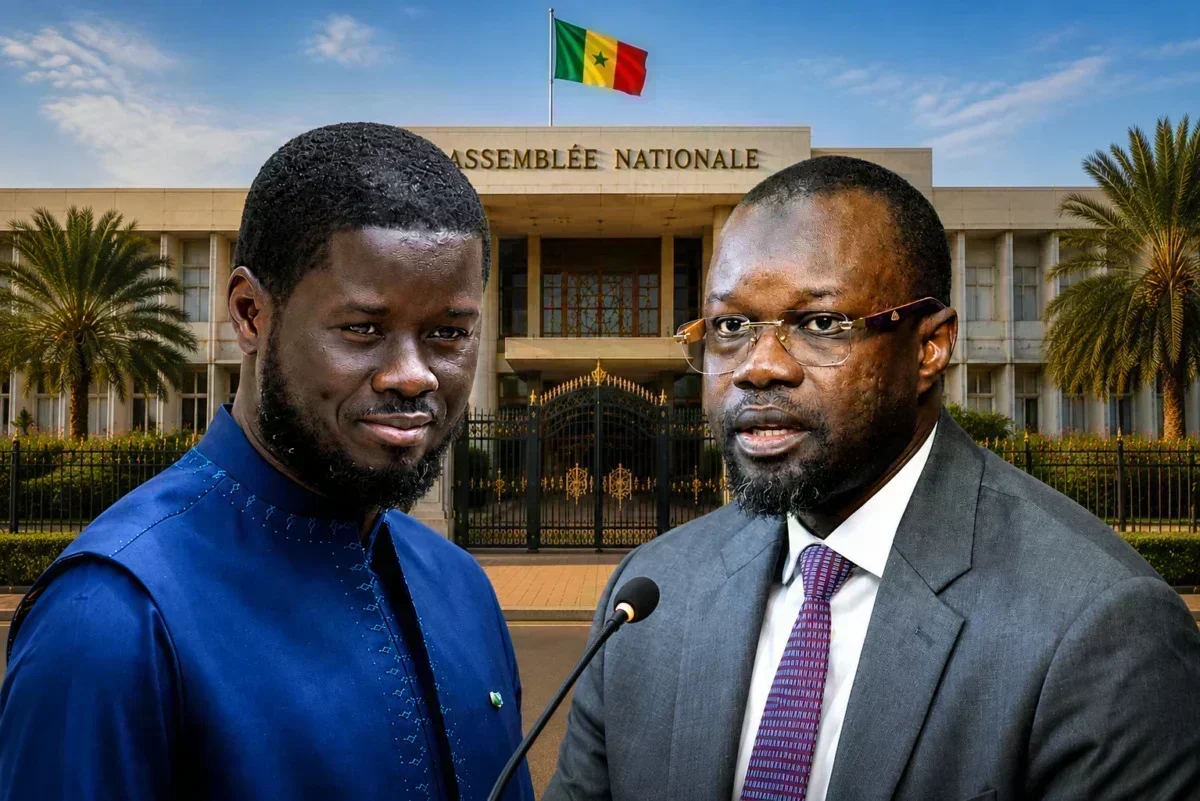
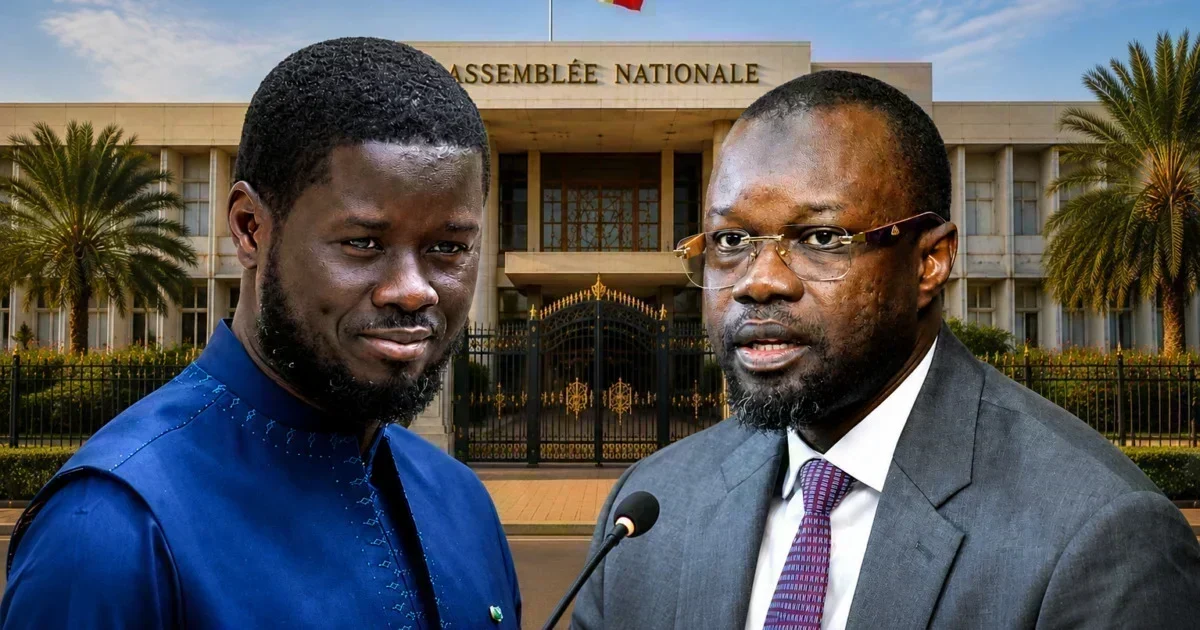
The context has shifted dramatically. On 22 May 2026, a presidential decree ended Ousmane Sonko’s tenure at the Primature and dissolved his government. Ahmadou Al Aminou Lô was appointed prime minister on 25 May 2026, while the Pastef leader took the helm of the National Assembly, replacing El Malick Ndiaye. The 2024 duo has become an institutional face-off, and the 2026 amended finance bill is now its first battleground.
The text has not arrived in a calm climate. After the agreement reached with the International Monetary Fund, which still requires approval from its board of directors, the government prepared this amended finance bill. Ousmane Sonko publicly demanded clarifications on the agreement’s content and on debt treatment. After weeks of controversy over the transmission of the file, the Assembly confirmed it had duly received the 2026 amended finance bill, along with the president’s transmittal letter and the presentation decree, on Friday 18 September 2026.
The vote: a majority’s first weapon
On paper, nothing obliges deputies to adopt a finance bill. The Constitution grants the National Assembly alone the power to vote laws and oversee government action. With 130 of 165 seats won in the November 2024 legislative elections, Pastef can single-handedly reject the text in plenary session without needing a single ally. That is the most direct route, but also the most politically risky: an outright refusal would make Sonko’s party bear responsibility for a potential public finance blockage in the middle of IMF negotiations.
The head of state cannot count on defections to reverse the trend either. Article 60 of the Constitution stipulates that any deputy who resigns from their party during the legislature is automatically stripped of their mandate. This lock protects Pastef’s group discipline and limits the room for manoeuvre of the Diomaye Président coalition inside the chamber.
Between adoption and rejection, deputies have a third, more subtle path. Article 82 strictly frames their right of amendment on budgetary matters: no additional article or amendment to a finance bill is admissible unless it aims to delete or effectively reduce an expenditure, or to create or increase a revenue. In other words, the majority cannot inflate credits, but it can cut the spending planned by the government. This is a way to deeply rewrite the executive’s arbitrations, particularly those tied to commitments made with the IMF, without resorting to a straightforward rejection.
The government, however, has a counter. The same Article 82 allows it to request a single vote on all or part of the text, retaining only the amendments it has proposed or accepted. This procedure forces deputies to decide as a bloc, bringing them back to the original dilemma: adopt the text as the executive wants it or accept its rejection.
Playing for time: a double-edged strategy
The Assembly presidency gives Ousmane Sonko real influence over the calendar of proceedings. But Article 84 sharply reduces the possibility of burying the text: priority inscription of a bill on the agenda is a right as soon as the President of the Republic or the prime minister demands it.
Above all, time works against an obstruction strategy. Article 68 sets a maximum of sixty days for the Assembly to vote finance bills. If the text is not definitively adopted at the end of this period, it is brought into force by decree, taking into account amendments voted by deputies and accepted by the President of the Republic. Since the deposit was registered on 18 September, this deadline falls around 17 November 2026. Letting the examination drag on would therefore offer Diomaye Faye the possibility of promulgating his budget without parliamentary approval.
A grey area remains, however. The Constitution explicitly provides for the case of a text “not voted” within the deadlines, but remains silent on the hypothesis of a formal rejection in session. The question of whether recourse to decree remains open after an explicit negative vote could then be brought before the Constitutional Council, which Article 74 allows one-tenth of deputies to refer.
The executive has another tool, already used in December 2024 to pass the 2025 budget, when Ousmane Sonko himself led the government. Article 86 allows the prime minister, after deliberation by the Council of Ministers, to engage the government’s responsibility on the vote of a finance bill. The text is then considered adopted, unless a censure motion, filed within twenty-four hours, is passed by an absolute majority of Assembly members.
This is where the Pastef majority regains its full power. A censure motion requires only the signature of one-tenth of deputies to be admissible, and 83 votes to be adopted. Pastef comfortably exceeds this threshold. If Ahmadou Al Aminou Lô’s government chose this route, Sonko’s deputies could not only defeat the budget but also topple the government. A formidable weapon, but one heavy with consequences, since it would open a governmental crisis just weeks before the date from which the head of state regains his dissolution power.
2 December: the deadline that balances forces
This is the other key element of the power struggle. Article 87 authorises the President of the Republic to dissolve the National Assembly after consulting the prime minister and the speaker, but prohibits any dissolution during the first two years of the legislature. Installed on 2 December 2024, the current Assembly is protected until 2 December 2026. Asked about a possible dissolution, Bassirou Diomaye Faye himself recalled that this date had not yet been reached.
The calendar thus draws a tight sequence. The sixty-day deadline to vote the amended finance bill expires in mid-November, just days before the head of state can send deputies back to the voters. A prolonged budget blockage would give Diomaye Faye a strong argument to justify dissolution, while a smooth adoption would deprive the president of this political lever.
In the end, Ousmane Sonko does have the constitutional means to block or rewrite Bassirou Diomaye Faye’s budget, through rejection, reduction amendments, or censure. But each of these options exposes him to a high political cost, against an executive that holds the Article 68 decree, the Article 86 responsibility engagement, and soon the Article 87 dissolution. More than a legal question, the examination of the 2026 amended finance bill promises to be a full-scale test of the new cohabitation between the Palace and the chamber.
Les Unes du 26 septembre 2026Voir toutes les Unes
- Libération
- La Voix +
- L’As
- Dakar Times
- Le Quotidien
- Source A
Ousmane Sonko
La rédaction vous conseille
Pour comprendre le contexte
- Dissolution de l’Assemblée : Ousmane Sonko met en garde Bassirou Diomaye Faye
- Officiellement saisi par Bassirou Diomaye Faye, Ousmane Sonko convoque le bureau de l’Assemblée
- Climat des affaires : Comment Bassirou Diomaye Faye et Ousmane Sonko font fuir bailleurs
- Duel institutionnel : Pourquoi ce mardi est un jour fatidique entre Ousmane Sonko et Bassirou Diomaye Faye
À lire aussi
Follow this section :