Senegal at a turning point: 2026 budget revision slashes 555 billion FCFA and resets growth momentum
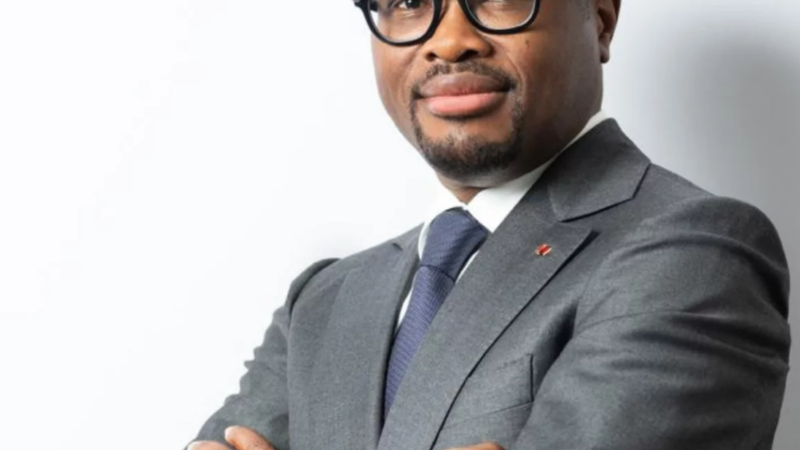
The revised 2026 finance bill that Senegal handed to the National Assembly on 18 September 2026 marks a hard turning point for Dakar’s economic ambitions. Projected growth has been dragged down from 5% to 2.7%, a gap that exposes how far the original forecasts had drifted from the country’s real capacity to raise money. The executive acknowledges a revenue shortfall of 451.4 billion FCFA and, to keep the books in balance, is slicing 555 billion FCFA off investment spending. Lansana Gagny Sakho, president of the Cercle des Administrateurs Publics and chairman of the board of APIX-SA, draws a blunt conclusion from that choice: no country can sustainably redistribute wealth it does not produce.
A decisive turning point as Senegal’s growth target collapses to 2.7%
The revision places Senegal in a classic bind for economies under strain. Dropping from 5% to 2.7% growth within a single fiscal year amounts to admitting that the productive base cannot keep pace with public commitments. With 451.4 billion FCFA missing from tax and non-tax revenue, holding the planned level of investment became impossible. Dakar therefore opted to protect day-to-day operations at the expense of capital accumulation, an arbitrage that mechanically weighs on medium-term prospects.
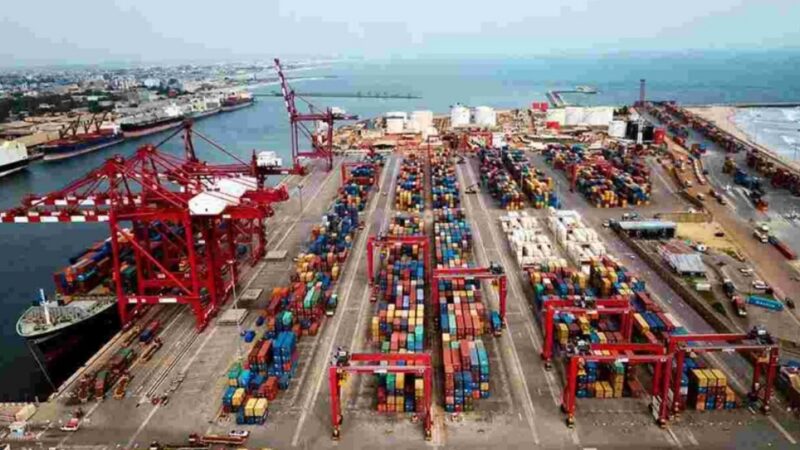
That trade-off is anything but neutral. By stripping 555 billion FCFA from investment, the state relinquishes, at least temporarily, a large share of its ability to shape the national supply side. Infrastructure, equipment and flagship projects: the cut lands precisely on the levers that condition future growth. The op-ed signed by Sakho reads this as the fingerprint of a public governance that has, in recent years, sustained spending standards far out of proportion to the country’s real tax base.
Why Dakar shielded running costs and sacrificed capital spending
The reasoning behind the 2026 revision is sound on a bookkeeping level but expensive strategically. Removing 555 billion FCFA from investment means postponing projects, slowing construction sites and delaying upgrades to infrastructure on which competitiveness and attractiveness depend. In a context where African sovereign issuances are closely scrutinised by the markets, the credibility of Senegal’s macroeconomic framework becomes an asset worth protecting.
For a senior executive at APIX, the agency responsible for promoting investment and major public works, the observation carries particular weight. The current sequence raises questions about the sustainability of the Senegalese model as it has been built, with a public sector dimensioned for anticipated revenues that never materialise at the expected pace. Repeated recourse to borrowing and last-minute adjustments leaves Dakar gradually losing room for manoeuvre with its financial partners.
A poor country bankrolling the privileges of a rich one
The title Sakho gave his column — a poor country that pays itself the privileges of a rich one — condenses a recurring critique of Senegalese public spending. Salaries, benefits in kind, the lifestyle of the administration and the sprawling perimeter of public agencies all sit in the background of that diagnosis. The 2026 revision lays bare the tension between those habits and a productive base that struggles to generate matching revenue. The divergence between 5% growth on paper and 2.7% genuinely within reach is, in that light, as much a political signal as an economic one.
The deeper question reaches well beyond a single revised finance bill. It concerns the state’s capacity to realign current spending with actual revenue, to clean up the public sphere and to redirect budgetary effort towards production. Without that exercise, each fiscal year risks replaying the same script: ambitious forecasts, weaker execution, and investment sacrificed to keep the machinery running. The 2026 revision stands, on that score, as a textbook case of the limits of a model that distributes before it produces.
The window is still open, but 2027 will set the tone
Even so, the window for adjustment has not closed. The direction given to the 2027 initial finance law will reveal whether Dakar intends to break with this pattern. Three levers will matter most: reining in the wage bill, rationalising the number of public agencies and relaunching targeted investment in production.
A parliamentary debate that doubles as a political test
That discussion is already under way, and its stakes stretch well past the figures. The parliamentary examination of the 2026 revised finance bill has turned into a major political test for the executive, one that could determine how much room it still has to manoeuvre in the years ahead.