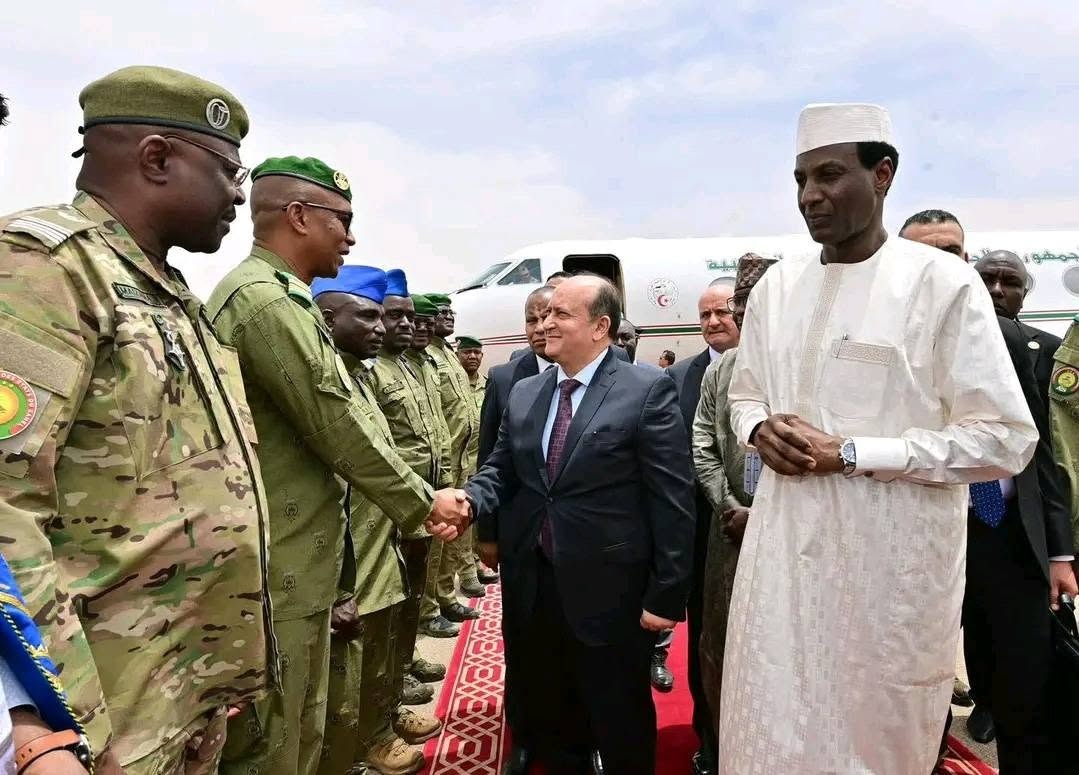
When Algeria and Niger officially switched on their trans-Saharan fiber optic link at Assamaka, the ceremony marked more than the completion of a technical project. The connection promises high-speed capacity, a new route to international bandwidth, and a potential revenue stream for operators. For Algiers, it is also a strategic statement south of its borders. But in a Niger still grappling with jihadist violence, keeping this new infrastructure safe may prove to be the hardest part of the story.
Assamaka: a symbolic junction with practical weight
The location was never incidental.
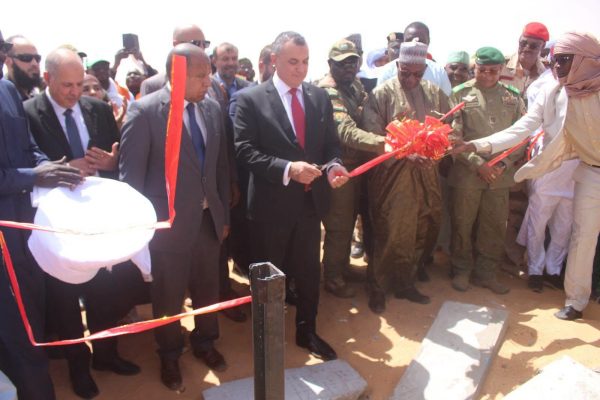
On 6 October 2026, telecommunications ministers from Algeria and Niger presided over the official commissioning of the trans-Saharan fiber optic link connecting their two countries at Assamaka, in the Agadez region on the Algerian-Nigerien border.
The launch brings years of construction to a close under the Trans-Saharan Fiber Optic Backbone (DTS), a regional initiative listed on the NEPAD agenda and designed eventually to link Algeria, Niger, Nigeria, Chad, Mali and Mauritania.
Yet the financial history of the project deserves clarity. Despite talk of an “Algeria-Niger deal”, public documents do not show a single bilateral contract under which Niamey would pay Algiers tens or hundreds of millions of euros.
The funding is far more layered.
43 Million euros for Niger’s section
According to the African Development Bank, Niger’s component of the trans-Saharan backbone is worth about 43 million euros.
That envelope covers 1,031 kilometers of fiber optic cable across five main routes, a national Tier III data center, and an 88-kilometer local loop.
Figures released by Nigerien authorities add further detail. In March 2026, the project coordinator put overall financing at more than 30 billion CFA francs, including roughly 16 billion CFA francs in credit, 12.76 billion CFA francs in grants, and 2.17 billion CFA francs in national counterpart funding.
One key confusion should be avoided: the 43 million euros corresponds to Niger’s component of the project, not a sum paid by Niger to Algeria to buy the link.
African Development Bank documentation for the multinational project approved in 2016 reveals a financial architecture blending the African Development Fund, European co-financing and state contributions. The original multinational project was valued at 62.262 million units of account.
In other words, the public records reviewed contain no figure that would justify claims that Algeria “earns” X billion and Niger Y billion from the launch.
That is precisely where the economic investigation begins.
So what does Niger actually gain?
The first and clearest beneficiary is Niger itself.
As a landlocked country, Niger depends on international connections that must transit through neighboring states’ infrastructure. The new backbone gives it an additional route to the global internet, notably via Algeria.
The benefit is not just the fiber itself: it is access to international capacity.
Algeria holds substantial international bandwidth capacity through its submarine cables. Algerian authorities have said for years that they want to use that capacity to connect landlocked Sahelian countries.
For Niamey, that could mean:
- more internet capacity;
- better quality of service;
- reduced dependence on certain existing routes;
- more competition among capacity providers;
- new possibilities for digital public services;
- growth in e-commerce and mobile financial services;
- better connectivity for northern regions.
The project is also meant to connect Niger more closely not only to Algeria but also to Nigeria, Benin, Burkina Faso and Chad.
The economic promise is therefore considerable. But the scale of savings for the Nigerien state, or the extra revenue it will collect each year, has not been published at this stage.
That is an essential point for any serious coverage.
What does Algeria stand to gain?
This is where the file turns geopolitical.
Algeria did not simply build infrastructure that stops at its border. For years it has sought to turn its territory into a digital gateway to the Sahel.
Algiers says it has already completed about 2,548 kilometers of fiber optic cable on its soil between Algiers and In Guezzam, on the Nigerien border. In 2024, the Algerian ministry even cited around 2,600 kilometers completed.
The logic is straightforward: route Sahelian digital traffic northward into Algerian international infrastructure.
For Algeria, that potentially opens a data transit market.
The more Niger, and eventually other Sahelian countries, use Algerian international capacity, the stronger Algiers’ position as a regional digital hub becomes.
There is already a concrete sign of this strategy.
In September 2026, Algérie Télécom signed an agreement with Niger Télécom providing for a donation of transmission equipment to enable a link between In Guezzam and Agadez, with an initial announced capacity of 100 gigabits.
That detail is telling: Algiers is no longer content merely to build its part of the backbone. It is also seeking to support the operation and strengthening of Nigerien infrastructure.
The return it seeks is therefore not necessarily an immediate financial one. It can be commercial, technological, diplomatic and strategic.
Algeria’s bet: becoming the Sahel’s digital doorway
Algiers’ calculation goes well beyond telecommunications.
The Algerian government officially presents the trans-Saharan backbone as a way to make Algeria a regional connectivity hub and invites landlocked Sahelian countries to use its international capacity linked to submarine cables.
This strategy comes amid Algeria’s broader repositioning in the Sahel.
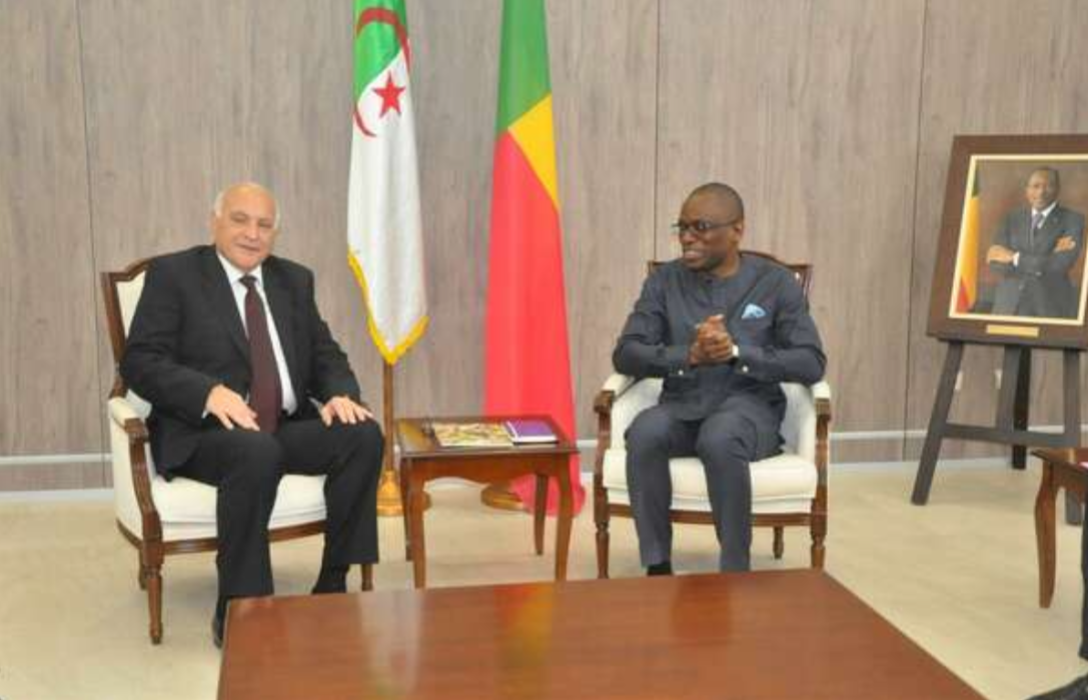
In March 2026, Algiers and Niamey reaffirmed the strategic nature of their partnership, giving particular priority to security coordination and infrastructure projects linking the two countries: the trans-Saharan road, fiber optic cable and trans-Saharan gas pipeline.
The cable is thus one piece of a much larger puzzle.
For Algiers, strengthening economic and digital ties with Niamey helps consolidate influence in a region where other powers — Russia, Turkey, Gulf states, China and Western actors — are also seeking to expand their presence.
Fiber thus becomes an instrument of soft power, but also of economic sovereignty.
The paradox: strategic infrastructure in a high-risk zone
One question that official ceremonies naturally downplay remains: who will protect the fiber?
The route crosses part of Niger where security risks are far from theoretical.
The Agadez region is a strategic space for Niger. Assamaka, on the Algerian border, hosts a reinforced military presence. In March 2026, the commander of defense zone No. 2 traveled there to meet forces deployed in what is considered a strategic area.
Recent history also reminds of this border’s vulnerability: in June 2021, a joint patrol of police and the national guard was attacked near Assamaka, leaving four dead.
But the problem goes well beyond the country’s north.
In 2026, Niger faces growing pressure from two major jihadist organizations: the Islamic State in the Sahel (ISSP) and JNIM, affiliated with Al-Qaeda. ACLED has described western Niger as a major theater of confrontation between the two groups.
In June 2026, an attack claimed by JNIM on Niamey’s airport and military base further demonstrated armed groups’ ability to strike sensitive infrastructure, including in the capital.
The risk to the fiber is twofold: sabotage and accidental or deliberate network interruption, but also the difficulty of maintaining infrastructure that crosses long desert distances.
The fiber could also become sovereign infrastructure
This is probably one of the most underestimated issues.
The backbone does not only carry streaming, messaging or social media. It can support administrative communications, financial services, trade exchanges, data systems and digitized public services.
Niger plans to pair the fiber with a national Tier III data center designed to strengthen its digital sovereignty.
The more the country digitizes its administration and economy, the more critical this infrastructure becomes.
That means it will have to be protected like a road, an oil pipeline or a power line.
Paradoxically, this need gives new dimension to security cooperation between Algiers and Niamey. In February 2026, the two countries specifically decided to strengthen control of their border and coordinate strategies against terrorism and cross-border crime.
A new route, but not yet a rent
The big economic question therefore remains open.
How much will Algeria earn each year from Nigerien traffic? How much will Niger save on connectivity costs? What will be the price of transiting a gigabit through the Algerian link? What share will go to public operators?
For now, available public data does not allow precise answers.
What can be established, however, is much more solid: Niger benefited from an investment of about 43 million euros for its national component, largely financed by the AfDB and supplemented by a national contribution; Algeria has built several thousand kilometers of fiber on its own territory; and the two countries have now turned these two national networks into an operational cross-border digital corridor.
The real “deal” is therefore less a check than an architecture.
For Niamey, it is a partial exit from digital isolation. For Algiers, it is the chance to become a privileged digital gateway to the Sahel.
But in a space where armed groups still contest states’ territorial control, one final condition will determine the success of this ambition: that the cable remains intact.
In the Sahara, building fiber is a technical feat. Turning it into profitable, secure and lasting infrastructure could be the real challenge of the next decade.