President Bassirou Diomaye Faye enacts landmark electoral reform in Senegal
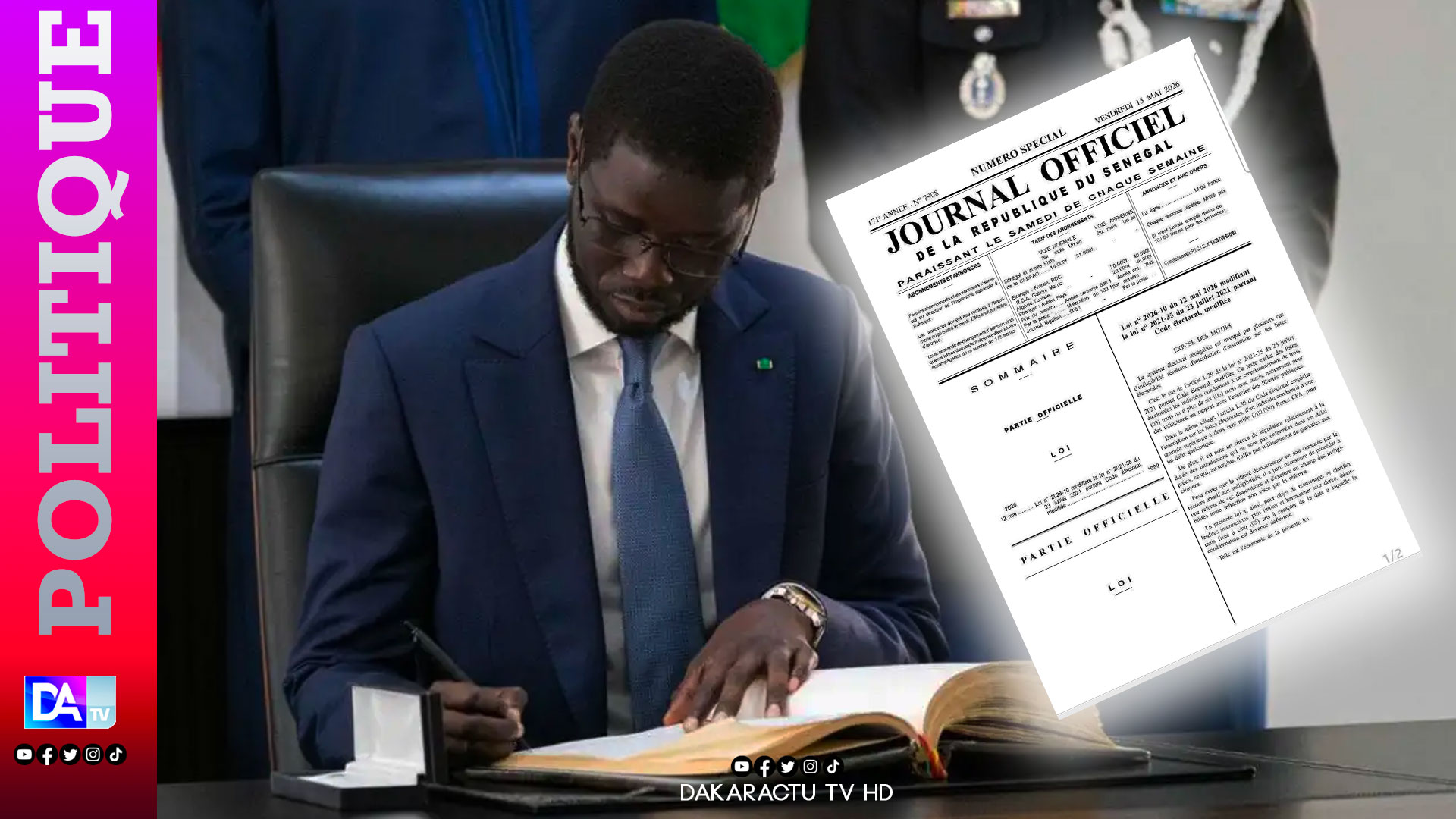
On May 12, 2026, President Bassirou Diomaye Diakhar Faye signed into law the landmark electoral reform bill (Law No. 2026-10), which significantly reshapes voter eligibility criteria. The legislation, approved by the National Assembly five days earlier with a three-fifths majority, establishes clear and binding rules for electoral ineligibility—a long-overdue clarification to a previously ambiguous system.
Published in a special edition of the Official Gazette on May 15, 2026, the reform bears the signature of Prime Minister Ousmane Sonko and represents a decisive step toward strengthening democratic safeguards in Senegal’s electoral process.
Key changes brought by the electoral reform
At the heart of this reform lies a complete overhaul of Article L.29, which now defines four definitive categories of individuals barred from voter registration:
- Individuals convicted of felonies;
- Those found guilty of serious financial crimes, including theft, fraud, breach of trust, embezzlement, corruption, money laundering, and influence peddling;
- Persons subject to a court-imposed voting ban;
- Legally incapacitated adults.
A major innovation is the introduction of a standardized five-year ineligibility period, calculated from the date a conviction becomes final. This replaces the previous system, which lacked clarity on the duration of civic rights deprivation. Additionally, Article L.30, which previously excluded from voter rolls anyone fined more than 200,000 CFA francs for any offense, has been fully repealed.
Why this reform matters for Senegal’s democracy
The legislature’s justification for the reform highlights the flaws in the former system, where even minor infractions—such as a three-month suspended sentence or a nominal fine—could trigger automatic ineligibility without a defined timeline. Such ambiguity, lawmakers argued, not only undermined citizens’ rights but also risked undermining public trust in the electoral process.
The new framework aims to tighten eligibility criteria by focusing on serious offenses while ensuring that disqualifications are time-bound and legally predictable—thus reinforcing the integrity of Senegal’s democratic institutions.
Political ripple effects of the electoral law changes
The sweeping reform, adopted with a supermajority, arrives amid a politically charged atmosphere ahead of upcoming elections. Its implementation could significantly alter the electoral status of several high-profile figures convicted in recent years, potentially restoring civic rights to opposition leaders or other political figures who had faced long-term bans.