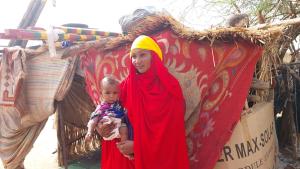
One Health approach bridges gap for Chad’s nomadic families
In the heart of N’Djamena‘s outskirts, the Mandjafa nomadic camp bustles with life as families gather for a day of essential services. Among them is Afia, a mother of five, who traveled with her four-month-old daughter Fatma to access integrated health services designed specifically for pastoral communities. For Afia, these services are vital: “Vaccines keep my children healthy. Whenever they fall ill, I take them to the nearest health center immediately,” she explains.
Nomadic families like Afia’s face unique challenges. Their livelihoods depend on seasonal mobility and livestock, often placing them far from fixed health structures. With pastoralists making up about 3.5% of Chad‘s population, traditional health systems struggle to reach these mobile communities effectively.
One Health initiative transforms service delivery
The Chadian government‘s progressive adoption of the One Health approach addresses this gap by merging health, livestock, environmental, and agricultural sectors. On June 9, 2026, this strategy came to life in Mandjafa, delivering integrated services to 134 individuals—including 11 children—while vaccinating 96 animals. Families received vitamin A supplementation, deworming treatment, and insecticide-treated mosquito nets, alongside human vaccination services.
Professor Mahamat Béchir, National Coordinator of One Health at the Ministry of Public Health and Prevention, highlights the approach’s origins: “Early 2000s studies revealed severely limited vaccination access for nomadic communities. We realized we needed strategies that aligned with their way of life.”
The initiative’s brilliance lies in its dual focus. Veterinary services are already familiar to herders, so combining animal and human health interventions allows teams to reach more families in a single visit, reducing travel burdens. Youssouf Idriss, a local herder with sheep, cattle, and camels, attests to its value: “My animals are the backbone of my family’s survival. Their health ensures our food security and livelihood.”
Sustainable impact on communities and livestock
For pastoral households, animal health directly impacts income, nutrition, and overall well-being. The joint campaigns address multiple needs simultaneously, strengthening prevention services. Raphaël Neni, a veterinary officer with five years of field experience, notes tangible improvements: “Post-vaccination, we’ve seen a decline in certain diseases. Herders themselves observe healthier livestock.”
Beyond livestock benefits, these interventions reduce zoonotic disease risks, enhancing community health security. At the national level, the One Health platform coordinates sectors to bolster prevention, surveillance, and response to health threats. Professor Béchir emphasizes: “Health challenges can’t be tackled in silos. Zoonotic diseases, climate change, and environmental issues demand cross-sector collaboration to protect populations.”
Long-term collaboration drives success
With support from WHO over the past two decades, Chad’s One Health platform has strengthened. Dr. Tamadji Mbaïhol, WHO Chad’s routine immunization lead, observes high acceptance rates when services adapt to nomadic realities: “Nomadic populations embrace health services when delivered where they live. The key is meeting them on their terms.”
The approach’s ability to consolidate multiple services into single interventions proves particularly effective in highly mobile zones. Through years of inter-ministerial collaboration and partnerships, the platform has evolved into a model for integrated health delivery. Professor Béchir reflects: “WHO’s support has fortified our platform and fostered unified action on shared public health priorities.”
As Afia prepares to return home with Fatma, she shares simple but powerful advice with other parents: “When a child falls ill, act fast—take them to the health center immediately. Prevention is the best protection.” In Mandjafa, the One Health approach isn’t just bridging distances; it’s safeguarding the future of Chad’s nomadic families and their livestock.