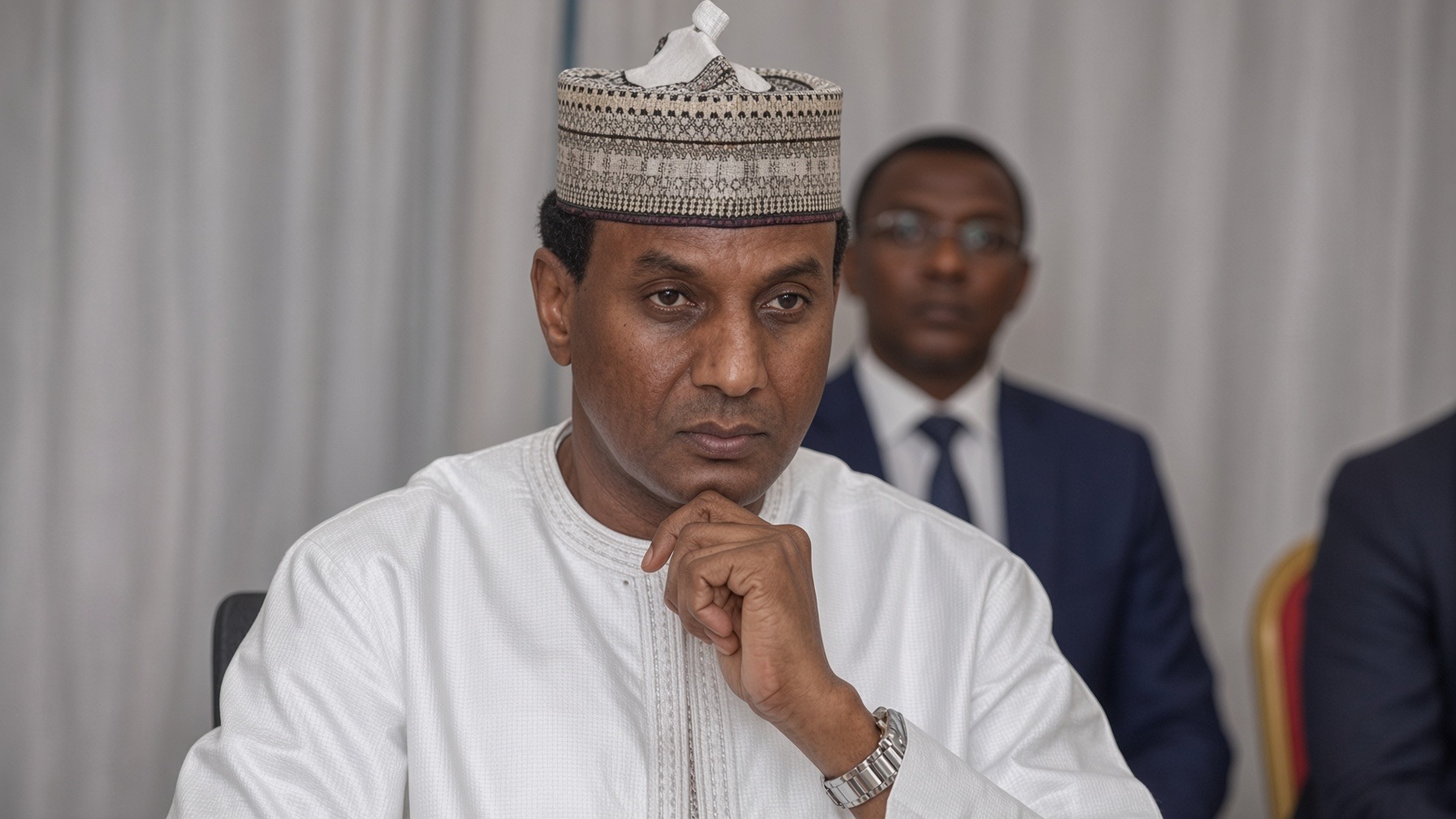
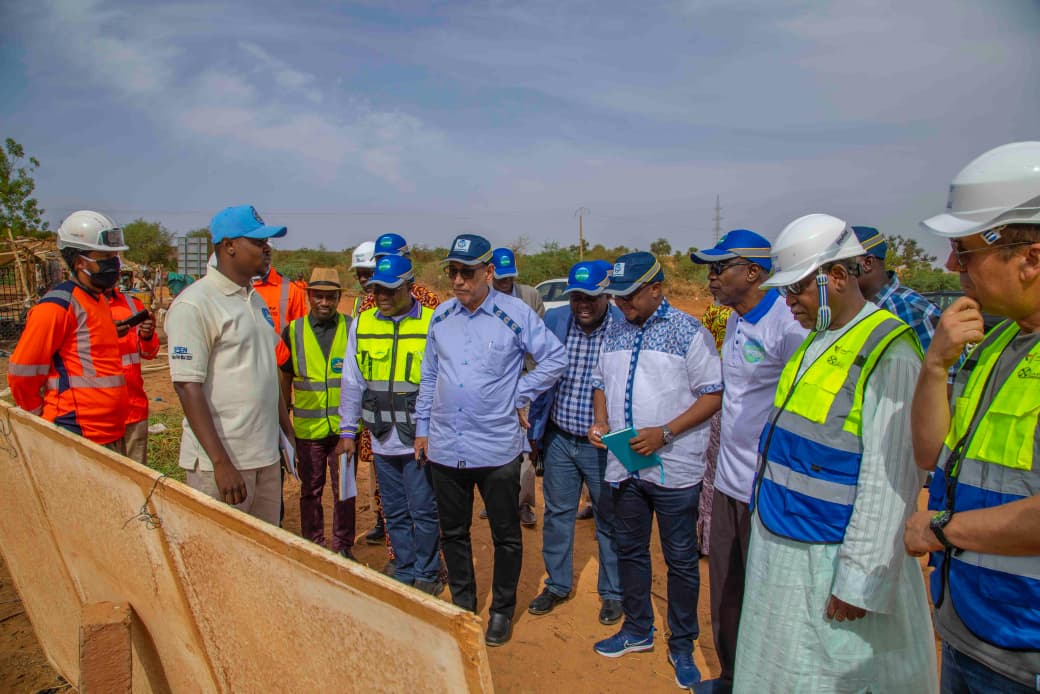
Niamey is poised for a water supply revolution as a high-level delegation from the Integrated Platform for Water Security in Niger (PISEN) and the World Bank conducted an on-site assessment of the construction progress for the city’s third potable water treatment facility. Led by PISEN National Coordinator Zibo Zakara and World Bank Project Manager Mohamed Nanzoul, the team toured key infrastructure sites, including the water intake point, the treatment plant itself, and the future reservoir locations.
Strategic water infrastructure to transform Niamey’s supply
The ambitious project, launched under the 2017 Urban and Semi-Urban Water Master Plan developed by the Niger Water Heritage Company (SPEN), is designed to meet growing demand in the capital’s expanding urban and peri-urban districts. The facility will ultimately deliver 250,000 cubic meters of clean water daily, rolled out in three phases: an initial 100,000 m³/day capacity followed by two 75,000 m³/day extensions. PISEN oversees coordination, while SPEN serves as the lead developer with critical technical and financial support from the World Bank.
Construction phases and local impact
At the intake site, raw water will be pumped to the plant plateau where the treatment facility is under construction. Two 2,500 m³ reservoirs are planned for the Yawari plateau, acting as key distribution hubs to supply water to outlying neighborhoods. PISEN National Coordinator Zibo Zakara confirmed that the first phase—100,000 m³/day—will secure Niamey’s water supply through 2035 and emphasized the project’s ten distinct work packages and potential expansions.
Zakara acknowledged early delays but noted that momentum has shifted significantly. Excavation and earthworks are now visibly advancing on Lots 6 and 7, with heavy machinery in operation and local labor force mobilization through subcontracting and direct hiring. “The project has truly taken off,” he stated. “We’re seeing robust activity that directly benefits the local workforce and surrounding communities.”
World Bank reaffirms commitment to Niger’s water future
World Bank Project Manager Mohamed Nanzoul praised the installation’s progress, reiterating the institution’s continued partnership with Niger to enhance public welfare through improved access to essential services.
Project Site Manager Haladou Laouali Amani outlined the current preparatory milestones: site mobilization, contractor setups, topographic surveys, and geotechnical studies are all complete. Upon completion, the initiative will mark a watershed moment for Niamey, introducing around 45,000 new social water connections and fundamentally strengthening the city’s potable water capacity.
Reporting by local technical teams