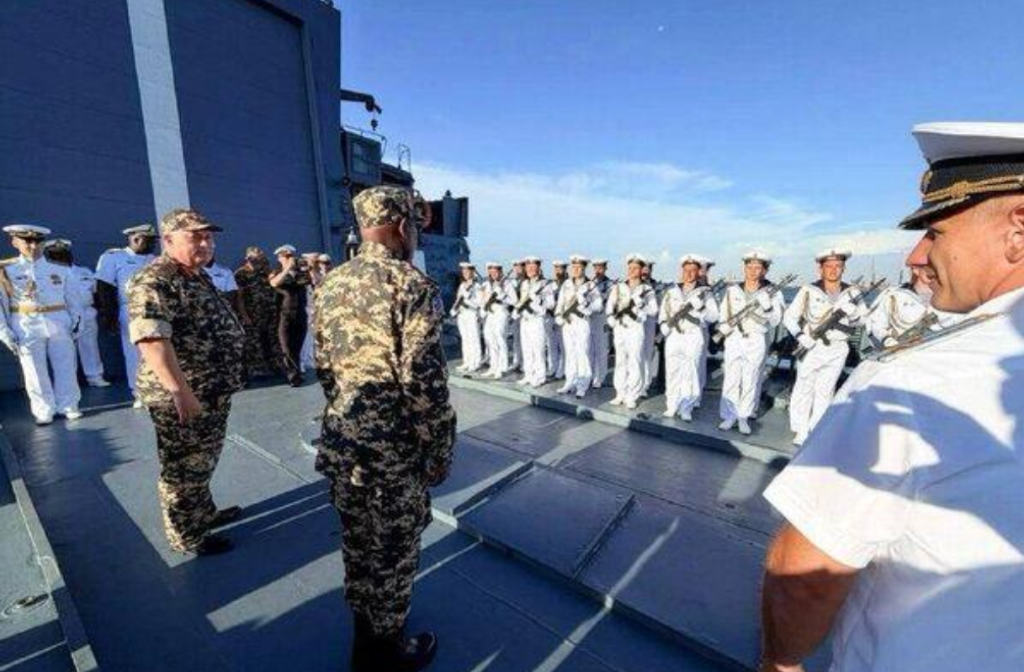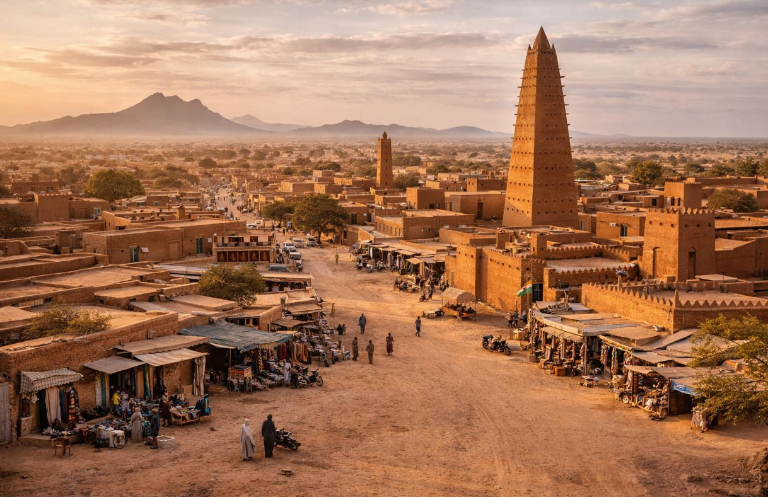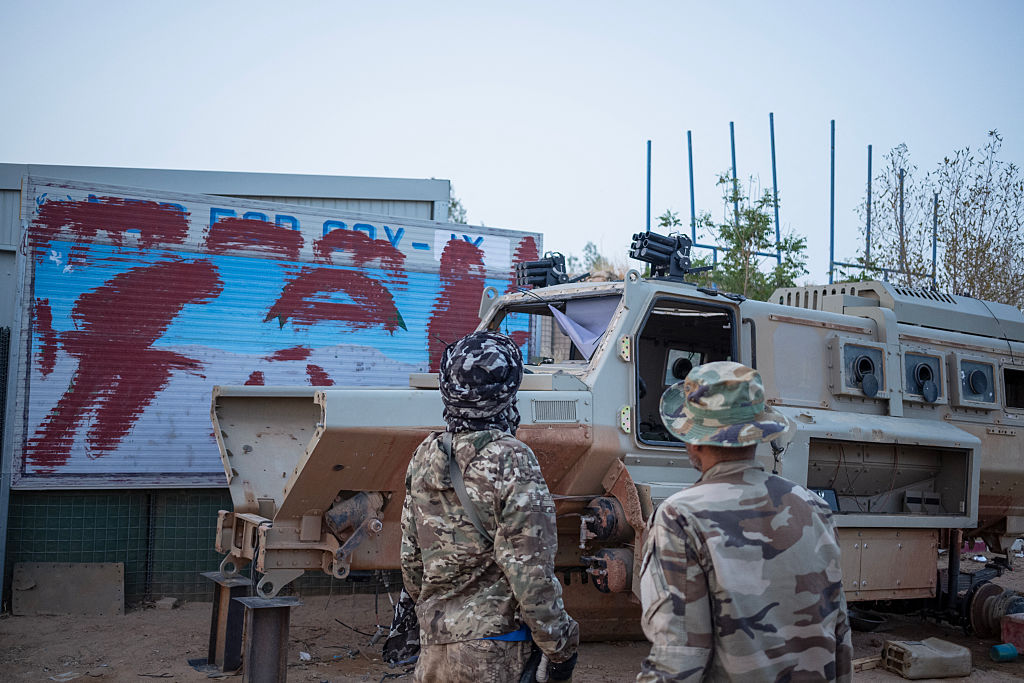
When Mali’s ruling junta invited Russian mercenaries to the country in 2021, it shifted its focus toward suppressing Tuareg rebels in the North. Analysts warn this strategic pivot allowed jihadist factions like the Group for the Support of Islam and Muslims (GSIM) and the Islamic State in the Greater Sahara (ISGS) to expand their influence, disrupting trade routes and crippling the economy through targeted blockades.
From counterterrorism to ethnic crackdowns
The junta’s heavy-handed military campaigns, backed by the Africa Corps, have resulted in thousands of civilian deaths—many executed on suspicion of rebel or terrorist ties based solely on ethnicity. These indiscriminate crackdowns have inadvertently fueled recruitment for militant groups, as grievances deepen among affected communities.
Wassim Nasr, a seasoned terrorism analyst, noted, “While the military fixated on reclaiming remote desert outposts, the GSIM grew bolder in the areas surrounding Bamako. Their propaganda gained traction, and the strategy backfired.”
By January 2024, the junta abandoned the Algiers Peace Accords, a landmark 2015 agreement between Mali’s previous democratic government and the Liberation Front of Azawad (FLA). Months earlier, in November 2023, Malian forces—with Wagner Group support—retook the Tuareg stronghold of Kidal, escalating tensions in the North.
Meanwhile, the GSIM and ISGS tightened their grip on central Mali, encircling the capital and severing critical supply lines from Senegal and Côte d’Ivoire.
Broken alliances and shifting loyalties
The junta’s pivot toward Russian mercenaries came after severing ties with France, which had led the Barkhane and Serval counterterrorism missions for over a decade. These operations had helped stabilize the North and laid the groundwork for the Algiers Accords. However, the junta’s expulsion of the UN Multidimensional Integrated Stabilization Mission in Mali (MINUSMA) in late 2023 left a security vacuum—one quickly filled by brutal mercenary-led operations.
The most infamous of these was the three-day assault on Moura, a central Malian village where Wagner fighters executed hundreds of ethnic Fulani civilians. The massacre, along with subsequent raids targeting communities accused of harboring militants, eroded public trust in the junta and Wagner alike. As Nasr observed, “They built no schools, no roads—only slogans like ‘We hate France and the West.’”
By July 2024, Wagner’s reign of terror ended abruptly in Tin Zaouatine, where a Tuareg ambush decimated a joint Malian-Wagner force, killing nearly 50 Malian soldiers and over 80 mercenaries. The retreat marked Wagner’s final withdrawal, with its remnants absorbed into the Africa Corps—a rebranded force still staffed by Wagner veterans.
The mercenary crutch: a failing strategy
Mali continues to pay the Africa Corps roughly $10 million monthly, though the mercenaries now operate primarily from fortified bases, relying on drones for support. “They still deploy, but with far less confidence,” Nasr remarked.
In late April, the Africa Corps and Malian troops failed to repel a combined GSIM-FLA assault on Kidal, fleeing as the city fell to the FLA. The same day, a separate attack claimed the life of Mali’s Defense Minister. With battlefield losses mounting, the Africa Corps’ priorities shifted from counterterrorism to protecting the junta’s survival, Nasr explained. Their focus now includes securing Bamako’s international airport and ensuring fuel and supply routes remain open despite GSIM blockades.
“The junta has no other option. It faces universal opposition and is trapped in its own desperation. They keep paying because the Africa Corps is their lifeline.”