Women hold just 3% of municipal leadership roles in Senegal
Despite being widely recognized as a democratic leader in Africa, Senegal continues to face significant challenges in achieving gender parity within its decision-making institutions. Recent data reveals a troubling decline in female political representation, with only 18 women serving as mayors out of 558 communes nationwide—a mere 3% of municipal leadership positions. This underrepresentation extends to departmental councils, where just three women hold presidential roles among 43 departments.
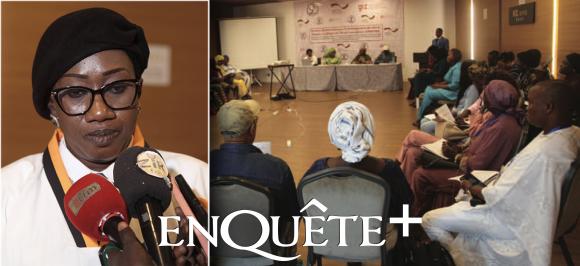
These figures emerged during a two-day national seminar on women’s political participation, organized by the Women Leaders Network for Development (WLND). The event brought together 30 women leaders, including parliamentarians, political party heads, local elected officials, activists, and civil society leaders. Their mission: to develop strategies that can strengthen female political engagement and address the structural barriers women face in accessing leadership roles.
From legal advances to persistent gaps
The seminar highlighted that Senegal has made notable progress in gender equality through landmark legislation such as the 2010 parity law, the 2001 Constitution which guarantees gender equality, and the ratification of major international conventions on human and women’s rights. Yet, despite these achievements, the reality remains starkly different. Bator Seck, WLND’s Senegal focal point, pointed out the contradictions between legal frameworks and practical implementation.
“The November 2024 legislative elections revealed a decline in female representation in the National Assembly, dropping from 44.2% to 41%. More concerning was the low number of women heading electoral lists—only 13%,” Seck explained. “At the local level, the situation is even more alarming: out of 558 communes, just 18 are led by women, and only three women preside over departmental councils.”
These statistics, she emphasized, are not merely numbers—they reflect deep-rooted structural obstacles, cultural resistance, and persistent inequalities in access to political financing, media visibility, and decision-making spaces.
Addressing systemic barriers to female leadership
The WLND initiative, supported by the Afrofeminist Initiative for Human Rights Development in Francophone West Africa and funded through the SEA-T program of the German Federal Ministry for Economic Cooperation and Development (BMZ) with GIZ support, aims to tackle these challenges through three key dimensions: political participation, leadership development, and advocacy for gender equality.
The cohort includes women from diverse backgrounds—young activists, experienced parliamentarians, local leaders, and civil society representatives—united by a shared goal: to transform Senegal’s political landscape by ensuring women are not just participants, but leaders in shaping the nation’s future. “A true democracy cannot be built without the full participation of women,” stated Seck. “The future of Senegal must be constructed with women, not for them.”
Building confidence and skills for women in politics
Maman Diouf Fall, representing the Ministry of Family and Social Solidarity, underscored another critical challenge: the lack of self-confidence among women engaged in public life. Many highly qualified women hesitate to step into leadership roles due to societal pressures, entrenched stereotypes, and insufficient structured support systems.
She emphasized the need for targeted training programs in leadership, political communication, negotiation, public governance, public speaking, and strategic organizational management. “Without sustained investment in women’s human capital, progress will remain limited,” Fall noted.
She also highlighted the disparities in access to capacity-building opportunities, particularly for women in rural and vulnerable areas, where training programs are often concentrated in urban centers. “We must ensure that all women, regardless of their location, have equal access to the tools and resources needed to succeed in leadership,” she asserted.
The Ministry has implemented several initiatives to address these gaps, including leadership training for women and adolescents, civic education programs, human rights advocacy, and psychosocial support for vulnerable groups. These efforts aim to empower women economically, socially, and politically while strengthening community resilience against issues such as child marriage, gender-based violence, and school dropout rates among girls.
A call for collective action
Fall concluded with a call for collective responsibility: “Beyond legal frameworks and political commitments, our shared duty is to create an environment where women can participate fully, freely, and effectively in public life. This requires continuous social transformation, community sensitization, and the cultivation of a culture that values female leadership and economic autonomy.”
The WLND, with its panafrican feminist approach and recognized status as an observer at the African Commission on Human and Peoples’ Rights—and holding a 501(c)(3) equivalent certification from NGOsource—continues to lead advocacy efforts for gender equality, sexual and reproductive health rights, civic space, and climate justice across the continent.