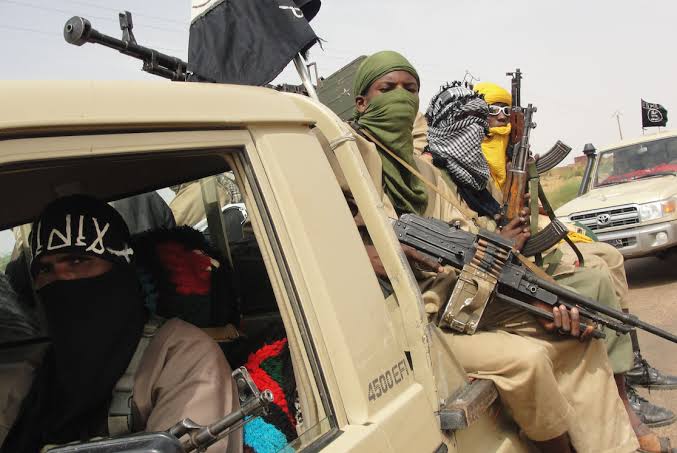
The Malian junta, led by General Assimi Goïta, faces an unprecedented challenge as the Group for the Support of Islam and Muslims (JNIM), an Al-Qaida-affiliated faction, tightens its grip on the country. The recent coordinated attacks on April 25 marked a turning point, with the JNIM imposing a blockade on Bamako and the Front de Libération de l’Azawad (FLA) reclaiming control of Kidal. Despite the junta’s assurances of military superiority, the balance of power appears to be shifting in favor of these armed groups.

General Goïta’s disappearance during the attacks and his subsequent declaration that the situation is under control have done little to reassure the population. Six years after seizing power, the junta’s inability to counter the growing influence of jihadist groups has left citizens grappling with a grim reality: the possibility of a JNIM-led state governed by sharia law. The JNIM’s recent communiqué leaves no room for doubt, explicitly stating that the establishment of Islamic law will be a top priority once they assume control of the government.
Between military rule and jihadist ideology: an impossible choice
The junta’s repression of dissent has inadvertently paved the way for the JNIM’s rise. By eliminating political opposition, jailing dissidents, and forcing critics into exile, the military regime has created a vacuum that the jihadists are now filling. Many Malians, disillusioned by the junta’s failure to restore stability, are reluctantly considering the JNIM as a potential alternative—despite the group’s extremist agenda.
Some opposition figures have floated the idea of a tactical alliance with the JNIM, hoping that a ‘soft sharia’ could replace the junta’s rule. However, the group’s rhetoric offers no such compromise. Their vision of a ‘new Mali’ is one where Islamic law dictates every aspect of public and private life, leaving no room for secular governance or democratic principles. For the citizens caught between a corrupt military regime and a theocratic future, the choice is stark—and increasingly desperate.
The junta’s spiral of repression
Faced with mounting pressure, the Malian junta has doubled down on repression. The April 25 offensive prompted a wave of arrests among military personnel suspected of disloyalty, while the abduction of Mountaga Tall, a prominent lawyer and political figure, on May 2 underscored the regime’s descent into authoritarianism. Reports of state security agents carrying out such operations have drawn international condemnation, with human rights organizations warning of the junta’s escalating violations.
The JNIM’s call for a unified front against the junta—targeting political parties, national armed forces, religious leaders, and traditional authorities—highlights the group’s ambition to dismantle the current regime. Yet, their proposed alternative offers no clear path to stability or democratic governance. Both the junta and the JNIM promise a ‘new Mali,’ but their visions are diametrically opposed: one rooted in military dictatorship, the other in extremist theocracy. For the people of Mali, the future remains shrouded in uncertainty, with no end in sight to the cycle of violence and instability.