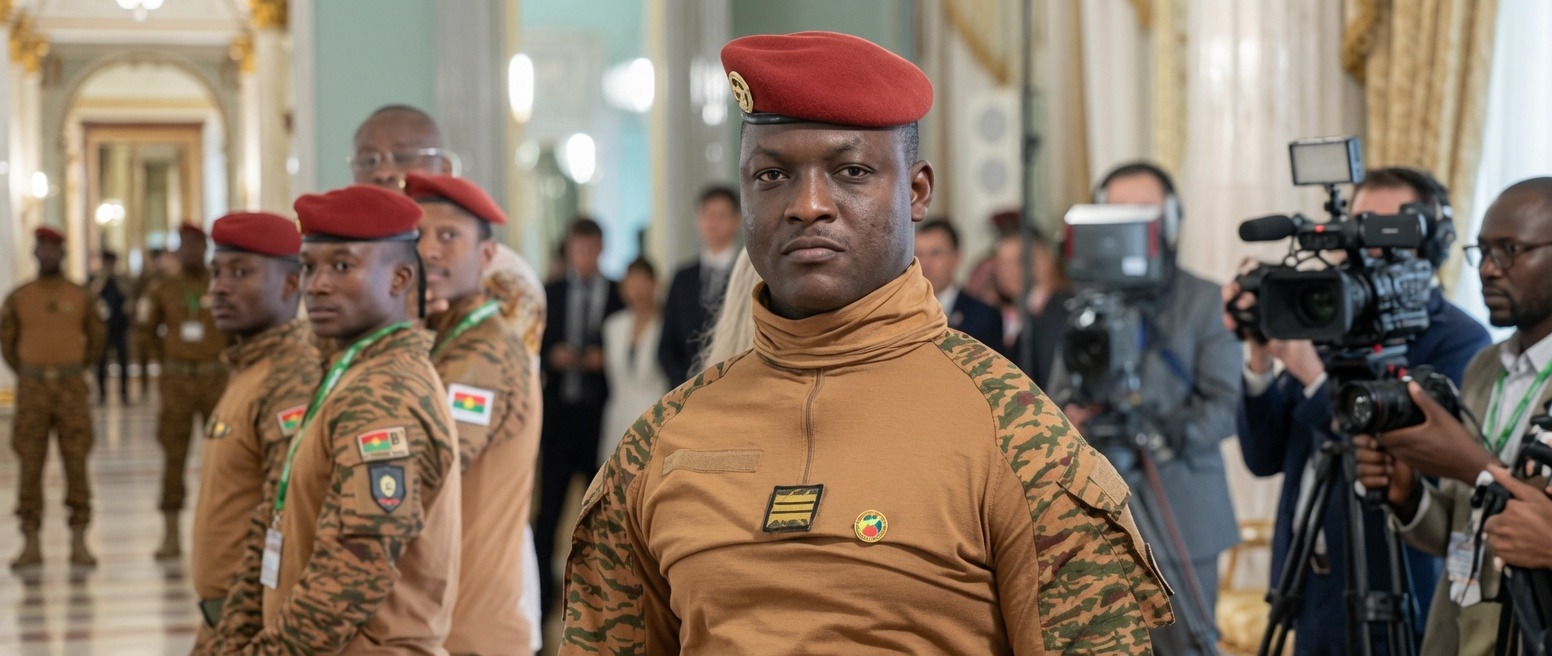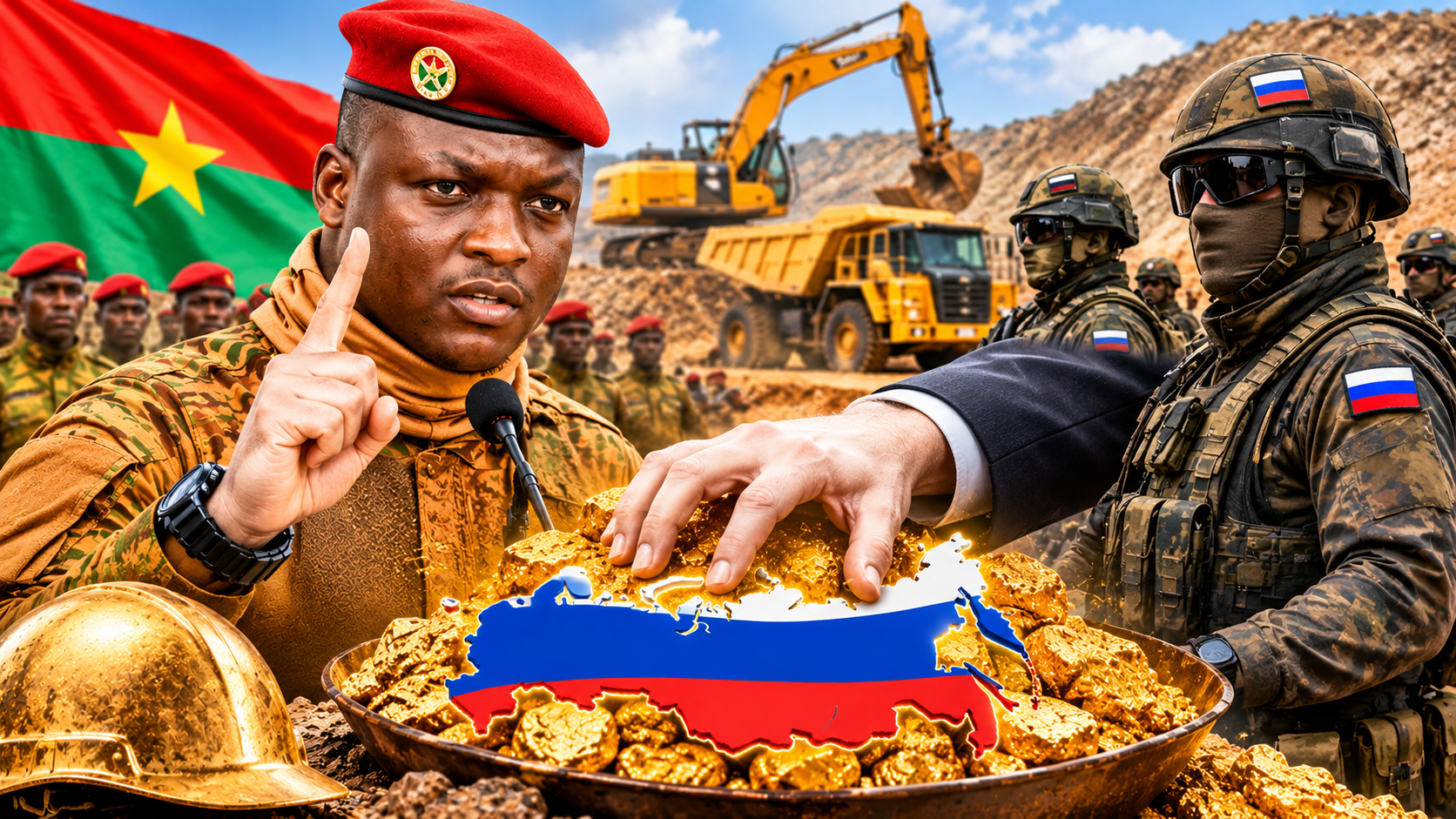
The declaration by Burkina Faso’s transitional leadership that the nation’s gold reserves are 100% Burkinabè has dominated public discourse in recent months. Yet beneath the nationalist rhetoric lies a complex reality: the growing presence of Russian security contractors around gold mining sites has introduced new questions about who truly controls the country’s most valuable resource.
The junta’s emphasis on economic sovereignty has positioned Burkina Faso’s gold deposits as a cornerstone of national independence. Military authorities argue that reclaiming control of mineral wealth represents a break from historical dependencies. But declarations of ownership do not preclude external actors from exercising decisive influence over how these resources are secured and extracted.
When sovereignty meets foreign security contractors
The expansion of Russian private military companies into Burkina Faso’s mining sector is not merely a commercial development. It reflects a strategic pivot in the country’s security partnerships. For a nation asserting its right to self-determination, the deployment of foreign security personnel to protect critical infrastructure raises immediate questions about operational oversight, contractual transparency, and the ultimate beneficiaries of such arrangements.
A gold mine is more than a pit in the earth it is a vital node in the national economy. The security of extraction sites, transportation routes, and financial flows tied to these operations falls under the state’s responsibility. When foreign entities assume such sensitive roles, citizens have a right to clarity: What are the precise roles of these contractors? Who pays them, and under what terms? How is compliance with national regulations enforced?
The gap between nationalist rhetoric and operational reality
The promise of 100% Burkinabè gold is a powerful political message, but sovereignty cannot be assessed solely through declarations or regulatory changes. True economic independence requires three conditions:
Operational control: Does the state retain final authority over mining operations, security protocols, and decision-making?
Contract transparency: Are the terms of agreements with foreign security firms open to public scrutiny, or shielded from oversight?
Economic return: Do the revenues generated from gold extraction flow primarily to national coffers and benefit local communities?
The presence of foreign security teams introduces a contradiction: How can Burkina Faso claim full ownership of its gold when external actors play a central role in its protection? While this does not imply that foreign firms control the mines themselves, it underscores that the control of access, security, and economic transactions around these sites carries profound implications for national sovereignty.
A moment of truth for Burkina Faso’s leadership
The junta faces a defining challenge: to transform its bold declarations into tangible realities. Sovereignty is not established by replacing one foreign influence with another it is measured by the state’s ability to set the rules, enforce compliance, and ensure that partnerships serve the public interest.
This moment demands more than symbolic gestures. It requires concrete steps: publishing detailed contracts, establishing independent audits of mining revenues, and clarifying the chain of command for security operations. The people of Burkina Faso deserve to know not only who protects their gold, but why and for whose benefit.
The era of unquestioned foreign involvement in strategic sectors must come to an end. While cooperation with foreign partners including Russian firms can be part of a broader security and economic strategy, such partnerships must remain subordinate to national institutions. No allegiance to Moscow, Paris, or any other capital should supersede the government’s duty to safeguard its own resources.
Gold for the nation, not for foreign interests
Ultimately, the debate over Burkina Faso’s gold is not about whether foreign security firms should exist. It is about whether the state has the power and the will to ensure that every ounce of gold unearthed from Burkinabè soil serves the nation first.
The junta’s leadership has declared that their gold is entirely Burkinabè. To make that claim credible, they must prove it not with words, but with deeds. The control of gold mines, their security, and their profits must remain firmly in the hands of the Burkinabè people and their institutions. Anything less is not sovereignty it is surrender.
By François Mvondo — Journalist