What the Sévaré airbase raid reveals about Mali’s deeper security architecture
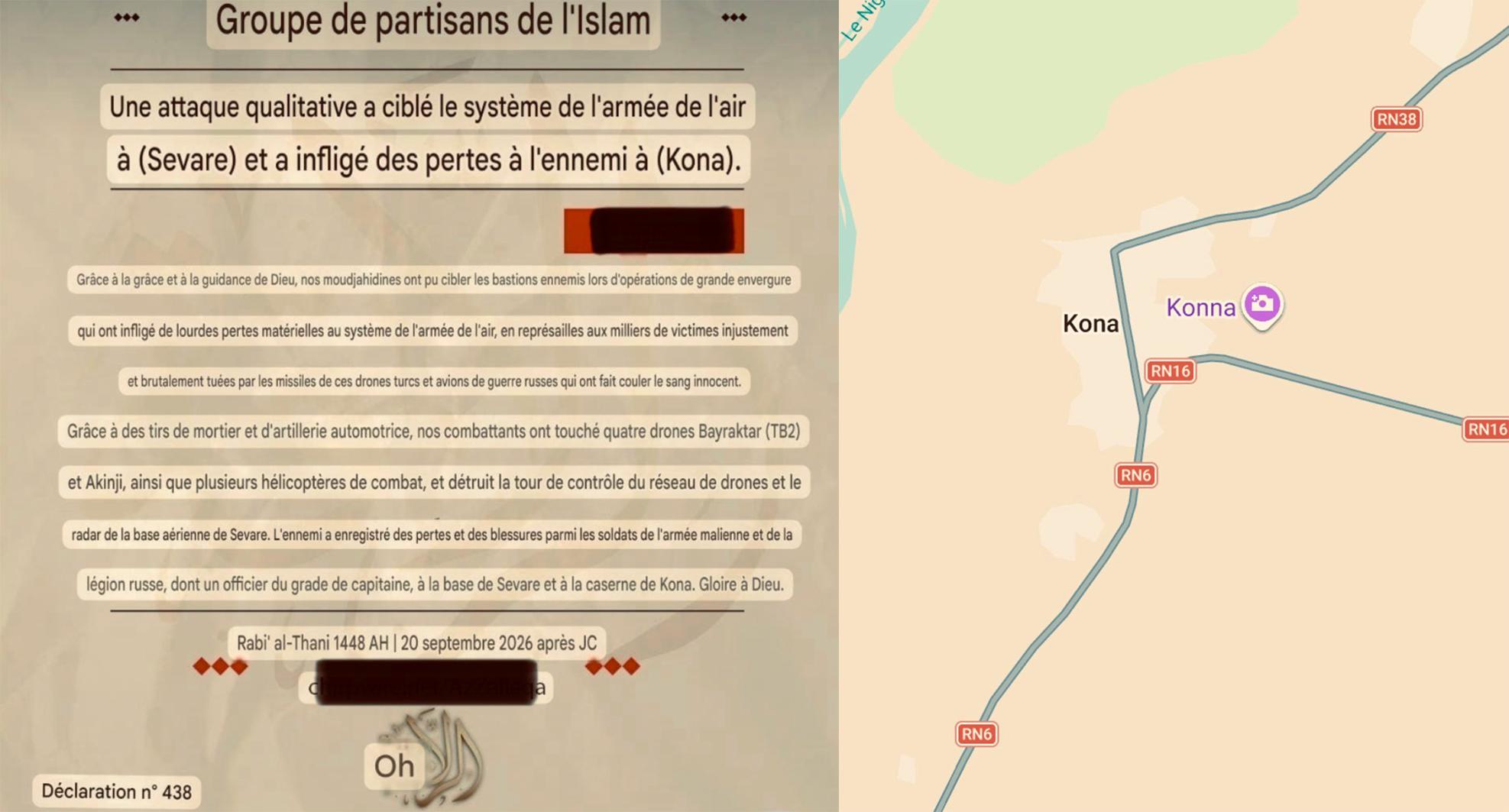
The raid on the Sévaré airbase and the Konna military camp, claimed by the al-Qaeda-affiliated Group for the Support of Islam and Muslims (JNIM), cut straight to the heart of Mali’s defense architecture. Despite massive military spending, the purchase of advanced hardware, and the deployment of Russian Africa Corps fighters, the national security system remains structurally exposed.
The JNIM stated it struck multiple military installations at Sévaré, destroying or damaging four Bayraktar TB2 and Akıncı drones, several helicopters, a radar station, and a control tower, while inflicting casualties among Malian soldiers and Russian personnel. These claims, if confirmed, point to vulnerabilities that go far beyond the loss of any single piece of equipment.
The structural paradox of Mali’s revamped security model
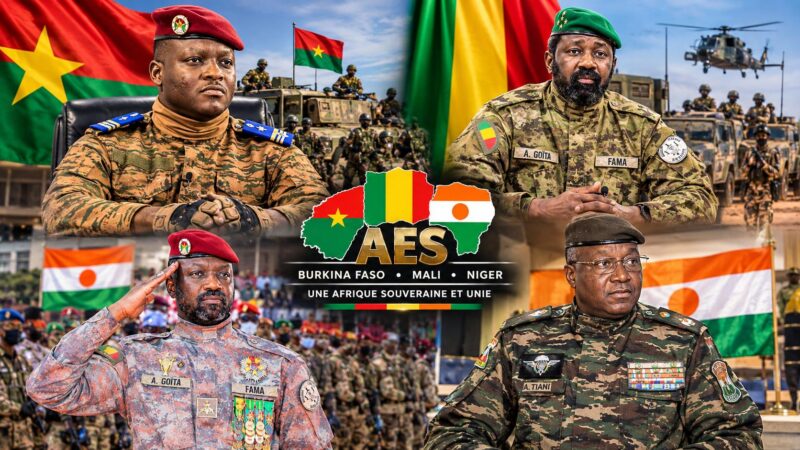
Since the coups of 2020 and 2021, Mali’s military authorities have fundamentally reoriented their defense policy. The break with Western partners, France in particular, went hand in hand with a strategic pivot toward Moscow.
Bamako frames this shift as an assertion of sovereignty, applying the principle of freely choosing its partners to strengthen its army and fight armed groups without depending on foreign powers.
Politically, the message resonates. On the ground, the reality is far more complex. The arrival of new equipment, notably Turkish-made drones, and the presence of Russian personnel have not eliminated the jihadist threat. Recent attacks prove that armed groups retain formidable capacity to inflict damage.
The core challenge is not the quantity of weapons available, but the ability to convert that military power into effective territorial control.
The Africa Corps and the limits of conventional power in an asymmetric war
The Russian presence is one of the pillars of Mali’s new security framework. After the French withdrawal and the end of Operation Barkhane, Bamako made an exclusive choice in favor of Moscow.
The Africa Corps, which succeeded the Wagner Group in several African countries, is now fully integrated into Mali’s security apparatus.
Yet this presence runs directly into the effectiveness of an insurgency deeply rooted in several regions. JNIM fighters operate in a familiar environment, master the terrain, and use asymmetric tactics that blunt the impact of technological superiority.
This reality puts Bamako’s chosen model to a direct test. Modern drones surveil and strike precise targets, helicopters support ground troops, and foreign fighters reinforce certain units, but none of these means alone guarantees lasting control of the territory.
A military power that struggles to secure the ground
The Sévaré episode unfolds against a worrying security backdrop. Malian forces are suffering deadly attacks claimed by jihadist groups targeting military positions, strategic axes, and infrastructure vital to sustaining the national security system.
This situation highlights a structural weakness: the army concentrates considerable resources around main bases without managing to control rural areas and surrounding communication routes.
Sévaré is the most emblematic case of this limitation. As a major military hub in central Mali, the town hosts air infrastructure for surveillance and combat. The strike on this base proves that the JNIM retains the capacity to reach highly strategic installations.
The repetition of these attacks worsens the situation. Evaluating a security strategy does not rest on the number of drones acquired, strikes carried out, or operations announced, but on its concrete ability to prevent attacks, protect populations, and durably maintain state authority.
The technology trap
The emphasis on Bayraktar drones illustrates an operational contradiction. Mali has acquired high-performance aircraft for intelligence gathering and long-range strikes, a clear advance for national military capabilities.
However, advanced technology remains exposed when concentrated on fixed, identifiable infrastructure. If the JNIM’s claims about the Sévaré equipment are validated, it would mark a major symbolic setback for Bamako, proving that part of the technological investment can be neutralized directly at its parking bases.
The Malian conflict demonstrates that a war against a jihadist organization requires more than sophisticated equipment: it depends imperatively on human intelligence, force mobility, population protection, securing logistical axes, and a continuous state presence in remote areas.
The political cost for the junta
For Mali’s junta, the stakes go beyond the strictly military sphere. Since taking power, it has built its political discourse on national sovereignty and the fight against terrorism.
The withdrawal of French forces and the rapprochement with Russia are presented as symbols of a new security policy freed from old dependencies.
Every attack on a strategic position reveals the limits of this orientation and directly confronts the authorities with the real-world results of changing military partners on the country’s security.
In Sévaré as elsewhere, the effectiveness of this policy is verified exclusively by facts on the ground.
Beyond Bamako and military bases
For Malian populations, strategic debates about France, Russia, Wagner, the Africa Corps, or Turkish drones remain secondary to daily imperatives. The only priority lies in the effective security of villages, roads, markets, and cities.
The success of a security policy is validated not by displaying weapons at military ceremonies, but by neutralizing threats against populations and permanently restoring the state’s presence.
The Sévaré attack confirms the depth of Mali’s security crisis. The junta has renewed its alliances, strengthened its arsenal, and asserted its will to regain the initiative. Nevertheless, military power alone is not enough to defeat the JNIM.
Bamako’s challenge now is to transform its military means into lasting security. As long as strategic bases suffer attacks, communication routes remain vulnerable, and jihadist groups impose their pace of action, the junta’s security model faces a critical test.
In Sévaré, power is now judged exclusively on its results on the ground.