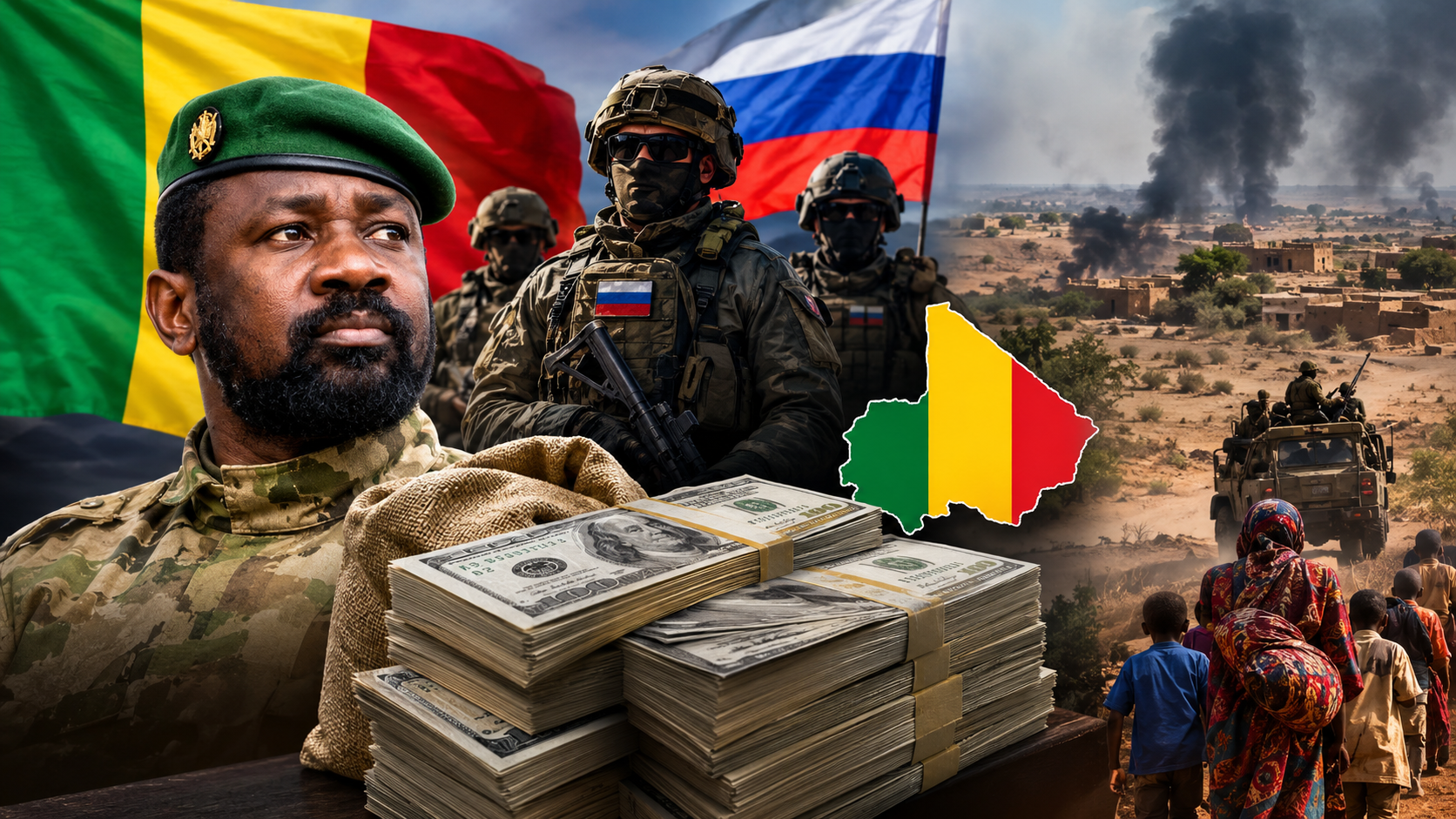
The Africa Corps’ latest publication has sent shockwaves through Bamako’s political circles, revealing far more than mere military posturing. Beneath the surface of this statement lies a calculated move that could redefine Mali’s northern strategy—and Assimi Goïta’s future.
At the heart of this shift is Kidal, a city long treated as a symbol of Malian sovereignty. For years, Goïta staked his reputation on reclaiming and holding every inch of the north, with Kidal as the centerpiece. But now, the Russia-backed group’s framing of the city as “worthless” and something to be avoided suggests a deliberate erosion of that narrative. Could this be the first step in abandoning the president’s hardline stance?
The political fallout of a Russian retreat
If the Africa Corps withdraws its support for Kidal, it leaves Goïta’s government exposed. The transition leader built his legitimacy on promises he can no longer fulfill, and a Russian withdrawal would force Bamako to confront a harsh reality: the north may never be fully under Malian control. This isn’t just a military setback—it’s a political earthquake.
Is a secret deal with armed groups already in motion?
Another explanation emerges from the shadows: what if this isn’t just a retreat, but the execution of a covert agreement? The Africa Corps’ messaging—downplaying Kidal’s importance while framing its abandonment as strategic—hints at a deeper negotiation. Could Moscow be preparing the ground for a tacit power-sharing arrangement with rebel factions like the FLA (Front de Libération de l’Azawad) and the JNIM?
The carefully crafted excuse—”We’re not losing, we’re avoiding a desert trap”—suggests an attempt to soften the blow of surrender. But the real question is whether this is a temporary retreat or the beginning of a new era in Mali’s conflict, where the state must coexist with armed groups it once vowed to eradicate.
One thing is clear: the Africa Corps’ strategy in the Sahel is no longer aligned with Goïta’s vision. Whether this signals a full withdrawal or a behind-the-scenes deal, the implications for Mali—and the wider Sahel—are profound.