Prominent panafricanist figure Kémi Séba, currently held in Pretoria following an alleged immigration violation, has vehemently decried his detention as political persecution. Yet, an investigation into his activities uncovers a narrative far more intricate than mere sovereignist rhetoric, revealing a web of subterranean alliances that span from Russian influence networks to elements within white supremacist movements, raising both surprise and alarm.
the arrest ignites a digital storm
From his South African holding cell, Kémi Séba remains defiant. The Franco-Beninese activist characterizes his arrest as merely another orchestrated “cabal” by his perceived adversaries—notably France and the Beninese government—aimed at curtailing his freedom of movement. His staunch supporters echo these sentiments, framing his detention as a calculated plot to undermine the momentum of a man who positions himself as the voice of disillusioned African youth.
However, beyond the immediate legal skirmish concerning his visa status or his plea for political asylum, the true nature of his international engagements prompts inquiries that the activist appears keen to sidestep.
the shadow of the kremlin and the wagner apparatus
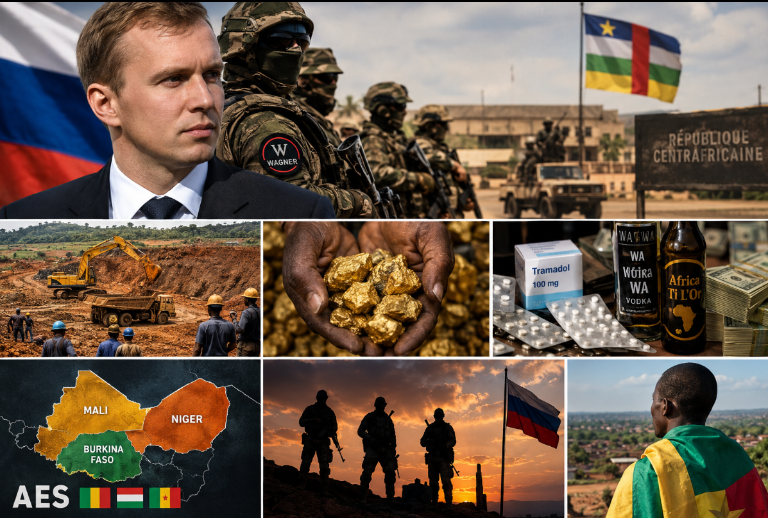
Our investigation confirms that Kémi Séba’s connections with Russian networks extend beyond shared ideology, now appearing structurally embedded. Consulted documents reveal frequent communications with entities linked to the late Yevgeny Prigozhin’s expansive network and the “Lakhta Project.”
The strategic objective? To leverage anti-Western sentiment as a means to advance Moscow’s geopolitical interests across the African continent. In exchange for logistical and financial backing, Séba allegedly functions as a conduit of influence, channeling post-colonial grievances into a potent instrument of destabilization for Russia’s benefit.
a paradox of partners: panafricanism’s proximity to supremacism
Even more disconcerting, our inquiry has unearthed discreet contacts between Séba and leading figures within white supremacist and radical far-right movements across Europe and America. While their core ideologies appear diametrically opposed, a striking commonality emerges: a shared commitment to racial separatism.
The pragmatic maxim, “the enemy of my enemy is my friend,” seemingly underpins Séba’s interactions with proponents of the “Great Replacement” theory or advocates for strict ethno-racial segregation. These revelations point to a strategy best described as a “convergence of extremes,” where the overarching goal is to undermine liberal democracies and multiculturalism, even if it means forging alliances with groups that historically view Africa as an inferior continent.
a high-stakes asylum bid
By seeking political asylum in South Africa, Kémi Séba endeavors to reframe a precarious legal predicament into a powerful symbol of resistance. Nevertheless, South African authorities, acutely aware of their international standing and the integrity of their immigration system, find themselves grappling with a significant dilemma.
April 29 looms as a pivotal date. Yet, irrespective of the Pretoria court’s eventual verdict, it is the very credibility of a prominent figure that hangs in the balance. The chasm between the proclaimed champion of black dignity and the alleged ally of foreign influence networks has never appeared wider.