Spain Morocco ties at crossroads under pp leadership
The Spanish government has leveled an unusually serious accusation against the country’s main opposition force. Foreign Minister José Manuel Albares recently described the Partido Popular (PP) as an “anti-Morocco” party, escalating political tensions beyond a typical government-opposition clash.
According to Albares, the PP is weaponizing Spain’s external relations—particularly with Morocco—to serve domestic political battles. Recent statements from current and former PP leaders have intensified these tensions, prompting the foreign minister to brand the opposition as a “roadblock” to Spain’s foreign policy objectives.
At the heart of this political storm lies a robust bilateral framework. Since 2022, Spain and Morocco have deepened cooperation in migration control, trade, security, and energy. Their strategic partnership now extends to co-hosting the 2030 FIFA World Cup with Portugal. In December 2025, the two nations reinforced this alliance with fourteen new cooperation agreements and a joint declaration to strengthen political dialogue.
The Western Sahara dilemma and the PP’s shifting stance
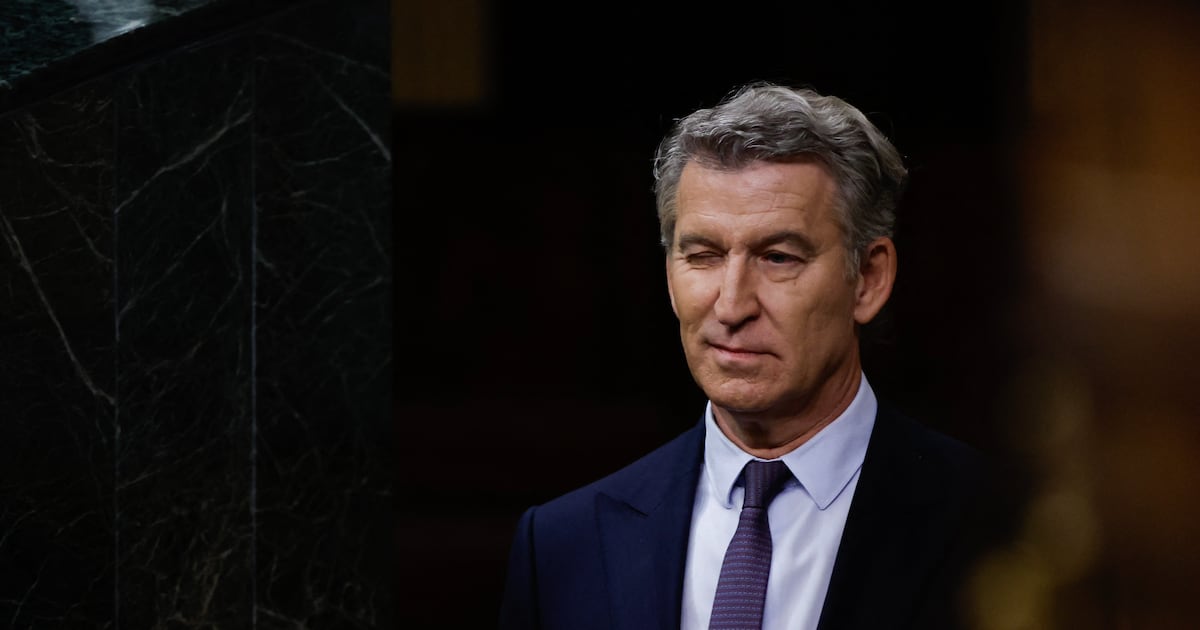
The Western Sahara conflict remains the most contentious issue. When Prime Minister Pedro Sánchez endorsed Morocco’s autonomy plan in March 2022 as the “most serious, credible, and realistic” basis for a solution, the PP condemned the move as a breach of Spain’s long-standing diplomatic consensus. Alberto Núñez Feijóo, the PP leader, argued that the decision was made without consulting the opposition, though the party’s official documents avoid explicitly endorsing—or rejecting—the Moroccan proposal.
The PP’s historical stance on Western Sahara has been inconsistent. Under former Prime Minister Mariano Rajoy, Spain maintained a cautious approach without opposing Morocco’s autonomy initiative. However, internal divisions within the PP have surfaced, with some members advocating for closer ties with Rabat while others align with separatist positions.
Tensions peaked in July 2025 when a purported Polisario representative attended the PP’s national congress, sparking controversy and raising questions in Morocco about the party’s potential foreign policy shift under Feijóo. By February 2026, Albares accused the PP of sending “secret envoys” to Morocco to privately support the autonomy plan while publicly criticizing it—a claim that, if true, underscores the party’s political pragmatism versus its public rhetoric.
International realities complicate a potential U-turn
A future PP government would inherit a vastly different geopolitical landscape than in 2022. Morocco’s autonomy plan has gained broader international support, and Spain’s position is now embedded in a broader bilateral relationship. Reversing course would do more than alter a diplomatic statement—it would reopen one of the most sensitive issues in Madrid-Rabat relations. Yet, the PP has yet to clarify whether it would maintain Spain’s current stance or revert to pre-2022 policies, leaving room for speculation.
Vox’s influence and the rise of nationalist rhetoric
The PP faces additional pressure from Vox, which has pushed the concept of “national priority”—a doctrine favoring Spanish nationals over foreigners in access to public benefits. In April 2026, Vox brought this idea to the national debate, forcing the PP to respond. While some PP figures, like Jaime de los Santos, emphasized equal rights for legal immigrants, others softened the language to terms like “residential priority.” Despite these efforts, Vox has succeeded in shifting the political agenda, compelling the PP to adapt its messaging.
The paradox of power: what awaits Feijóo
The PP’s dilemma is clear: its opposition rhetoric on Morocco and Western Sahara may not align with the realities of governance. Cooperation with Morocco is not merely a PSOE (Spanish Socialist Workers’ Party) ideological choice—it is driven by geography, economics, security needs, and shared interests. A PP-led government would likely preserve the core of the current relationship, leaving Feijóo to justify abandoning years of criticism.
The accusations of secret diplomacy suggest the PP may prioritize pragmatism in practice over its public stance. The real question is whether the party is willing to use Morocco as a political tool or recognize the necessity of a stable, strategic partnership. With the 2030 World Cup on the horizon, Spain and Morocco’s collaboration will only deepen, leaving little room for ideological deviations.
For Feijóo, the choice is stark: either translate opposition rhetoric into policy—risking diplomatic fallout—or acknowledge that pragmatic engagement with Morocco is a necessity, not an option. This decision could define his early tenure as Spain’s leader.